These are stories that generally involve only Cheryl and/or Emerson and are most likely about day-to-day activities. They can be engaging the two of them in a whirlwind tour somewhere, or simply about conversation around the fire. Usually, they will have a more reflective side to them, or a particular lesson learned.

Welcome!

The Musical Stories can also be found in the Main Menu under “Music.” However, on occasion one may be highlighted in a post like this to align with a season, holiday, current related topic or just for fun. You can go directly to the post by clicking below—so relax, read along, listen-in.
Click Here


Family Ties

Henri in his studio

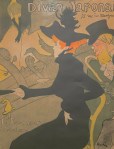
His full name is Henri Marie Raymond de Toulouse-Lautrec-Montfa, but most of us know him simply as Toulouse-Lautrec. He was an artist known for his renditions of the life he lived and observed, as well as for his diminutive stature. Due to a genetic weakness that rendered his bones brittle and vulnerable, he unfortunately broke both legs when he was a young boy. The result was a disturbing stunted appearance. Ever self-conscious about his physical imperfections, he found himself most at home with common people who had their own obvious flaws. He was especially drawn to the fascinating theatrical lifestyle of Paris in the late 19th century, even though, as his hyphenated name suggests, his family had deep aristocratic roots.

Playful self portrait

Toulouse-Lautrec became a famed artist, printmaker, master caricaturist, draughtsman and illustrator during his short life (1864 to 1901). He was also a gourmet food lover who invited his guests to dine with him via formal, artistic invitations. He even described the anticipated menu and commented that a meal was very similar to any other artistic expression—full of color, in both the foods and the guests. Meals and people were meant to be savored and shared. He often directed conversation to inspire lively exchanges.

Can-can dancers

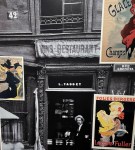
Lautrec’s many associations in the vibrant milieu of Paris’ Montmartre district allowed him simultaneous front row and backstage views of that world of wonderfully “imperfect people,” like him. He was deeply immersed in the imagery of decadence—empathizing with the every-day plight of the working-class characters swirling around him, performing in the theaters. The famous Moulin Rouge (Red Mill) drew boisterous crowds, Lautrec interpreted them to be willing subjects, part of the “show.” The frenetic energy of the “can-can” invigorated the audience. Brothels of the area added to the attitude of decadence and pleasure. Lautrec enjoyed all of it, leaving a colorful, artistic “journal” for us to understand and appreciate his contribution to a rapidly evolving world of art. Although Lautrec enjoyed success and notoriety while he lived, he was destined to succumb to his circumstances and choices. An illness abruptly ended his life when he was merely 37 years old.

Ospedale

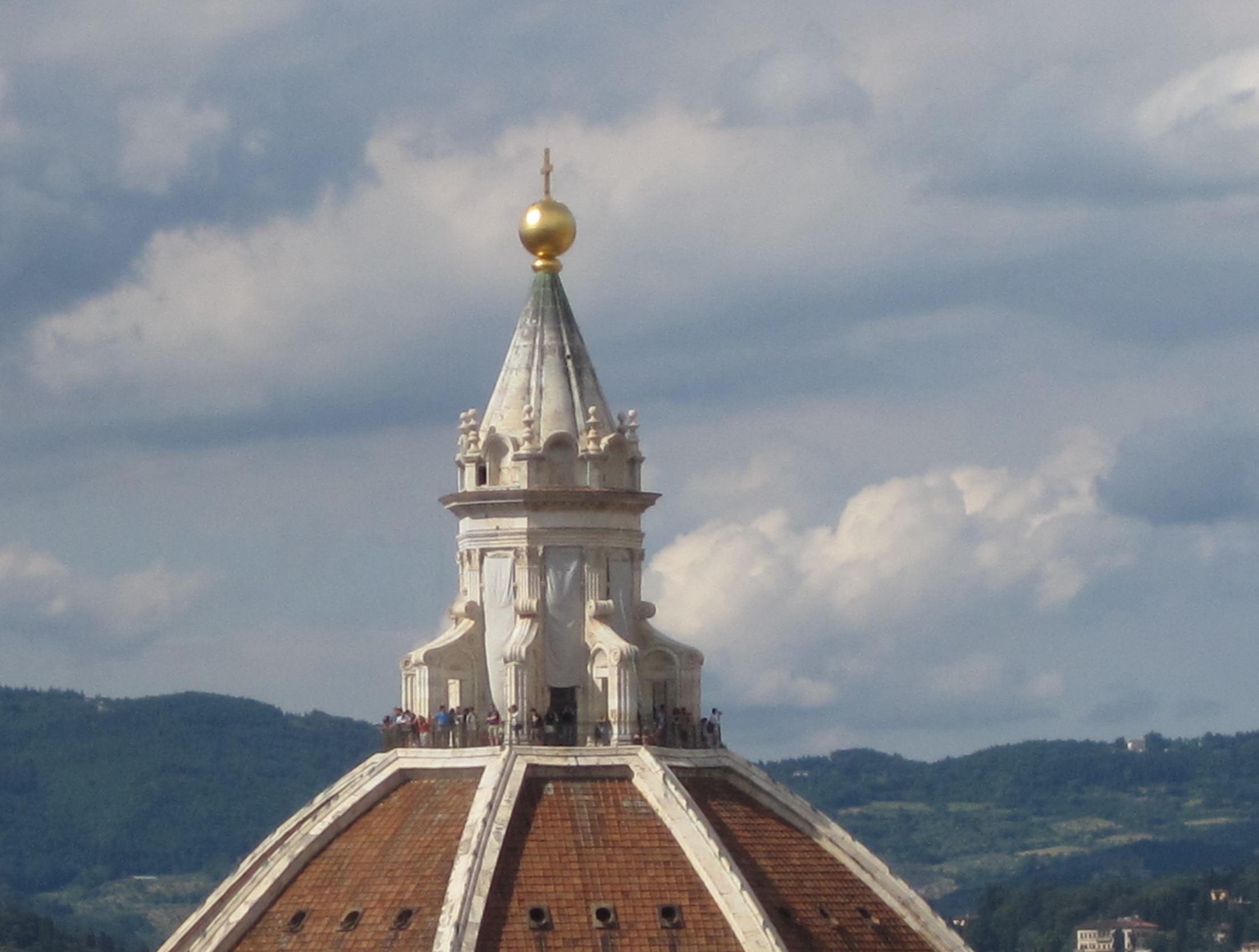
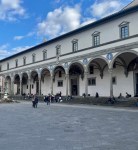
We think Toulouse-Lautrec would have found this exhibit to be the perfect expression of his artistic flair, since it was such a unique presentation. The historic corridors of the space were transformed into Parisian passageways that transported us back in time. Anchoring one side of the Piazza Santissima Annunziata, the beautiful RenaissanceOspedale degli Innocenti” was the perfect choice for the exhibition. The 1419 architectural masterpiece was conceived by Fillipo Brunelleschi as a Children’s Hospital and Orphanage to support and care for the children abandoned during the Florentine Renaissance. (Brunelleschi also designed the famous dome of Florence’s grand cathedral—il Duomo.) The contrast of the exquisite historical building with Lautrec’s avant-garde style accentuated both.

Seeing 19th century art with 21st century eyes has become “normal,” yet to have that experience in a 600 year old architectural gem seems almost miraculous.

Stock Photo

Coming back outside into the brilliant Florentine sunshine, after having spent a 90 minute immersion into the late 19th century underbelly of Parisian cabaret life was a bit shocking and overwhelming. We had just glimpsed inside the life and mind of one of the world’s most influential artists of the late 1800s.

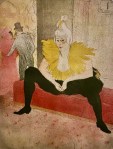
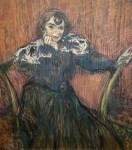
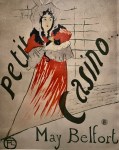
Following is a video of a “passageway experience” within the exhibit, along with a few amateur snapshots of his masterful work. Notice how accurately he captured the essence of a complex personality with a single, delicate line of the face, the audacious glint of an eye, or the subtle slant of an expressive black hat—absolutely fantastic!

Passageway Video

Cabaret Video

Gallery

On a backroad between Borgo San Lorenzo and the small town of Polcanto, in Tuscany, just north of Florence, an unknown artist has taken an open, sunny patch of meadow and created an outdoor exhibit, a seemingly permanent Art Gallery of sorts. Each unique piece is weathered and worn, allowing the natural patina to be the final artistic touch. The exhibit appears to be a dynamic, additive process, with some pieces showing more age and weathering mirroring the passage of time (perhaps years), while others seemed like more recent additions.

Two of the sculptures were quite detailed and complex, using a very modern-day material, Corten steel (a special alloy that forms a stable external layer of rust). The large heart-shaped steel plates were incised with the first stanza of the Rumi poem: Ode 314which offers commentary on our choice of living our lives “asleep” or “awakened.” He suggests that life is to be lived with intention and reflection. Without judgment, he suggests that the alternative is simply sleep. He even advises against disturbing this sleep. It’s sort of a live and let live perspective. Perhaps he’s posing the question of readiness. But clearly his choice is to take the way of intention. The first stanza is shown below.

In stark contrast, another sculptural piece is in the form of a collage. Another, is a fluttering collection of random neck ties, suspended from the branches of an oak tree. Do the ties relate to the steel heart? Or to the other pieces? Are these expressions from the same artist, or is this an open invitation to anyone who feels inspired? Either way, it is compelling enough to warrant a closer look from any passersby, either on foot or enjoying a peaceful drive on a typical Tuscan side road.

Signature?

We found what could be an artist’s name in only one location, but couldn’t verify it. So, this “pop-up gallery” appeared to be a relatively anonymous gift offered freely without recognition or reward. All we know about the prolific creator(s) is the number 46 adjacent to a gravel drive that disappears down the hillside. We wonder what lies at the end of that ordinary country drive. One day, we might take a walk down that meandering road to see what’s at the other end. If we discover more to this story we’ll definitely let you know.

Side Note: A few days before discovering this Roadside Gallery, we visited the Palazzo Strozzi exhibit in Florence, viewing the collected work of Fra Angelico—what a fascinating contrast to the Roadside Exhibit.
To read that story, go to Perspectives: Immersion Into Religion Through Art.


Gallery of Roadside Art

Broken Heart of Rusted Steel (Right Side – Poem by Rumi)

Ode 314 (First Stanza)
Those who don’t feel this Love
pulling them like a river,
those who don’t drink dawn
like a cup of spring water
or take in sunset like supper,
those who don’t want to change,  
let them sleep.  

Broken Heart of Rusted Steel (Left Side – author unknown)
The last stanza – translated from the original Italian version:

Imagine utopia
Dream of Ithaca and hope the road you choose is long
Live in the moment, the emotion, the desire
Now.


Palazzo Strozzi

We went to an exhibit at the Palazzo Strozzi in Florence, which is an incredible experience, even without an exhibition. Fortunately, the Palazzo was the site chosen for a once-in-a-lifetime collection of paintings from around the world by the Renaissance artist Beato Angelico. He was also known as Fra Angelico (Dominican Friar 1395-1455) prior to being canonized by the Catholic Church. He is now acclaimed as one of the greatest artists in all of Italy—ever! That’s a significant statement.

The exhibit was truly amazing. Ever loyal to his faith, Fra Angelico was a painter, sculptor, and creator of Illuminated Manuscripts (texts decorated for the reader’s enlightenment or illumination). He expressed his religious awe through a unique ability to render his subjects nearly translucent. The luminosity of the skin tones and his use of color is absolutely magical. The addition of gold leaf to highlight the halos of the saintly religious figures, as well as the intricate attention to detailing is quite mind boggling.

There are, of course, many fierce competitors in the Italian lineage of great artists like: Michelangelo, Botticelli, Giotto, Leonardo da Vince and Caravaggio, just to name a few. But after the exhibit, we had to agree that Fra Angelico’s art and impeccable character seemed inseparable and incomparable. If you ever get the chance to experience his artistic gifts to the world, seize the opportunity.

A few days after the Strozzi exhibit, we were in the countryside just north of Florence and happened upon a different artist’s work in a very different “Gallery.” The contrast with the Fra Angelico exhibit was remarkable and quite thought-provoking. Watch for another story coming soon—part 2 of Perspectives: Free Spirit and Free Form.

Related Music

You might also enjoy some music written about the Spiritual Quest and how the deep, personal changes find their way into Each Cell of our Being. We imagine the young Fra Angelico moving quietly through stone arches, meditating as he struggles with a longing to serve as both loyal friar to the religious order, while accomplishing his patrons’ requests for commissions. With his art, Fra Angelico elevated his patrons’ status, while making his unique way through a humble monastic life.

Each Cell

You can also find the original story and video that accompanied the song called Each Cell, from 2005, as we visited the beautiful Italian Monestery of Madonna del Sasso in Tuscany.

Credits (Each Cell Music)

From Where I Need to Be, track released June, 2005
Cheryl Martlage – Lyrics and vocals
Emerson Martlage – Music, guitar and vocals
Tom Tomasello – Producer/Arranger
Jim Bruno – Vocal producer
Mr Toad’s San Francisco – Mastering
Inspiration – The kind Monk from Madonna del Sasso

New and fast friends

“How did you two meet?”

This is an age-old question, often used to jump-start a conversation.

“We met in a class, freshman year at college.”

“We met online, in a dating website.”

“We met through mutual friends.”

“We were “fixed up” by a well-meaning friend who knew someone seemingly “perfect” for me. 

“We sat down on opposite ends of a sofa at a party and just started talking.”

“We literally bumped into one another at a concert.”

“We met at a coffee shop one morning, standing in line.”

“We both took our dogs to the park one day and they wanted to greet each other”

However the first encounter happened, it’s still something of a miracle given all the random possibilities. The fact that two people meet and really connect with one another is an amazing phenomenon. We were reminded of that recently when a friend “clicked” with someone, seemingly out-of-the-blue and they’ve been inseparable since.

Keys to a heart

He swiped right, She swiped right. They met for tea. Then they met for lunch. Then dinner. Once the “interest seed” was planted, the relationship blossomed. They discovered common values, preferences and humor. It rapidly went from being a possibility to being “something.” They’d each hoped to find a “significant other” and cautiously began an earnest search—romantic details as well as practical considerations were clearly in mind. She wanted X characteristics and he wanted Y. Each was determined to find a kindred heart to unlock.

Hidden treasure

Each was primed and felt determined to find the exact person who would match their descriptions. What were the chances? 50/50? Daunting? One in a million? Our friends took a deep dive into the proverbial haystack and re-emerged with a prize—the ever-elusive needle. Sometimes fate steps in and treasures can be found. Dreams can become reality and love grows, however unlikely it may seem.

Don’t you just love happy endings?

Music—Meant to Be

Related Music and Story—The First Time We Met

You can also find a collection of songs/stories about soulful relationships written over several decades of an evolving partnership, in the album called “Love Stories.”


Not so steady

We circled the flickering campfire as the balmy day gave way to a cool evening breeze. Quietly inspired by the massive peaks standing watch over the rugged southern California landscape, a momentary hush fell upon us. The day’s end encouraged reflection. Clearly this was a Kumbaya moment, with the expectation of guitar accompaniment. Our daughter scanned the scene and then asked her dad if he brought his guitar. “Nope,” came the matter-of-fact reply. “Why not?” she asked, disappointed. Em searched for the right words, “Because my hands aren’t as steady as they used to be. In fact, I don’t really play just for enjoyment anymore.” Iris’ tone softened, “I didn’t know that.” 

Just a dusty memory

Even without songs around the campfire, our adventure was still a delight as we made some sweet memories together. But, that lingering fireside question about the guitar triggered some reflective moments the following day on the drive home. For the past 50 years, we’ve written music and sung together, accompanied by a guitar—always a guitar. We were college-age during the folk music years and imagined that we’d just continue in that mode. The simple question during the camp-out prompted conversation that uncovered a looming realization that our musical form of self-expression is limited. At 71 years of age, we expect a dimming spotlight on our favorite pastime. Perhaps only a certain number of songs remain to be written—20, 15, single digits?

Life certainly has its earthly limits. We’re painfully aware of the ever-diminishing natural resources in the world around us. As much as we try to stay focused on abundance, there’s a subtle ever present thought that scarcity does exist. Everything eventually gives-way to the ages. So, the realization of personal limitations is not really a big surprise. 

For us, abundance and scarcity show-up together. Everything is defined by its opposite. Rather than deny the negative aspects, why not look for their value? How can we accept and even find peace with something that we interpret as negative? Acceptance, integration and transition are steps needed to embrace the whole. Maybe pesky tremors can actually point the way to new and surprising possibilities. 

Our path, for now

Our conclusion: We’ll continue walking our current path with whatever brings us joy for as long as we can. Then, one day an urge will cause us to shift. Maybe we’ll find ourselves being nudged closer to the next dream as Em’s once-steady hands lay down the guitar. That moment will be our pivot-point, when we turn from that which we love and have loved, to something new—perhaps even better. The essence of those curious inflection points in life is captured beautifully in the following poem, “Snowbanks North of the House,” by Robert Bly—from his collection called The Man In The Black Coat Turns:

The mystery of “Why?” remains, quietly hidden in the “When?” We remind each other to “just be nimble.”

Snowbanks North of the House

Those great sweeps of snow that stop suddenly six
feet from the house …
Thoughts that go so far.
The boy gets out of high school and reads no more
books;
the son stops calling home.
The mother puts down her rolling pin and makes no
more bread.
And the wife looks at her husband one night at a
party, and loves him no more.
The energy leaves the wine, and the minister falls
leaving the church.
It will not come closer
the one inside moves back, and the hands touch
nothing, and are safe.
 
The father grieves for his son, and will not leave the
room where the coffin stands.
He turns away from his wife, and she sleeps alone.
 
And the sea lifts and falls all night, the moon goes on
through the unattached heavens alone.
 
The toe of the shoe pivots
in the dust …
And the man in the black coat turns, and goes back
down the hill.
No one knows why he came, or why he turned away,
and did not climb the hill.


Credits

Title inspiration:  “Jack Be Nimble,” the 1800s rhyme from England. Good luck was ascribed to those who could jump over a candle stick without dampening the flame. May we all aspire to such daring and resolve in the face of challenge!


Related Story and Music: Turn Around

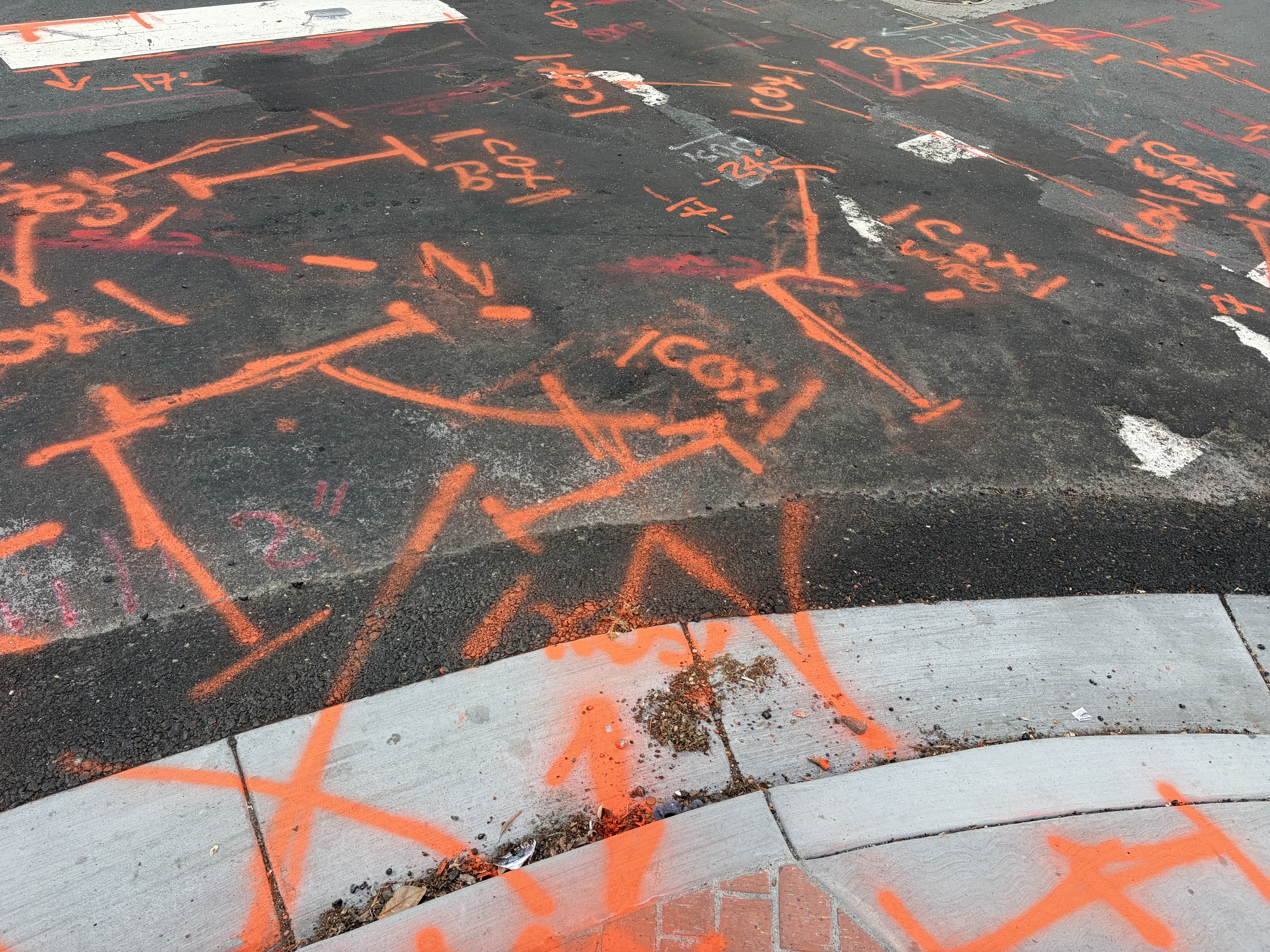
Parmesan cheese

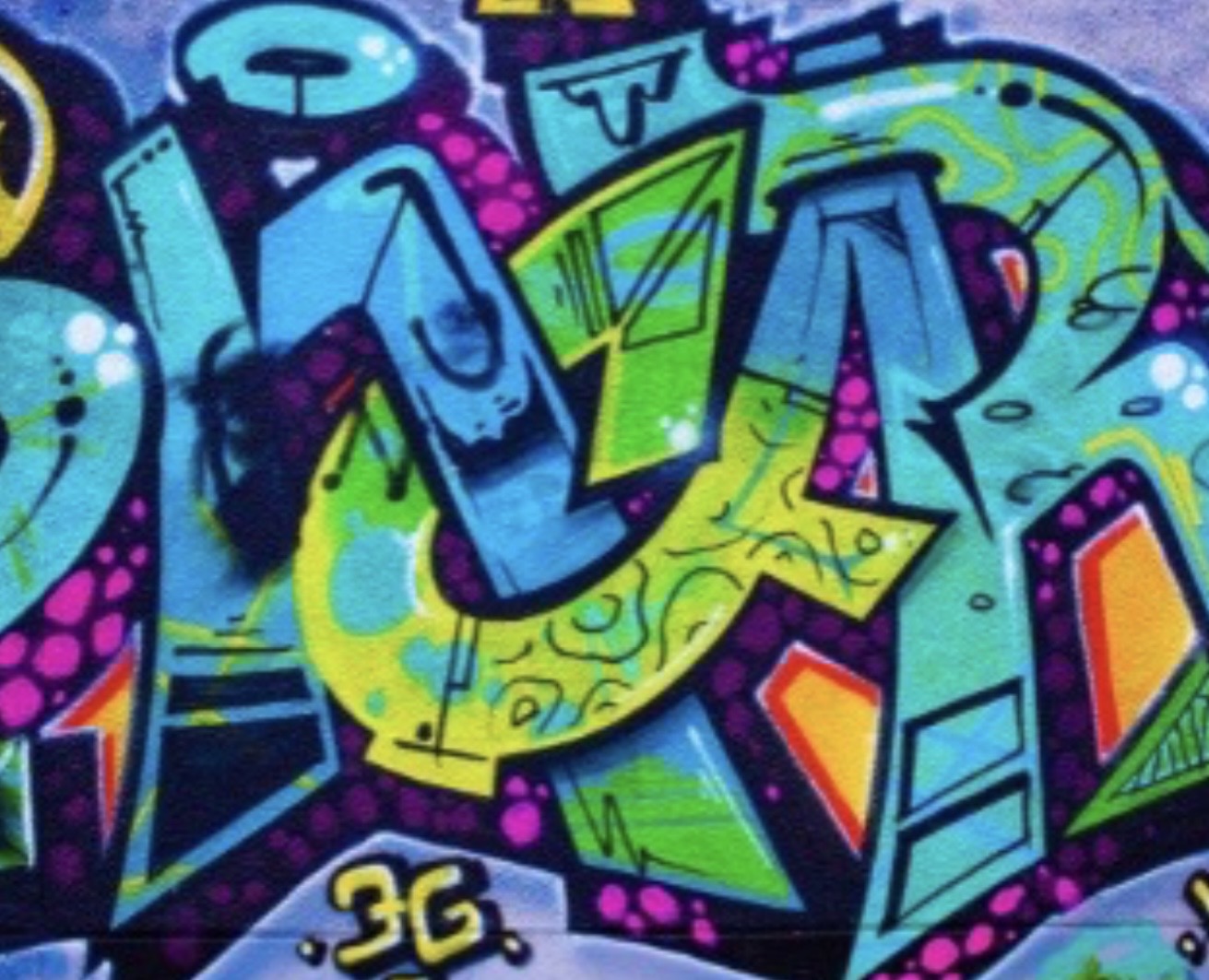
The image above is readily recognizable as street graffiti. But expression can take many forms. “What is art?” you might ask. Let’s take that “what is . . . ” question in another direction. For example, “what is food?” Or, “can food be art?” Or, “when does food take a form that lends itself to interpretation?” Are these cheesy hypothetical questions? Perhaps not. For example, what is the difference between making delicious cheese like Parmesan vs processing cheese food? Let’s explore.

The original Kraft

Turning milk into cheese requires six important steps. Signature techniques have created world-famous products that have literally become art forms, yet the basic steps remain the same. Then, in 1916,  James L. Kraft patented his curious idea. Suddenly, there was a new twist to cheesemaking—American cheese appeared on the scene. Is it a new art form or is it vandalism of an age-old beautiful product? The newly created food soon came to be known as a “modern cheese product”—cheese but not cheese.

Kraft Singles

American cheese is a mild, creamy, salty concoction that is highly processed and artificially colored to achieve a shiny orange-yellow hue. To preserve its luster there needed to be a final touch—individually wrapped in plastic. Although this last step may improve shelf-life, we suppose that its true purpose is to keep the goo from melting together forming some sort of cheesy brick—no, that’s a different product: Kraft Velveeta.

As kids we ate the lower-cost substitute on our burgers, in mac-n-cheese and even as a handy snack sometimes. As adults, however, many of us kicked the pseudo-cheese habit since we have complete control of our eating choices. But, our opinion of that cheesy product took a turn yesterday, thanks to an experience with RJ, our 5-year-old granddaughter.

Where’s the cheese?

Driving RJ home after camp, she enthusiastically called out from the back seat, “Look at the American cheese!” Our response was, “What?” She repeated her request a little louder. This prompted a second response, “What in the world are you talking about?” She said, “Look, right there (pointing somewhere to the left)—American cheese.” Slowing the car, we both peered down the street, more confused than ever.

RJ was right, as usual

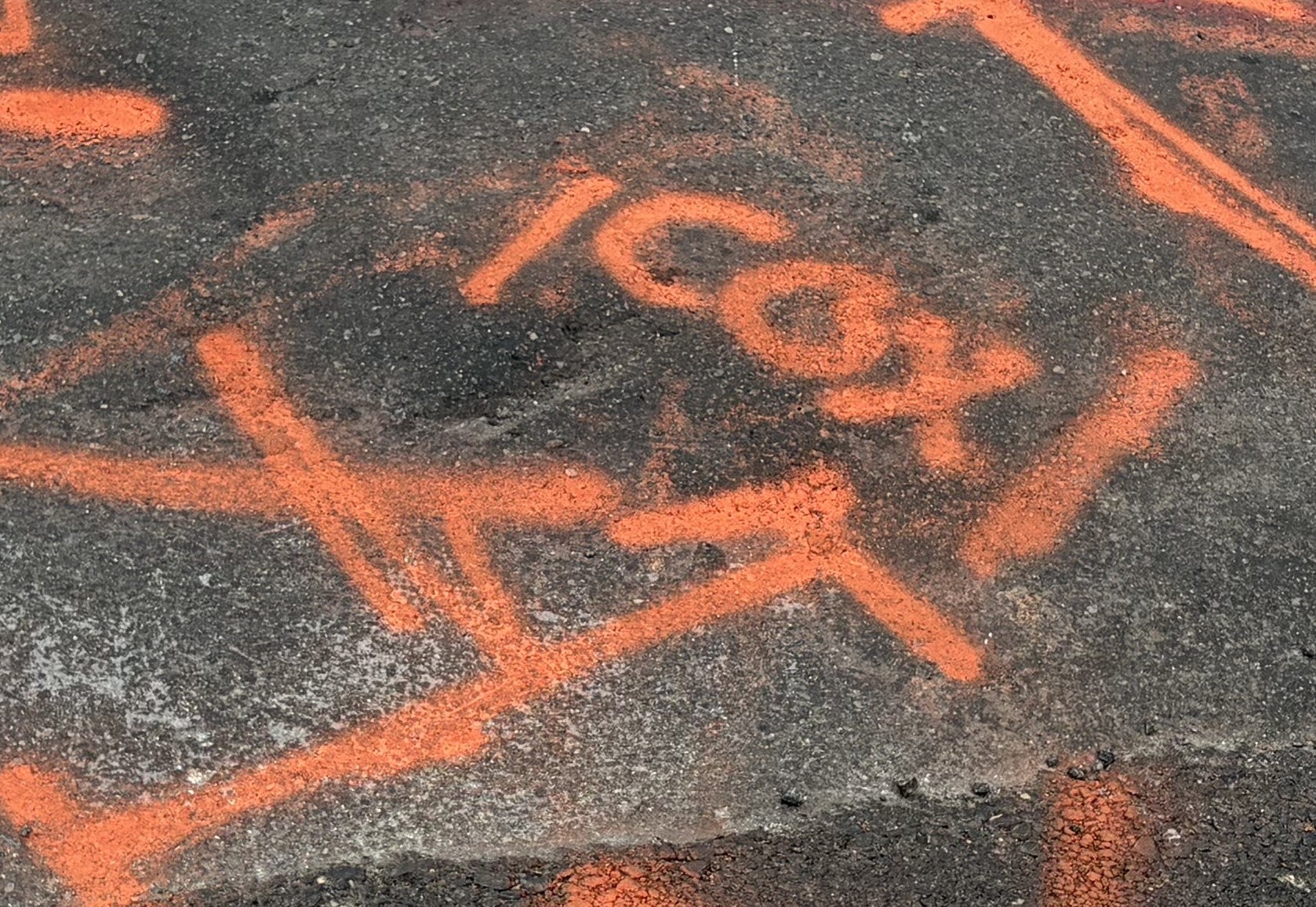
Cheryl said, “Oh, I thought you said, “American cheese.” RJ said, “I did say American cheese,” this time pointing slightly behind us since we had rolled a few feet farther. I turned the car around so we could see exactly what she was pointing toward. As we slowly approached the speed limit sign on the right, she said, “There it is!” I stopped the car and we honed our glances more intently. Sure enough, there on the black and white sign were pieces of American cheese randomly stuck over the 25 mph warning, as if tossed for point value like darts.

We immediately recognized the famed cheese product because of the unmistakable sun-faded color, as well as the iconic size of the squares. Evidently their sticky texture and low melting point made them ideal for quick and long-lasting adherence on a warm street sign.

Stop sign—gross!

It appeared that “suburban vandals” had attacked the entire area just nights before. Upon further inspection we found cheese squares on the stop sign, on top of the playground posts and other equipment in the park. They must have used an entire package of cheese-food on their rampage as they ran from sign to sign. But was it a violent outburst or an artistic expression?

Another option

When we were kids, we threw expensive eggs as a sticky statement of displeasure. We never imagined that we could have hurled processed cheesy orange squares instead. But, while the eggs were readily available and easy to snatch out of their carton, those squares known as “Singles,” had to be painstakingly unwrapped before they could be slapped into place or Frisbee-tossed at their targets. If the message of the “suburban vandals” was one of displeasure, the meticulous unveiling of each slice of cheese-food would certainly have quelled their rage. In addition, by opting for the Kraft Singles as their “paint,” the extra time involved could have slowed their escape—caught red-handed orange handed!

Whether the culprits use spray paint on walls or Kraft Singles on signs, the process is pretty much the same. Art or vandalism remains squarely in the eye of the beholder.

So now, for the final question: Did Mr. Kraft commit an act of artistic expression by reformulating real cheese or did he knowingly vandalize a public institution?  We cast our cheesy votes for the latter.

Related Photos

Following is a gallery of pictures we captured of roadside art in Florence Italy. The creativity is wonderful and the implementation must have been a real challenge. Hopefully you can still see what the original sign was signaling, yet discover an unexpected drive-by chuckle as well.


“How much is that doggie in the window
The one with the waggly tail
How much is that doggie in the window
I do hope that doggie’s for sale”

Patti Page popularized the novelty song, “(How much is) That Doggie in the Window?” in 1952, when we had each achieved the magical age of 1. The answers to those questions were clear for us even as children and became underscored as the years went on. Here are the questions, followed by our answers: “How much?”—”priceless” and “For Sale?”—”not a chance.”

Doggie in a bag

If you want to have some fun, put a dog in a carry bag (preferably a small dog) and take it everywhere you go. Doing this in Italy resulted in our pooches becoming our “doggies in the window,” attracting the attention of many passers-by. We began with our dearly departed Izzy-B. Her name was Isabel, but Italians knew her as “Ee-sah-bella.” She was a real sweetheart who graciously allowed us to carry her everywhere—the grocery store, restaurants, running errands—the destination made no difference to her. She never uttered one complaint or showed a lack of enthusiasm. She seemed to bask in the attention of all the friendly folks who greeted her.

After 2 years without a doxie, we adopted her successor Sara, pronounced “Sah-dah” in Italian. We’ve had strangers scheming to sneak her into forbidden places, while others have screamed with glee as they take her little face into both hands to smooch her loudly. Most people can’t resist feeding her tiny treats they carry in their pockets, and we’ve even had her magical power give us direction and grant special favors. Following is just one silly example of the antics:

Doggie in the window

Em needed a haircut in Italy. He’d seen a barber shop in the nearby town of Caldine, just across from the local grocery store. It looked promising, so he thought he’d give it a try. One day, while Cheryl was at the market, he walked over for a trim. As usual, Sara was tucked into her carry-bag and barely visible. The barber spun around to offer Em a seat in the barber’s chair. Suddenly, he saw Sara peeking from under Em’s arm. Barber Giovanni is an avid dog lover and was fine with Em keeping Sara on his lap during the haircut—he simply let the barber’s cape drift slowly down over both of them. Another man entered the shop and Giovanni insisted on giving him a peek at Sara. He carefully lifted the hem of the cape to present a napping doggie. Everyone laughed at the silly sight. Sara glanced up momentarily and then fell back asleep.

Sara: doggie dis-covered

After the long pandemic travel drought, we finally returned to Italy some 2 years later. Although he’d had a few haircuts stateside, Em really liked Giovanni’s technique so he returned to the shop for another trim. As Em entered the barber shop, Giovanni paused over his seated customer. Holding his comb and scissors in mid-air, he greeted Em, “Hello, hello, how’s Sara?”(“Ciao, ciao, come sta Sah-dah?”) Em quickly realized that Giovanni didn’t remember his name—just Sara’s. Em replied that she was waiting in the car with Cheryl, but offered to retrieve her. When they returned, the finished customer stood to leave and Giovanni gestured for Em to be seated. Em placed Sara on his lap just like before, anticipating the same fluttering barber’s cape. Giovanni whooshed the large white bib up and out, then waited for it to settle over them. This time, to Em and Sara’s surprise, there was a new feature in the large cape. A clear window had been sewn into the front of it, seemingly custom-made for a furry friend. Sara was completely visible, giving everyone a hearty chuckle as she peered out through the plastic window (finestra di plastica), a bit puzzled and curious. It may have taken her a few extra seconds to fall asleep. Giovanni explained that the cape-windows are intended for cell phone use. However, we agreed that a dedicated dog-window is much more important and a lot more fun!

So, we return to the original question: “How much is that doggie in the (modified cape) window?”—still “priceless.” We wouldn’t trade our little fur baby for all of Italy, or the entire world for that matter! Our theory was supported yet again: some furry fun is always guaranteed when a dog is in tow.

Related Stories and Music

Puppy Love

Simone and Alessia arrived around mezzogiorno, noon the other day for lunch with us in the country. The sun was bright and the air was clear with that unmistakable fall crispness. We hadn’t seen them for over a year, so it was especially fun for us to have that time together to sit and talk . . .

Simple Pleasures

Sometimes Mondays are all about Tuesday.

What?! Are you confused? Don’t be. Tuesday is the name of our daughter’s chocolate lab. No, Iris does not work in research at Hershey headquarters in Pennsylvania. No, she didn’t adopt her sweet puppy on a Tuesday afternoon, but we do celebrate Tuesdays as double days.

Marking the end of an Era, Mom died on January 19, 2022 at 5 in the morning.

Mom in her 90s

Her lifelong goal was to be 100 years-old, but “Big Rosie” fell a mere 73 days short of that milestone. For her valiant effort and positive attitude, the family has given her a pass and will consider the cherished goal achieved. It broke her heart when our dear dad and her loving husband Harry passed in 2001 some 21 years earlier, but ever the optimist, she never gave up. She was a strong and determined woman.

After some weeks of reflection since Mom’s passing, I’m (Em) overwhelmed with many happy memories. My mere 70 years of life as a “practicing adult” under Mom and Dad’s tutelage have given me opportunities beyond my wildest dreams—too many to recount. However, amid the flood of countless thoughts and emotions, I turn to their legacy of values passed down to me and hopefully through me to our children and subsequently, on to their children as well.

The focused team

Mom and Dad had a shared vision: Love, Faith, Family and Fun. It was just that simple. Those basic elements were apparent every single day in numerous ways. They believed that if they kept their focus on those central values, everything would be just fine—a life full of abundance, success and happiness. It turns out that they were right. It worked!

Memories are the greatest keepsakes that we all inherit, but there were also two tangible memory-pieces that I wanted from them as well. Those two items serve as visual reminders of essential gifts they gave me—those particular attributes that have carried me forward throughout my life.

Dad’s favorite drill

Dad had an old wooden drill that he sometimes used on projects at home. That simple tool now symbolizes his steadfast work ethic and natural capabilities. Constantly busy, Dad made all sorts of things that helped create our strong sense of home—a tireless lover of projects of all types and sizes. He made stained-glass, carved wooden figures and fashioned an intricate plaster replica of the Taj Mahal, loved oil painting and even played an electric guitar. In his spare time, K9VTD became his ham radio presence around the world, giving him untold hours of pleasure. Not many people knew that he built all of his radio equipment from mail-order kits with hundreds of tiny parts he staged and stored in muffin tins. He also designed and built an intricate setting for his miniature train that filled most of the garage, painstakingly making all of the mountains, streams and towns from scratch.

Taking a work break

Any projects that were needed around the house, he did himself. Fortunately, as the youngest I was always his sidekick, learning by both watching and doing. He taught me resourcefulness, commitment, perseverance, kindness, patience and problem-solving. To this day, I’m a willing volunteer if something needs a little adjustment or major repair. For me that simple wooden drill captures all of those wonderful qualities he quietly wove into the fabric of who I am. The many lessons and skills he taught me, by example, have served me well.

Mom’s tap shoes

Mom was the consummate mother who resumed tap-dancing at 50 years old—all I wanted was her patent leather tap shoes. She loved to dance as a child with her older sister, Margaret, on the Garfield Park stage. She was a natural performer and it showed-up in every aspect of her life. So when we three kids became young adults, she decided to dust-off her tap dancing skills, navigating her return to the “stage” with grace, dignity and enthusiasm. A young dance teacher gave her lessons and as her “performer” persona reappeared, I saw a new spark of life flash in her eyes. She turned the music up loud and tapped away in the garage where the concrete floor created the perfect click/slide sound. The rhythmic beats echoed as she tilted her head and gracefully extended her arms, swaying and tapping to her heart’s content.

She had no intention of performing for anyone (although she graciously accepted an occasional  request). Mom just loved the process, the practice and the promise—forever a little girl at heart. So, for me those shoes symbolize her love for life and an unfaltering zest in everything she did. Just like Dad, she modeled values, hopes and dreams for us kids. I always saw her as youthful in spirit, socially engaging with others and being as entertaining and joyful as possible. Her tap shoes sit prominently on the living room bookshelf. A quick glance there reminds me to make every minute count as I aim for those same qualities.

The Family project

Mom and Dad together also gave me a tangible model of what it looks like when committed partners create family, striving toward a vision so big it requires a team of two kindred spirits. They produced a legacy of love that continues to trickle down through each generation, soaking deeply into every cell of our being. That’s immortality!

Thanks Mom and Dad for all you gave me. May I allow your selfless gifts to flow through me over the course of my lifetime, hopefully adding my own little tweaks and twists to your beautiful story. The “Rose and Harry” playbook will live on forever.

Love, Emerson (and Cheryl)

Music – “Where Forever Waits”

Related Stories and Music

We also wrote the following stories and songs over the years as the life of Rose and Harry continued to unfold before us:  “Lucky Day,” “Yesterday Me.” “Rocking Chair,”  “Lover’s Leap” and “99 Years,” “Where Forever Waits.”

Credits: The featured image at the top of the post is Rose Louise in 1942 at the age of 20.

Our Tuscan adventure taught us that strength, power, intellect, efficiency, and capability are genderless qualities. And sometimes they are named Barbara.

Tuscan Hills

We were determined to find a one room art/music studio in Italy—full of romance, abundance, creativity, magic, wonder, and beauty. Essentially, we wanted to immerse ourselves in the powerful Feminine Energy of the Tuscan Hills—the epicenter of the legendary Italian Renaissance, that incredible experiment in humanity. Florence (Firenze) whispered to us and its rolling northern hills beckoned. Our plan seemed simple enough. We longed to “birth” something new from deep within. However, life is messy sometimes, and cross-cultural life can be downright chaotic.

Just a one room studio

We found the perfect place, unfortunately in ruins. Our friend Pietro said, “This project sounds tricky. There’re many Italian laws you MUST know and follow. You need a good attorney (avvocato). You need Barbara!” Even though her specialty is corporate law, as a favor to Pietro, Barbara agreed to assist. She was an absolute godsend and without her, our dream wouldn’t have been fulfilled. She not only speaks English, but she’s great fun and definitely knew how to work through the intricacies of the Italian bureaucracy. 

It just so happened that Barbara was pregnant with her first child when we started working together. We soon met her husband, Giacomo and our Italian adventure expanded. They were starting their family and we were beginning our dream journey at the same time. As the years passed, we came to understand the significance of Barbara and her baby.  

The site was cleared

The spring was filled with tough negotiations, promises, miscues and confusion. The developers were a challenge to work with, but Barbara remained calm and collected throughout the process. She was up against a negotiating team of 80% men, which made the game even more fun for our Wonder-Woman attorney. Single-handedly, she charged forward with confidence and negotiated everything we needed to close the deal. Although Italy remains a patriarchal society and Italian men basically still run the show, Barbara was amazing and a real powerhouse. We were certain that we had tapped directly into the fierce Tuscan heart of ancient Feminine Energy and perhaps we even caught a glimpse into the not-too-distant future. We just stood back and watched her do what seemed to come natural—the impossible.

That summer Barbara and Giacomo welcomed their first daughter. We shared their excitement as we all greeted the new addition to our Female Power Team. We felt an immediate emotional attachment to their sweet daughter. After all, she was in the room with us (in utero, of course) during all of the negotiations and debates. With our young new partner and renewed enthusiasm we turned our attention to the promise of a completed arts studio. 

The invisible stuff

The second year of the project crept by very slowly, as the construction company readied the site, cleared and prepped for building to begin. There was visible activity, but at a snail’s pace. We had devastating periods of discouragement, due to the contractors’ inaction and constant internal conflicts. To say that it was exasperating would be an understatement. But soon, we received wonderfully distracting news, Barbara and Giacomo announced that a new baby would be joining the family.

Soon, their second daughter was born and the Power Team increased. Barbara was now super-busy with her full-time job as a lawyer, our project and two little girls (bambine) in tow. Since they had become a family of four, they needed more space. So, Barbara and her husband casually added more construction and relocation projects to their to-do list—without even flinching. They were busy times indeed with many changes, EXCEPT for the studio project which continued to drag along at a the pace of an old Tuscan turtle.

Stone walls appeared

As time passed with very little progress, we were nearing the end of our patience. We even entertained the possibility of scrapping the whole project. Once again. Barbara made a quick intervention, saying  “WHEN (more accurately, WHENEVER) the project is completed, it will have definitely appreciated in value.” She emphatically said we would be FOOLISH to withdraw from the contract. Since Barbara was a force of nature to be reckoned with, we followed her advice, immersing ourselves into writing more music and stories—the perfect distraction.

What seemed to be a relatively short time later, Barbara gave birth to her third baby. Unbelievable! Another sweet little girl joined the team representing another substantial increase in Feminine Power. Compared with our slow-motion project, it was incredible to note that 3 perfect little people had been born into our tiny sphere of “family.” How could this happen? How is it possible to create three baby girls in less time than it takes to rebuild/restore an old Tuscan barn? 

Finished Studio?

We finally moved into our dream studio at the end of the four-year odyssey. Although no one could deem it “move-in ready” by any means, our studio was finally a reality—just a wee bit late (più tarde). Somehow, all the delays and consternations were curiously within the limits allowed by Italian law (don’t ask). Never-the-less, we had keys in hand. So we turned our attention to the yard, or as the Italians call it, the GARDEN. We quickly learned that trees are masculine and the fruit is feminine as we focused on “bearing fruit.” Soon enough, we had enclosed and surrounded our little stone studio with lush vegetation—a soft green embrace.  

The Studio Goddess

Our dream studio could not have happened without Barbara, Giacomo and their three sweet little girls. The overwhelming presence of Feminine Energy inspired us. And yes just like the garden, it takes both the masculine and the feminine to make it work, but we’re thinking about an ideal balance of 80/20—majority Female Power. Our little project nestled in the Tuscan hills remains as a powerful symbol for us as we remember that simple truth: “The future is female!” 

This is a true “Italian Moments” story of actual events from 1999 – 2004

Related Stories and Music


The story called “Good Girl” speaks to the essential life-giving power of feminine energy.

We wrote another short story and music a few years back about our romance with Tuscany called “Tuscan Hills.” Check it out if you’re so inclined. 

When first arriving at the site of the ruins, we were captivated and swept away in the mystery of it all. We called it “My Treasured Heart.”