These are stories about major events that take place in and around Tuscany. They can involve many people and are publicized in some way, or they can be private gatherings of only a few. In any case, they are events that have the power to shift perspectives and possibly even change lives.
The Musical Storiescan also be found in the Main Menu under “Music.” However, on occasion one may be highlighted in a post like this to align with a season, holiday, current related topic or just for fun. You can go directly to the post by clicking below—so relax, read along, listen-in. Click Here
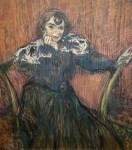
His full name is Henri Marie Raymond de Toulouse-Lautrec-Montfa, but most of us know him simply as Toulouse-Lautrec. He was an artist known for his renditions of the life he lived and observed, as well as for his diminutive stature. Due to a genetic weakness that rendered his bones brittle and vulnerable, he unfortunately broke both legs when he was a young boy. The result was a disturbing stunted appearance. Ever self-conscious about his physical imperfections, he found himself most at home with common people who had their own obvious flaws. He was especially drawn to the fascinating theatrical lifestyle of Paris in the late 19th century, even though, as his hyphenated name suggests, his family had deep aristocratic roots.
Playful self portrait
Toulouse-Lautrec became a famed artist, printmaker, master caricaturist, draughtsman and illustrator during his short life (1864 to 1901). He was also a gourmet food lover who invited his guests to dine with him via formal, artistic invitations. He even described the anticipated menu and commented that a meal was very similar to any other artistic expression—full of color, in both the foods and the guests. Meals and people were meant to be savored and shared. He often directed conversation to inspire lively exchanges.
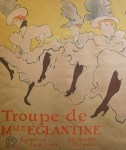
Can-can dancers
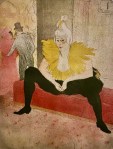
Lautrec’s many associations in the vibrant milieu of Paris’ Montmartre district allowed him simultaneous front row and backstage views of that world of wonderfully “imperfect people,” like him. He was deeply immersed in the imagery of decadence—empathizing with the every-day plight of the working-class characters swirling around him, performing in the theaters. The famous Moulin Rouge (Red Mill) drew boisterous crowds, Lautrec interpreted them to be willing subjects, part of the “show.” The frenetic energy of the “can-can” invigorated the audience. Brothels of the area added to the attitude of decadence and pleasure. Lautrec enjoyed all of it, leaving a colorful, artistic “journal” for us to understand and appreciate his contribution to a rapidly evolving world of art. Although Lautrec enjoyed success and notoriety while he lived, he was destined to succumb to his circumstances and choices. An illness abruptly ended his life when he was merely 37 years old.
Ospedale
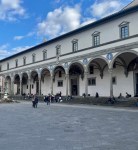
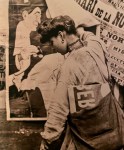
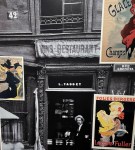
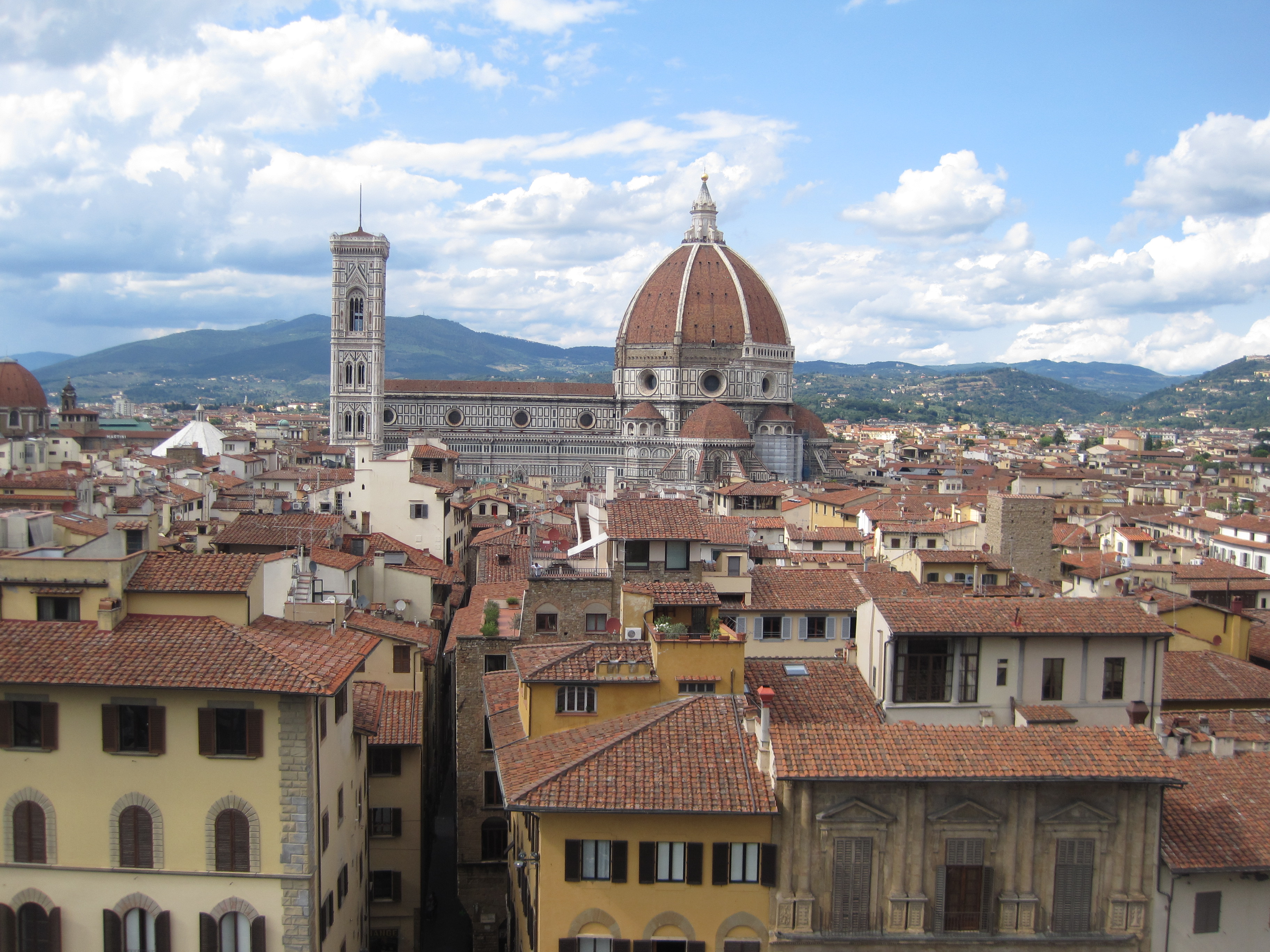
We think Toulouse-Lautrec would have found this exhibit to be the perfect expression of his artistic flair, since it was such a unique presentation. The historic corridors of the space were transformed into Parisian passageways that transported us back in time. Anchoring one side of the Piazza Santissima Annunziata, the beautiful Renaissance “Ospedale degli Innocenti” was the perfect choice for the exhibition. The 1419 architectural masterpiece was conceived by Fillipo Brunelleschi as a Children’s Hospital and Orphanage to support and care for the children abandoned during the Florentine Renaissance. (Brunelleschi also designed the famous dome of Florence’s grand cathedral—il Duomo.) The contrast of the exquisite historical building with Lautrec’s avant-garde style accentuated both.
Seeing 19th century art with 21st century eyes has become “normal,” yet to have that experience in a 600 year old architectural gem seems almost miraculous.
Stock Photo
Coming back outside into the brilliant Florentine sunshine, after having spent a 90 minute immersion into the late 19th century underbelly of Parisian cabaret life was a bit shocking and overwhelming. We had just glimpsed inside the life and mind of one of the world’s most influential artists of the late 1800s.
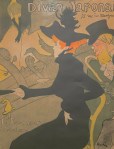
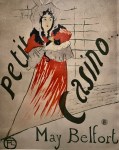
Following is a video of a “passageway experience” within the exhibit, along with a few amateur snapshots of his masterful work. Notice how accurately he captured the essence of a complex personality with a single, delicate line of the face, the audacious glint of an eye, or the subtle slant of an expressive black hat—absolutely fantastic!
More than a decade has passed. We find ourselves drawn once again to this “delusional” bedtime story, woven by the master storyteller, Laurie Anderson.
On a Saturday night 12 years ago, we witnessed a spectacular performance. At the EX3 Theater of Contemporary Arts across the Arno River in Florence Italy, Laurie Anderson mesmerized the audience with a one-woman show. An incredibly creative and energetic performing artist, singer, musician, inventor and philosopher, she did not disappoint! “Normal” instruments weren’t enough to express her dream-state thoughts and feelings. So, she invented one: an electronic violin that uses special magnetic tape on the bow instead of horsehair and space-age pick-ups that make the violin wail like a wild cat. Laurie’s philosophy is expressed weaving diverse fragments of life into a political-personal-psychological-fairy tale performance. Her style is unique and we’ve never experienced anything quite like it.
Florence/Firenze
Following is the excerpt from a local newspaper, “The Florentine,” November 2010, which described her anticipated performance: “Delusion” is an eclectic multimedia show that brings together various forms of media, including video, music, monologues, and electronic puppets and violins. The show, which made its premier last February at the Vancouver Olympic Games, is conceived as a series of short mystery plays featuring elves and golems, nuns and dead relatives, fantastical unmanned ships and dark, scary forests. Through a series of altered voices and imaginary guests, Laurie Anderson’s colourful and poetic language in “Delusion” is a reflection on words and things, life and language. “Delusion,” a story of longing, memory and identity, makes its Italian premier in Florence, as part of Ex3’s New Musical Events.
Art Like Great Wine?
She has described her art as “of the moment,” and says that it doesn’t really keep well over time. While her many videos create a chronicle of her performances throughout the years, they don’t quite tell a full story.
We arrived early, as usual, to claim third row seats. From 8:30 pm, when the doors opened, people slowly wandered into the theater. In true Italian style, they chatted in the aisles, gesturing to animate their conversations. The l’ora accademia, (the academic hour) prevailed, which is customary in Italy. Performances and lectures begin a fashionable 15 minutes later than scheduled. At 9:30 pm the theater lights flickered to indicate the beginning of the show. Some obstinate folks continued to linger, ultimately fumbling their way to their seats in the dark.
Stage screen
A full-projection screen covered the back part of the stage, while two smaller screens flanked each side, strategically angled. The 10 x 10 screen to the left resembled a giant blank hallmark card. The other flanking screen to the right appeared to be a security fence hidden beneath a white nubby tablecloth, casually thrown over it at the last minute. A keyboard stood just right of center with Laurie’s strange electronic violin hanging precariously on a side hook. Then front and center, was a loosely covered sofa of sorts—the form looked a bit like spontaneously draped Halloween wax lips. Finally, completing the scene was a small platform toward the back of the stage.
The show began a full hour before Laurie appeared onstage, with a projector casting black and white oscillating pop-art images onto the couch—like a lava lamp without the liquid. It was undulating, almost nauseating. Despite having motion sickness, we were intrigued. Laurie finally emerged from the shadows wearing an untucked crisp white shirt, an artsy tie (loosely knotted under the collar), and black knit capris. As a final touch, she wore the cutest little sparkling Mary-Jane shoes with translucent soles.
Laurie’s violin
Laurie quietly floated her way to the keyboard. With a dreamy look on her face, she began playing several repeated chords while talking—and so the narrative unfolded. For 90 minutes, she wove stories, reading from her computer screen or paper notes, delicately pressing buttons on floor controls with her feet, while frequently launching into musical tirades with her vio-lectro-lin. With the latest technology, she made the sound of her voice alternate between ethereal, almost angelic and Darth Vader-like menacing tones. Several times she sang—her voice sounding like a strange other-worldy visitation. As she spoke, sang, read or played music, there were thousands of wild images flashing onto the 3 screens: scribbles on chalkboards, rain, blowing leaves, and other random dream-scapes.
Overall, it was an amazing, wonderfully thought-provoking evening. She was flawless and nothing short of masterful. With all the diverse ideas presented, as well as the sensory bombardment, we were exhausted by the end of performance. On the drive home, we wondered, “What does it all mean?” It was a performance that needed some mulling over. The pondering continues to this day—perhaps for the rest of our lives.?
We agree that her art is especially tasty “in the moment,” but find her message actually ages quite well—timeless, like a fine wine, better with every passing year.
What an incredible bedtime story!
Credits
Feature image above: courtesy of sfjazz.org
Video courtesy of YouTube
Cover of the Florentine courtesy of theflorentine.net
Laurie’s violin photo courtesy of Derrick Belcham
Story courtesy of our long-term memories
Related Music
“Nighty-Night Rosie June”—Another kind of bedtime story designed to take you into peaceful slumber rather than calling forth your most complex nighttime illusions/delusions:
We circled the flickering campfire as the balmy day gave way to a cool evening breeze. Quietly inspired by the massive peaks standing watch over the rugged southern California landscape, a momentary hush fell upon us. The day’s end encouraged reflection. Clearly this was a Kumbaya moment, with the expectation of guitar accompaniment. Our daughter scanned the scene and then asked her dad if he brought his guitar. “Nope,” came the matter-of-fact reply. “Why not?” she asked, disappointed. Em searched for the right words, “Because my hands aren’t as steady as they used to be. In fact, I don’t really play just for enjoyment anymore.” Iris’ tone softened, “I didn’t know that.”
Just a dusty memory
Even without songs around the campfire, our adventure was still a delight as we made some sweet memories together. But, that lingering fireside question about the guitar triggered some reflective moments the following day on the drive home. For the past 50 years, we’ve written music and sung together, accompanied by a guitar—always a guitar. We were college-age during the folk music years and imagined that we’d just continue in that mode. The simple question during the camp-out prompted conversation that uncovered a looming realization that our musical form of self-expression is limited. At 71 years of age, we expect a dimming spotlight on our favorite pastime. Perhaps only a certain number of songs remain to be written—20, 15, single digits?
Life certainly has its earthly limits. We’re painfully aware of the ever-diminishing natural resources in the world around us. As much as we try to stay focused on abundance, there’s a subtle ever present thought that scarcity does exist. Everything eventually gives-way to the ages. So, the realization of personal limitations is not really a big surprise.
For us, abundance and scarcity show-up together. Everything is defined by its opposite. Rather than deny the negative aspects, why not look for their value? How can we accept and even find peace with something that we interpret as negative? Acceptance, integration and transition are steps needed to embrace the whole. Maybe pesky tremors can actually point the way to new and surprising possibilities.
Our path, for now
Our conclusion: We’ll continue walking our current path with whatever brings us joy for as long as we can. Then, one day an urge will cause us to shift. Maybe we’ll find ourselves being nudged closer to the next dream as Em’s once-steady hands lay down the guitar. That moment will be our pivot-point, when we turn from that which we love and have loved, to something new—perhaps even better. The essence of those curious inflection points in life is captured beautifully in the following poem, “Snowbanks North of the House,” by Robert Bly—from his collection called The Man In The Black Coat Turns:
The mystery of “Why?” remains, quietly hidden in the “When?” We remind each other to “just be nimble.”
Snowbanks North of the House
Those great sweeps of snow that stop suddenly six
feet from the house …
Thoughts that go so far.
The boy gets out of high school and reads no more
books;
the son stops calling home.
The mother puts down her rolling pin and makes no
more bread.
And the wife looks at her husband one night at a
party, and loves him no more.
The energy leaves the wine, and the minister falls
leaving the church.
It will not come closer
the one inside moves back, and the hands touch
nothing, and are safe.
The father grieves for his son, and will not leave the
room where the coffin stands.
He turns away from his wife, and she sleeps alone.
And the sea lifts and falls all night, the moon goes on
through the unattached heavens alone.
The toe of the shoe pivots
in the dust …
And the man in the black coat turns, and goes back
down the hill.
No one knows why he came, or why he turned away,
and did not climb the hill.
Credits
Title inspiration: “Jack Be Nimble,” the 1800s rhyme from England. Good luck was ascribed to those who could jump over a candle stick without dampening the flame. May we all aspire to such daring and resolve in the face of challenge!
The image above is readily recognizable as street graffiti. But expression can take many forms. “What is art?” you might ask. Let’s take that “what is . . . ” question in another direction. For example, “what is food?” Or, “can food be art?” Or, “when does food take a form that lends itself to interpretation?” Are these cheesy hypothetical questions? Perhaps not. For example, what is the difference between making delicious cheese like Parmesan vs processing cheese food? Let’s explore.
The original Kraft
Turning milk into cheese requires six important steps. Signature techniques have created world-famous products that have literally become art forms, yet the basic steps remain the same. Then, in 1916, James L. Kraft patented his curious idea. Suddenly, there was a new twist to cheesemaking—American cheese appeared on the scene. Is it a new art form or is it vandalism of an age-old beautiful product? The newly created food soon came to be known as a “modern cheese product”—cheese but not cheese.
Kraft Singles
American cheese is a mild, creamy, salty concoction that is highly processed and artificially colored to achieve a shiny orange-yellow hue. To preserve its luster there needed to be a final touch—individually wrapped in plastic. Although this last step may improve shelf-life, we suppose that its true purpose is to keep the goo from melting together forming some sort of cheesy brick—no, that’s a different product: KraftVelveeta.
As kids we ate the lower-cost substitute on our burgers, in mac-n-cheese and even as a handy snack sometimes. As adults, however, many of us kicked the pseudo-cheese habit since we have complete control of our eating choices. But, our opinion of that cheesy product took a turn yesterday, thanks to an experience with RJ, our 5-year-old granddaughter.
Where’s the cheese?
Driving RJ home after camp, she enthusiastically called out from the back seat, “Look at the American cheese!” Our response was, “What?” She repeated her request a little louder. This prompted a second response, “What in the world are you talking about?” She said, “Look, right there (pointing somewhere to the left)—American cheese.” Slowing the car, we both peered down the street, more confused than ever.
RJ was right, as usual
Cheryl said, “Oh, I thought you said, “American cheese.” RJ said, “I did say American cheese,” this time pointing slightly behind us since we had rolled a few feet farther. I turned the car around so we could see exactly what she was pointing toward. As we slowly approached the speed limit sign on the right, she said, “There it is!” I stopped the car and we honed our glances more intently. Sure enough, there on the black and white sign were pieces of American cheese randomly stuck over the 25 mph warning, as if tossed for point value like darts.
We immediately recognized the famed cheese product because of the unmistakable sun-faded color, as well as the iconic size of the squares. Evidently their sticky texture and low melting point made them ideal for quick and long-lasting adherence on a warm street sign.
Stop sign—gross!
It appeared that “suburban vandals” had attacked the entire area just nights before. Upon further inspection we found cheese squares on the stop sign, on top of the playground posts and other equipment in the park. They must have used an entire package of cheese-food on their rampage as they ran from sign to sign. But was it a violent outburst or an artistic expression?
Another option
When we were kids, we threw expensive eggs as a sticky statement of displeasure. We never imagined that we could have hurled processed cheesy orange squares instead. But, while the eggs were readily available and easy to snatch out of their carton, those squares known as “Singles,” had to be painstakingly unwrapped before they could be slapped into place or Frisbee-tossed at their targets. If the message of the “suburban vandals” was one of displeasure, the meticulous unveiling of each slice of cheese-food would certainly have quelled their rage. In addition, by opting for the Kraft Singles as their “paint,” the extra time involved could have slowed their escape—caught red-handed orange handed!
Whether the culprits use spray paint on walls or Kraft Singles on signs, the process is pretty much the same. Art or vandalism remains squarely in the eye of the beholder.
So now, for the final question: Did Mr. Kraft commit an act of artistic expression by reformulating real cheese or did he knowingly vandalize a public institution? We cast our cheesy votes for the latter.
Related Photos
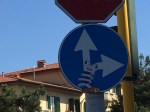
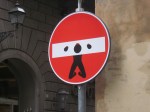
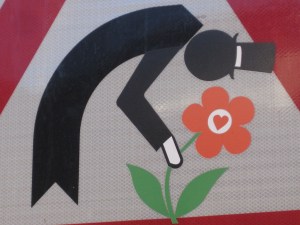
Following is a gallery of pictures we captured of roadside art in Florence Italy. The creativity is wonderful and the implementation must have been a real challenge. Hopefully you can still see what the original sign was signaling, yet discover an unexpected drive-by chuckle as well.
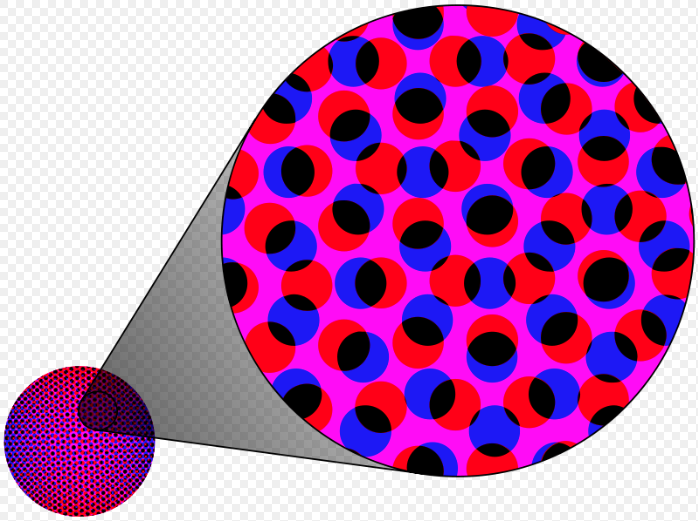
In 1879, the printer/illustrator Benjamin Henry Day invented “Ben Day dots,” those ubiquitous dots that illustrate comics. This invention opened up possibilities for creative expression. Day concluded that images don’t need to be rendered in full color, but rather, could be made from thousands of tiny equal-size dots with varied spacing, color or even overlapping to create a desired effect or illusion. Creating optical illusions is a visual magic act, based on knowledge of how the eye and brain work together to fill in the blanks. The human eye picks up patterns and the brain finishes the rest.
Day’s brilliant technique has been around for nearly 150 years, and we’ve all figured out the game. Comic strips are predictably constructed of those pervasive dots. In fact, they’re so obvious that we actually anticipate them. We all know the clever trick, yet it still works like magic—dots can be interpreted as people, animals, buildings, or anything else needed to create a comic strip story-line. It’s as though we all share a secret code, a magic key to deciphering clues.
“Ohhh…Alright” detail
The Pop Artist, Roy Fox Lichtenstein, took the visual illusions to a playful and lucrative new level in 1961. His son challenged Roy to paint as realistically as one of his favorite Disney cartoons appeared. The result was Lichtenstein’s first major piece, “Look Mickey.” He had an “Aha!” moment and the resulting style became synonymous with Lichtenstein’s name. Even his exploration into dots of monumental proportions resulted in the same success—the trick worked better than ever.
Daytime “Opaque” Graphics
The city of San Diego is preparing for the upcoming “Comic-Con International” (comic book convention). The city is abuzz with anticipation. The Marriott Hotel, hosting and supporting some of the festivities, has a sweeping curved glass facade. Right before our eyes, skilled workers applied huge comic-style graphics in the form of an opaque film to “wallpaper” the glass. The transformation was dramatic as the massive window-wall suddenly appeared solid, filled with vivid imagery. However, to our surprise, in the same evening, the huge wall of graphics seemed to have been completely removed. Or, so we thought. How was that possible, and why would they go to all of that expense for just one day? Strangely enough, the next morning the graphic once again reappeared over the entire glass facade.
Nighttime transparency
We discovered that the “skin” applied to the glass isn’t really opaque. It actually has thousands of tiny holes (reverse Ben Day dots) that allow the graphic to look monolithic and solid during the day. Likewise, when the interior lights are on in the evening, the skin seems to magically disappear. The eye/brain team do the rest—always ready to fill-in gaps with the “imagined” missing bits to make it complete. It seems that we are hard-wired with a built-in bias for completion—imagining everything just as we think it should be.
Incomplete information? No problem. We just fill in the gaps and fabricate the missing parts. That message from the brain seems to be enough for us to accept the illusion, in fact we embrace it. But just because we go along with the trick doesn’t mean that what we see is real, true or even complete. Clearly we only need enough Ben Day Dots to prompt us. We then connect, complete and accept the implied image.
It must be quite Comic-al for the Marriott folks to watch the quizzical and curiosity-filled faces passing by the facade.
Credits
Marriott Marquis Hotel, San Diego – Graphic installation
“Ahhh . . . Alright” detail – 1964 Roy Lichtenstein
“Ben Day dots” detail MoMA
“Both Sides, Now” – Joni Mitchell – courtesy of YouTube
Featured image above – Marriott graphic screen detail
Related Music
Joni Mitchell wrote about the serious implications of life’s illusions back in 1966 with her famous song “Both Sides, Now.” Over 30 years later, she recorded the song again, but from a more mature, reflective position—a different view of life’s illusions. Her poetry speaks: “I’ve looked at love from both sides now/ From give and take and still somehow/ It’s love’s illusions I recall/ I really don’t know love at all.” You can listen to her 2000 rendition below.
If you have a great life, but still sense a longing for something more; if you ever considered acting on your special dream that has waited patiently for what seems like an entire lifetime; or if you’ve ever tried to create, or even change a long-term relationship, this book may be for you.
The title is Time to Partner—Relationship Changed Through Dreams, Intuition, Trust and Courage.
The story of our journey into a new way to partner together is now available thanks to the wonderful capabilities of Apple Books. Originally, we documented our process of personal change by writing the story and then binding the books by hand—creating only 27 copies. That was over 20 years ago. However, more recently, technology has opened doors to other possibilities.
The entire book has been transformed into a digital format, exactly like the original (amazingly close, except for a few improvements). The new version includes stories, art, poetry, quotes and 14 original songs. In the book we share the details of the first four years of our partnered journey, openly disclosing the dissatisfaction, risk, creative spark, intuition, dream and magic exactly as it happened. Now, our hope of sharing it with a broader group has become a reality. As we pass the 50-year mark in our relationship, we think it is a good time to reissue the digital story.
Join us on our adventure
You can easily get the e-book with just a few clicks. However, the app is only available at the App Store for iPhone, iPad, and Apple Watch. Simply go to Apple Books and search for Time to Partner—download for free and you’re ready to start reading, viewing and listening.
Below is a short video called Accidental Authors, we made as a way to introduce the book. Check it out to discover something that might spark your own insights and inspirations. Also, feel free to share the link with any friends you think could be interested. Basically, we’re inviting you to take Time to Partner!
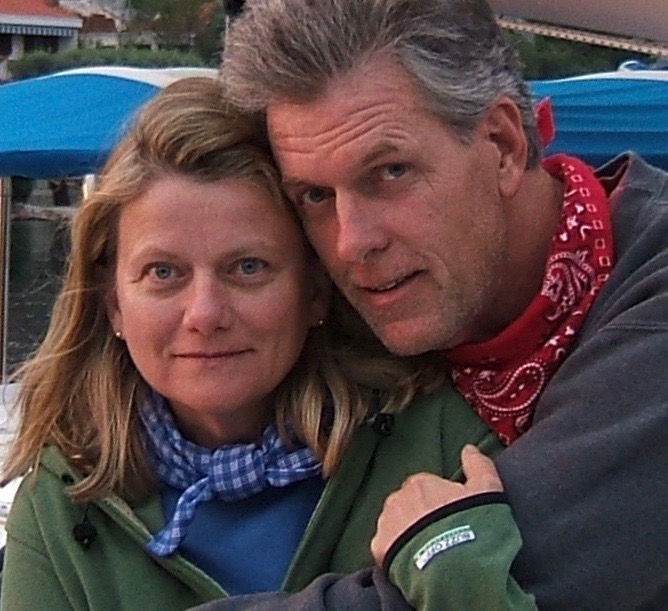
Cheryl and Emerson
Accidental Authors (Trailer)
Uncommon Promise (Music)
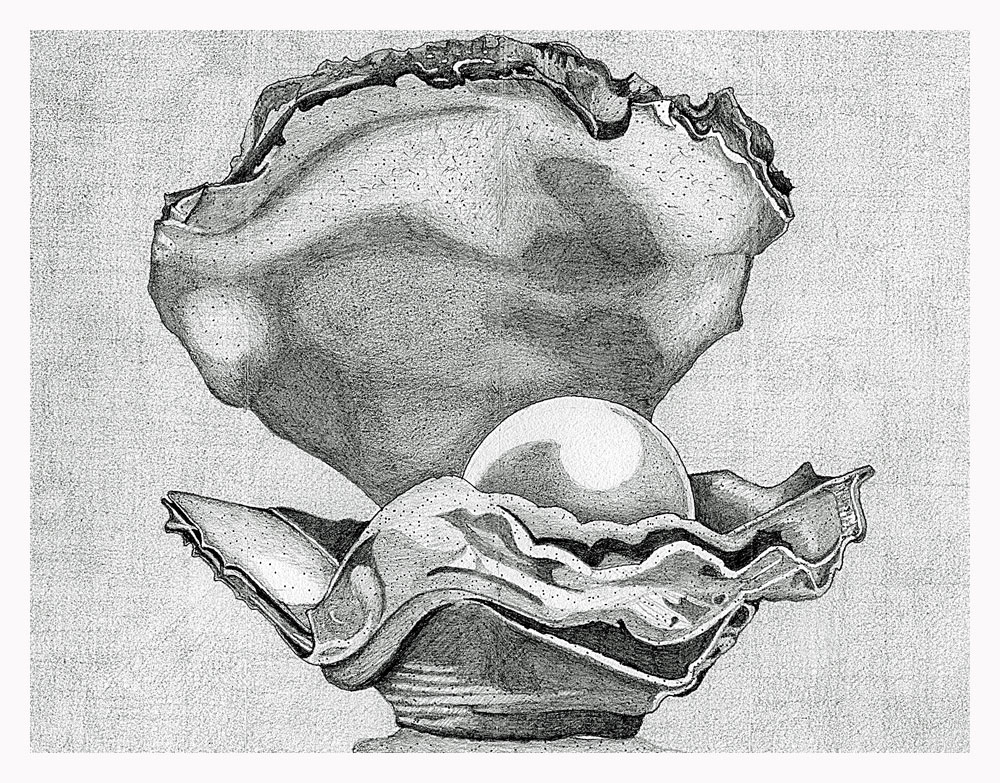
An “uncommon promise” became extremely important to us in the early years of our relationship. We knew we had to become impeccable with our word, and open and honest like never before. It was then, that we decided to use “Uncommon Promise” as the name for all of the art, music and stories we were creating together. Then, we decided to write our feelings of recommitment into a new song so we could capture that feeling and sincerity for all times. At that moment, we envisioned our journey into a stronger relationship like trying to discover an unimaginably beautiful Pearl. We haven’t yet uncovered everything we’ve been searching for, but remain committed to the quest.
We were born right smack-dab in the middle of the 20th century. Our entire lives have been full of national middle-class possibility. The Great American Dream was truly achievable, if not expected. The idea was so ingrained in us that we never thought consciously about it. Hard work was the key. As Americans, ideals were at our fingertips—the promise of equal opportunity for all, freedom, prosperity and justice. Right? We fully understood the power of that promise and took full advantage of our privilege. Privilege. Back then, we had no idea that being white had anything to do with anything. But now, we clearly understand that isn’t true. As most “people of color” would say at that time, those years may have seemed more like an American nightmare.
The President of the US at the time was Harry Truman, who signed an Executive Order calling for military integration of races in 1948. Shortly after that, in 1954 the Supreme Court declared an end to Jim Crow laws that allowed separate schools for black and white students. That seminal case, Brown v. The Board of Education, signaled the beginning of the end of state-sponsored segregation.
The famous, Ben’s Chili Bowl
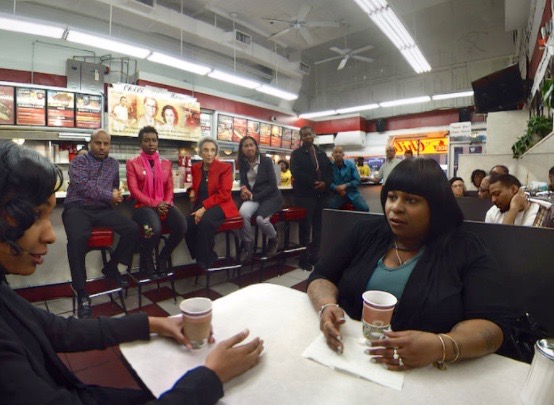
So we were born into the era of desegregation—at least that was our assumption. Seventy-three years later we caught a first-hand glimpse into a different perspective, through a virtual reality documentary film, “Traveling While Black.” The Canadian/American film was directed by Roger Ross Williams and released in 2019. It was both shocking and powerful for us. The film was set in Ben’s Chili Bowl, a well-known diner in Washington DC. Through the magic of 3-D headsets, we sat virtually with three African-American people in a 4 person booth, listening as they talked about their experience as traveling citizens. It seemed so realistic. Clearly, we had lived in different times, places and cultures. The truth is, we were fellow Americans, but to those people of color, we were inhabitants of totally different countries on opposite sides of the earth. What they said was disturbing and deeply sad.
1940 edition
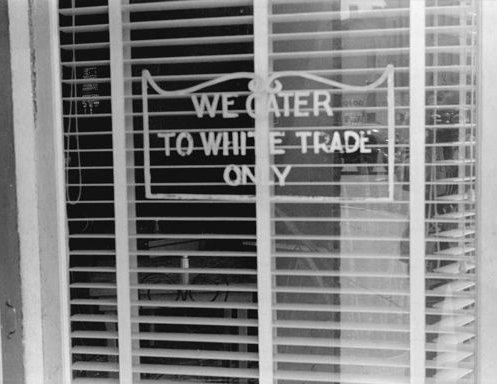
In 1936, during the era of Jim Crow laws mandating segregation, New York City mailman Victor Hugo Green wrote the “Green Book” to help those of color navigate the hostile and often dangerous American highways and byways. The automobile generally symbolized freedom and made leisure travel possible. Disturbed with “separate, but unequal” public transportation, African-Americans bought cars, if they could, to gain some degree of control over their lives. But even though they could travel, they were often met with a hostile experience—routinely denied access to motels, restrooms, diners, and all other necessities while on the road. The “Green Book” became an essential guide to avoid “discomfort, discrimination, segregation and insult,” as George Schuyler wrote in 1930. It truly was a stressful period in American history where unconscionable discrimination was openly enforced until 1965 when many of the laws were finally overturned. But that certainly wasn’t the end of disdain and discrimination.
Tamir Rice 2002 -2014
Samaria Rice, mother of Tamir Rice sat across the table from us at Ben’s Chili Bar, recounting the details of the tragic day when her son died. Everyone in the diner respectfully turned to listen—you could have heard a pin drop. On November 22, 2014 a 12-year-old African-American boy, full of promise, was killed in Cleveland, Ohio. A 26-year-old white policeman, Timothy Loehmann, was the on-duty officer that day. Rice was carrying a replica toy gun which was all the reason Officer Loehmann needed to justify shooting him. The event happened in the blink of an eye. The squad car pulled alongside Tamir, who visibly shrugged his shoulders. In the police camera footage that’s all we saw. But Loehmann responded to the shrug with gunshots. Tamir died the following day.
Samaria Rice recounting the tragic events
Our experience that afternoon in the Chili Bowl was terribly uncomfortable, as we sat there alongside the community of color. We were riveted to every word painfully shared by Samaria Rice. All eyes were focused on her and also on us, her booth-mates and the only white people in the room. They looked to us for minute indications of shock, sadness, empathy, solidarity—humanity. Whether traveling across our country or even within their own neighborhoods, people of color have told similar heart-wrenching accounts. Tamir’s story is but one sad tale of events—amid countless insults and injury over centuries. We hope that the “regulars” at Ben’s Chili Bowl who were peering into our faces, saw the empathy and humanity they longed to see.
The hope for shared humanity was the overarching message in the “movie. “The “Green Book” remains an important historic reminder that change and promise may be slow in coming, but they are always possible. We must believe that—and make it so.
Related Story and Music
“End of the Line,” written in 2005 also explores the importance of moving beyond a dualistic world-view to become more accepting of differences; less focused on division; interested in breaking down barriers—simply more inclusive. Feel free to check it out if you’re so inclined.
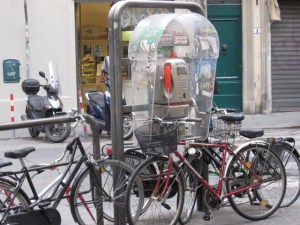
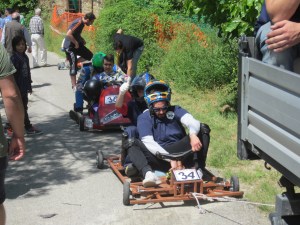
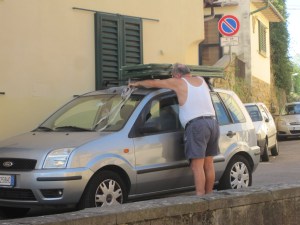
The incomparable Vespa is known around the world, but that’s just one minor detail in the vast array of Italian accomplishments. The distinctions are many, including: food, art, the Renaissance, the Roman Empire, the Vatican, incredible villas, world-class fashion, fast cars (Lamborghini, Ferrari, Maserati ), passionate lovers, espresso, the original organized crime group (a dubious distinction), beautiful cities, culture, opera, and the list goes on and on. But, in addition to the many significant accomplishments over literally millennia, there is nothing quite like the unique Italian personality—a tireless energy, generosity and unmistakable presence, easily seen in their facial expressions, synchronized with flamboyant gestures or easily heard in their voices, as they speak. Spoken words sound like poetry, lyrical and lilting. The Tuscans are particularly proud of their language, since their favorite son, Dante Aligheri, invented it. Traveling around Italy, wandering the towns and narrow back-streets, one can find all sorts of clever, cute, hilarious and sometimes downright unbelievable Italian sights. Following is a gallery of some surprising and often quirky discoveries we’ve made over several decades of living amongst the amazing Italians. They offer a seemingly endless source of inspiration, and yes, humorous, free entertainment. Their most fascinating contributions can be found scattered around in the every-day activities. You absolutely have to love the Italians!
Wow! Quite a powerful name, don’t you agree? Of course, it is fitting, since she’s such a powerful individual. She’s definitely one of a kind, and today is her 99th birthday. If you were to meet her, we think you’d like her. Oh, sure, she has a few little quirks and peccadillos, but who doesn’t? And if you were to tally the pros and cons of her life, it would be HEAVILY weighted toward the pros—thereby making her an absolute “PRO” at this messy business of living. We’re impressed with her stamina and desire to achieve the sweet age of 99, and offer our congratulations along with a few hearty compliments on her admirable style as well.
A part of the dream come true
Born on April 3, 1922, she was Alice and Will’s third child making her the lucky last one in line to get the lion’s share of abundant parental doting, with the bonus of a big brother and sister adding to the dotage. She set-out to create the best possible version of the “American Dream” (which was impressed onto everyone’s psyche at the time). Her goals were simple: deep and sustaining faith, member of a church that she cherishes, a loving husband, healthy and happy children, and of course a safe and beautiful home in the suburbs. For her, it was a fairy-tale come true, and couldn’t get any better. Even as she lived her dream, she saw her fair share of sorrow and heartache, as well. True to the custom of the day, when troubles arose, she just prayed, shed a few tears, then propped herself back up and started in again—powered by undaunted drive and persistence which was her hallmark.
Rose and sweet daughter Sue
She always told us she was going to live to be 100. We believed her, but never quite imagined what that prediction really meant or would look like. Now we’re beginning to get an inkling. So, in anticipation of her upcoming 100th year, it seems appropriate to honor her magnificent dream as she charges forward toward achieving her goal. We sang “Happy Birthday” to her this morning and she giggled. We don’t question whether or not she’ll celebrate the next one, because knowing her, she WILL, and possibly even set a new goal. She lives life with a Master Plan—the way she wants things to turn out. In fact, we always joked that she was a “dessert-first planner.” When creating a menu for a dinner party she would consistently decide on the dessert, then make the rest of the meal play toward that end. This upcoming 100th birthday is her “icing on the cake,” and you can be sure she’s in the “kitchen” making everything just right!
Cheers!
This story isn’t just about Rose, or the magical age of 100, or the goodness of a life. Rather, it’s about the power of vision, commitment and determination. Those qualities are readily available to all of us no matter what our name, stage or age. They’re free. Please join in a metaphorical toast to all of us—our hopes, dreams, visions and goals. “Here’s to the power of positive thinking!” Mom’s will-power and the way she lives her strategy is a model for us all. That unmistakable approach and style remains simple. She merely sees this complex world through “Rose-colored glasses.” Well done and happy Birthday!
We love you!
Note: The photo of the 99th birthday party was taken by T.C. Christenberry
Cheryl & Emerson
Quality time is undeniably great for relationships. We've discovered that quantity of time can provide that quality. Perhaps it takes Time to Partner.



















































 Quality time is undeniably great for relationships. We've discovered that quantity of time can provide that quality. Perhaps it takes Time to Partner.
 Uncommon promise