“I began to piece together another part of the puzzle—one that was hidden deep in our DNA. I found that we inherit the emotions and beliefs of our ancestors. Programmed into our very cells, these deeply embedded patterns influence our health, wealth, and relationships.”
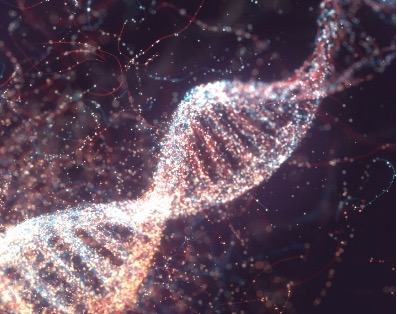
DNA

Margaret Ruby, a pioneer in the fields of personal growth and self-healing, penned those words. Her book, “The DNA of Healing”, is a captivating read. Studies have shown that our DNA isn’t as permanently fixed as previously thought. More than being just about our physical attributes, it seems there’s a DNA underbelly made up of nuances, habits, behaviors and expectations. Rather than a fixed set of genetic characteristics, our DNA is malleable and dynamic. That realization leads to three very important ideas:

  1. Your DNA has been shaped by those who came before you, imprinted with the patterns of THEIR life experiences and beliefs, whether limiting or encouraging. The results are quite often unintended genetic consequences.
  2. Those evolutionary changes, both positive and negative are automatically stamped into the fabric of YOUR life and consequently, generations to come. However, those pesky, undesirable nuances can actually be snipped out of the DNA and replaced with something that does work.
  3. In her book, Ruby describes this conceptual micro-surgery. You can easily and safely be guided through the process by a specially trained therapist to eliminate limiting patterns forever!
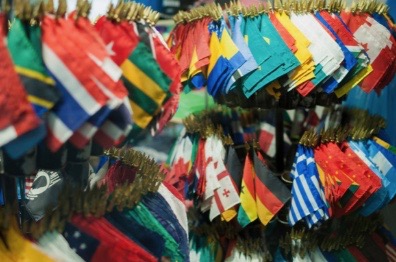
Cultural overlay

Still there exists the age-old question of Nature vs. Nurture. In addition to those interior genetic patterns, there are powerful external structures that dictate much of what gets programmed into our lives in the first place. Yes, the forces that shape us come from deep within our genetic structures, but also from outside us in the ever-present cultures we inhabit.

According to Ruby, “The Matrix is the system of beliefs that we have come to accept as truth—a giant web of ideas that we believe is right or wrong, good or bad. The Matrix is the rules we as a society have created that dictate how we should live our lives.”

The Matrix

“The Matrix Trilogy” is actually mentioned in her book as a cinematic touchstone. Within the scope of a movie we see how dangerously powerful the “made-up web of rules” is in determining what’s possible in our lives. We tend to think that our days are just being “played out” with very little thought about our own accountability. Ruby suggests we begin snipping the ties that bind us inexorably to the past—both internally and externally—that block the full expression of our better-selves. As we see the context of our lives differently and more holistically, we can begin layering change upon microscopic change, both within and without, to become free—an action that creates a positive impact for many generations to come. 

In medicine, once a genetic mutation dead-ends, that mutation no longer exists within a family. The threat of risk ceases. The same thing is true with behavioral “mutations.” For example, we often hear about the necessity of breaking the “cycle of abuse.” Future generations reap the benefit of such an intervention. So, if we see the value of that positive change, doesn’t it follow that we can permanently re-direct other behaviors and thoughts as well?

Subtle forces influence our world

The Matrix Trilogy recently birthed a sequel. The 4th Matrix movie is available to stream and watch in the comfort of our homes. Anticipating this installment, we decided to re-watch the first three movies in preparation. Cinema can often be powerful in depicting the unyielding patterns of a given culture. In this particular instance, watching the shows has strengthened our resolve to look inward at the “genetic code”—whether physical, psychological, mind or body. Simultaneously we’re examining other established programs, the “exo-genetic codes”—whether political, societal, or other subtle constructs that influence our world. Once we see those external forces at work, we can never un-see them. Then, if we decide, they CAN be changed!  

Related Stories and Music

Footsteps
Footsteps

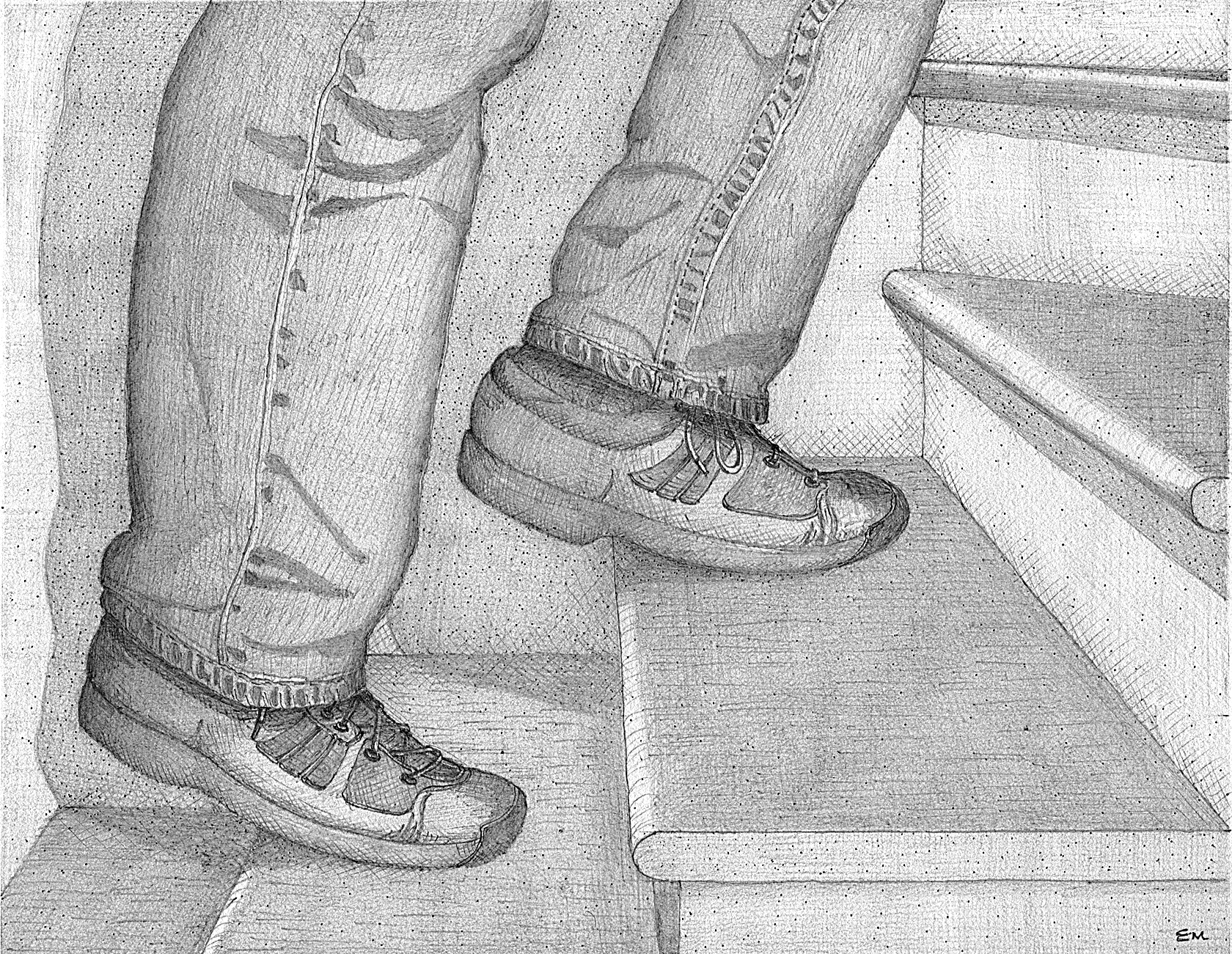
This story is about the patterns hidden deep within each of us that block us from becoming our very best Self—self-sabotage at its worst.

Green Book

Take a look at the disturbing underbelly of our American culture and the powerful limitations created in our not too distant past and unfortunately, our present day as well.

 

San Diego is a multi-cultural city.

How do we know that? Just listen! Aside from English, and of course Spanish, you’ll hear Chinese, Korean, Japanese, Cambodian, Thai, Laotian, Vietnamese and Tagalog, along with other Pacific Island and Asian languages. You’ll notice that the air is laced with spoken melodies of French, Italian, Portugese, Armenian, Persian, Greek, German, Russian, Polish, Hindi, Arabic and Hebrew. Various African words and phrases also float about, intermixed with Navajo and other Native North American languages as well. Some, of course, are more prevalent than others, but they all have their day in the California sun, and they all have their “say.”
“Soul” of the city

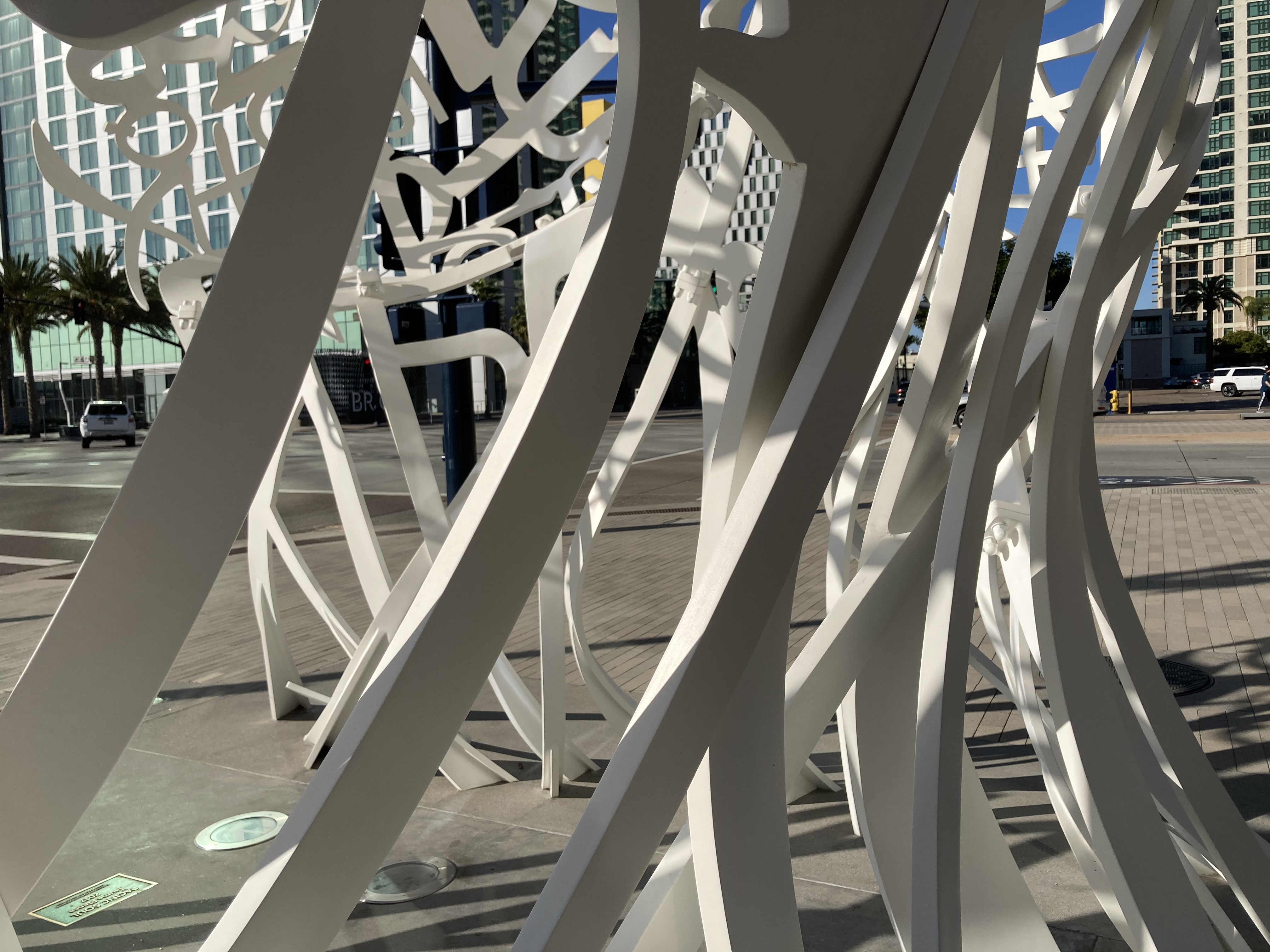
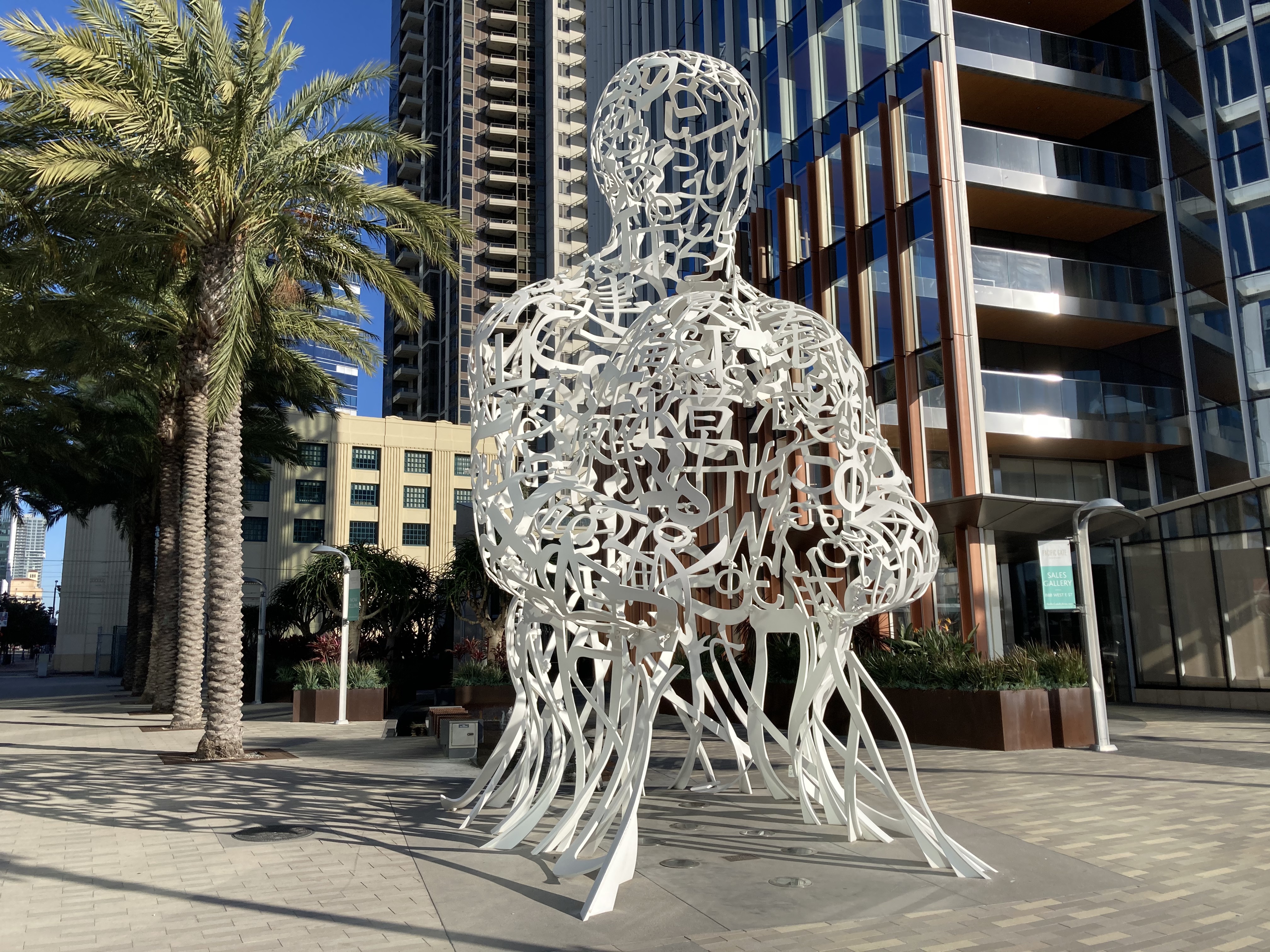
In addition to hearing the multi-cultural diversity, you can now actually see it, thanks to Jaume Plensa. He is a world-renowned sculptor from Barcelona, who has bestowed his sculpture to San Diego, representing his interpretation of the “Soul” of the city. His multi-lingual expression graces the corner of Broadway and Pacific Highway, just outside the new Pacific Gate Tower. The work is an every-day reminder of the importance of diversity in creating who we all are—together.

The human figure, titled “Pacific Soul,” appears to be crouched down, gazing west into the vastness of the Pacific Ocean. The figure seems to grasp a knee with each hand, adding tension to an otherwise serene form. About this work, Plensa explains, “The ocean is always in movement, always changing; we never know precisely where a drop of water will go, or where it has been before. It is filled with potential.” San Diego is much like its ocean companion—always changing and full of possibility. Serenity and tension co-exist.

Roots to the Pacific

As you approach the imposing figure, you may be drawn to step inside. As you stand there, an infant in a womb, centered in the body, just imagine the magnitude of the idea—The life-giving waters of the Pacific are being drawn upward through the massive “roots” of the sculpture, giving strength and sustenance to anyone inside. We have a sense of being forever linked to the sea. As a baby is linked to its mother, we too are directly connected to the vast ocean beyond.

Looking skyward

The brilliant blue sky creates stark contrast as we gaze upward. Woven together are seemingly random sweeping white ribbons and a variety of shapes. Quickly, letters come into view. These are the lines and figures that enclose us. The myriad diverse letters are gathered from many languages heard within and around the city. Words seem to float in the very air we breathe. You become, and remain an integral part of this bustling metropolis whether living here or just visiting. You can feel the ocean breeze wafting past you, like a balmy current through a screen door on a warm summer day. You are changed.

You begin to understand that your very presence makes you part of Plensa’s multi-cultural “Pacific Soul.” In addition to becoming part of the sculpture, you are also part of the unique, evolving and diverse collective we call San Diego.

Welcome!

Tuscan Hills

We wrote another story and song about diversity in 2011, called “Layers” that you might enjoy reading. Instead of the warm San Diego sun, we were inspired by the hills of Tuscany, where centuries layer upon each other to create a rich history and incredible landscape. That layering deepens individual lives, as well as the texture of generations, forming unmatched magical diversity.

There’s nothing like a Tuscan scavenger hunt. Saturday’s goal was to unearth some of the relics of the ancient Florentine past, buried in the middle of the bustling 21st century life. We headed northwest from Florence into the challenging sea of modern development. Calenzano was our destination, and we were in search of her historic heart. We found it! (more…)

We needed a replacement grill. The one we bought years ago rusted through, dropping fire out the bottom faster than we could sear our chicken breasts. That’s a dangerous scenario during the dry days of August. The trendy Big Green Egg is touted as the ultimate grilling experience, but they just don’t exist here. Perhaps something simple, like our classic Weber. But wait! Wouldn’t it be nice to replace our charcoal model with a spiffy propane powered grill? Regardless of the options, we decided that “buying local” was the thing to do. So, we went hunting. (more…)

We turned around and saw one for the first time. It was outside the coffee bar, just across the narrow street in Fiesole. On the sportello (little door) that covers the gas meter was a painting of a street scene—specifically, the very house that belonged with the painted door! It was signed FL and dated 2013. We smiled at our discovery and asked Riccardo, the owner of the bar, what that colorful picture was all about. He told us about an artist in town who likes to paint pictures on those little utility doors. Interesting! (more…)

Our friend Sergio has a dream tucked beneath layers of rust in a salvage yard.

Whenever we need an old unique piece made of iron, we go to see Sergio. He’s been tirelessly collecting everything iron for decades now, and his collection is indeed impressive. He has meticulously gathered everything from enormous iron gates from the largest villas in Tuscany, to the miscellaneous small parts to make them work. He has old statues, machines, beds and swords. You name it. He has it. (more…)

Gordon Matthew Sumner wore a favorite black and yellow striped shirt so often, that a friend finally blurted out that he looked like a bee. The nickname stuck. You might know him better today as Sting.

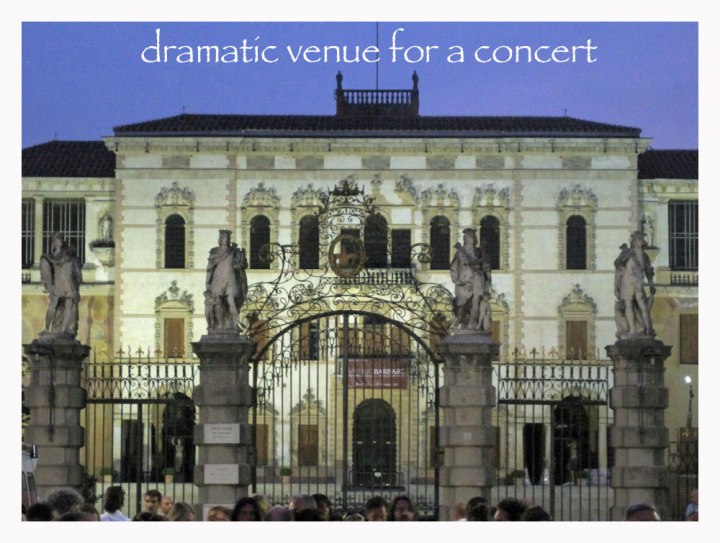
We’ve always enjoyed his particular style of jazz/rock, and have waited for him to show up in concert in our neighborhood for a decade or so. That day finally arrived, and it was well worth the wait. He played at a place called Piazzola sul Brenta, which is a town not far from Venice, Verona, and Padova. Piazzola was never a particularly noteworthy destination until they decided to develop the magnificent 16th century Villa Contarini (attributed to the famous architect Andrea Palladio,) into an unbelievable concert venue. Now, it has worldwide acclaim, and for very good reason! (more…)

A brainstorm rewarded us with a great new idea for the garden: a “perch,” built into the slope behind the house, overlooking the grape arbor, the studio, and of course the valley. Besides many heavy stones, we needed some gravel. So, we went to one of our favorite ferramente, hardware stores, Guidotti in Pontassieve. Since we hadn’t been there for a while, we were glad to see our old friends Roberto and Francesco, who had been so helpful in the past with a number of knotty problems. They informed us that the gravel yard had closed promptly at noon, so we’d have to return at 13:30. In the meantime, they suggested a rosticceria, a roasting restaurant in Sieci, where we could eat. Nice idea! (more…)

Through the olive groves, vineyards and cypress trees, there is a trail in the northern hills of Florence that leads from the Cave, old stone quarries of Maiano, to the ancient borgo, town of Settignano. On this very trail, young Michelangelo walked from his hometown to his beloved quarries to select stone for his sculptures. With every footstep the history of the world was changed, during those enchanted days of the Italian Rinascimento, Renaissance. (more…)

Duct tape. The miracle material was invented in 1942.

Since then, it has been acclaimed as the perfect solution to fix just about anything, from a broken pipe to aircraft. More recently, its versatility has brought it to the forefront of fashion design, bizarre costumes, competitions, and even sitcoms. We thought we’d seen it all with the complete construction of a sailboat and the functional cannon, but we were wrong. There was more questionable “creativity” in store for that ever-popular item we either call duct tape, or duck tape—you choose. (more…)