
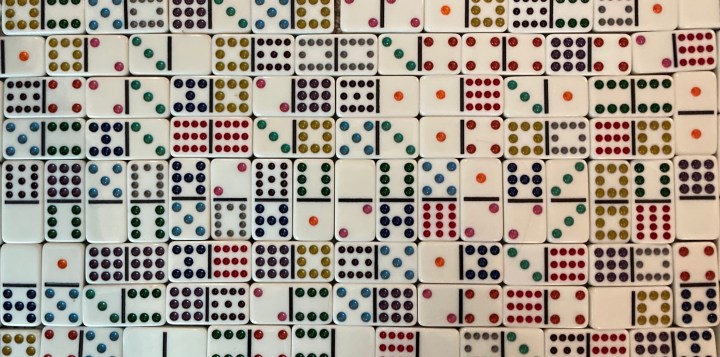
The magical, mystical allure of Dominoes.
In the hills of 12th century China, domino tiles were purportedly invented. That said, there are pesky rumors of earlier Egyptian and Arabian origins that have persisted over the centuries. Everyone wants the prestigious honor of having dreamt-up one of the greatest games ever made. But regardless of the domino creation story, it’s fair to say that Italy was the first country in Europe to adopt and adapt il gioco da tavolo, the table game, with its irresistible ivory tiles. Let’s fast-forward 500 years from the hills of China to Italy in the 1600s and take a closer look.

The game of Dominoes mysteriously appeared in 17th century Italy, in a “new and improved version.” With Italian enthusiasm behind it, the popularity of the game spread across Europe and the rest of the world like wildfire. In China, the game had been called “Pupai,” which means to “lay out.” Although somewhat descriptive, that name was less than dazzling. So, some Italian marketing minds, eager to claim the game, apparently came up with the name Domino to give it more popular appeal.

The Latin word dominus means lord or master, which makes some sense since the first player to use all of their tiles becomes the “MASTER” of the game. In addition to the Latin, the Italian word dominare means to dominate, so domino il gioco would literally translate into “I dominate the game.” Given the many power shifts throughout Italy’s history, that name would appeal to those living in the shadow of the forceful Florentine Grand Dukes de’ Medici, or the Vatican’s powerful presence in Rome. Imagine the vicarious sense of strength and authority that dominating a game would give to the powerless in those historic times. So, even though the Italians didn’t invent Dominoes, they did rename it and went on to introduce it to the rest of the world, making it a remarkable success.

There’s another theory in favor of Italian authorship of the game name. Since the Vatican has been the heart of Christianity for centuries, it makes sense that the church would influence the naming of an important cultural pastime. Dominus, meaning Lord, was a pretty direct God reference to the Church. After all, there was nothing much separating Church and State at that time—they were essentially one and the same. The Church wanted the association between the Divine and everyday, ordinary life to be emphasized.
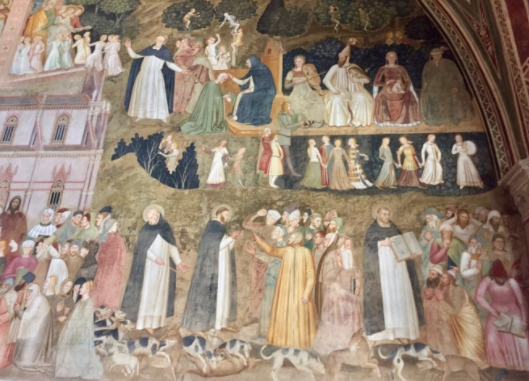
The traditional garb for priests and monks were hooded black cloaks. Curiously, early European game pieces were made with an ivory or bone front with a contrasting back made from ebony. In the mind’s eye, the subtle association was made to the black-shrouded clergy—creating Holy intrigue for the popular game, complete with spiritual force, mystery and authority. Even more specifically, one religious order followed the teachings of Saint Domenico, and so became the Dominicans, a relatively austere order (often contrasted with the Franciscans). Their order name was frequently slurred to Domini-Canes, dogs for God, due to their stringent adherence to scripture. Once again, the connection to the church is quietly reinforced.

A third theory to support the Italian influence over the game is based in Venezia, Venice. During the famous Carnivale, costumes are traditionally worn so that the wearer remains anonymous. The cloaks and masks underscore elements of adventure, intrigue, and mystery. Questionable behavior is protected and class differences dissolve for a time. The traditional black-hooded robe with a white mask called a Domino is worn by both men and women. Just by donning a small covering across the eyes, anyone could change their gender and status. The Church obviously frowned upon bad behavior, so wearing a disguise was flaunting individual action over authority. During Carnivale, anyone can be powerful and influential, or at least present the illusion!

Even though Dominoes seems old-fashioned today and most likely a relic to be discovered in Grandma’s closet, the game remains compelling. There may be a sentimental longing for the tactile, a need to physically lay the pieces on a table. There’s something soothing about the unmistakable click and clatter of the tiles. In fact, there seems to be a universal compulsion to line the tiles in vertical rows and then listen to the staccato percussion as they knock each other over. In fact, the tiles have gone from simple games at Grandma’s table to complex displays in huge auditoriums. We now have “Domino Competitions” where they’ve become strategic, artistic, mechanical creations. Just tap the first tile and watch the lines of standing pieces cascade into one another.
Then in 1954, President Eisenhower christened the “Domino Theory,” suggesting that a series of countries could also fall in rapid succession to political power. The once humble game of Dominoes has literally shown-up in so many aspects of our lives—our homes, churches, classrooms, thoughts and war rooms.
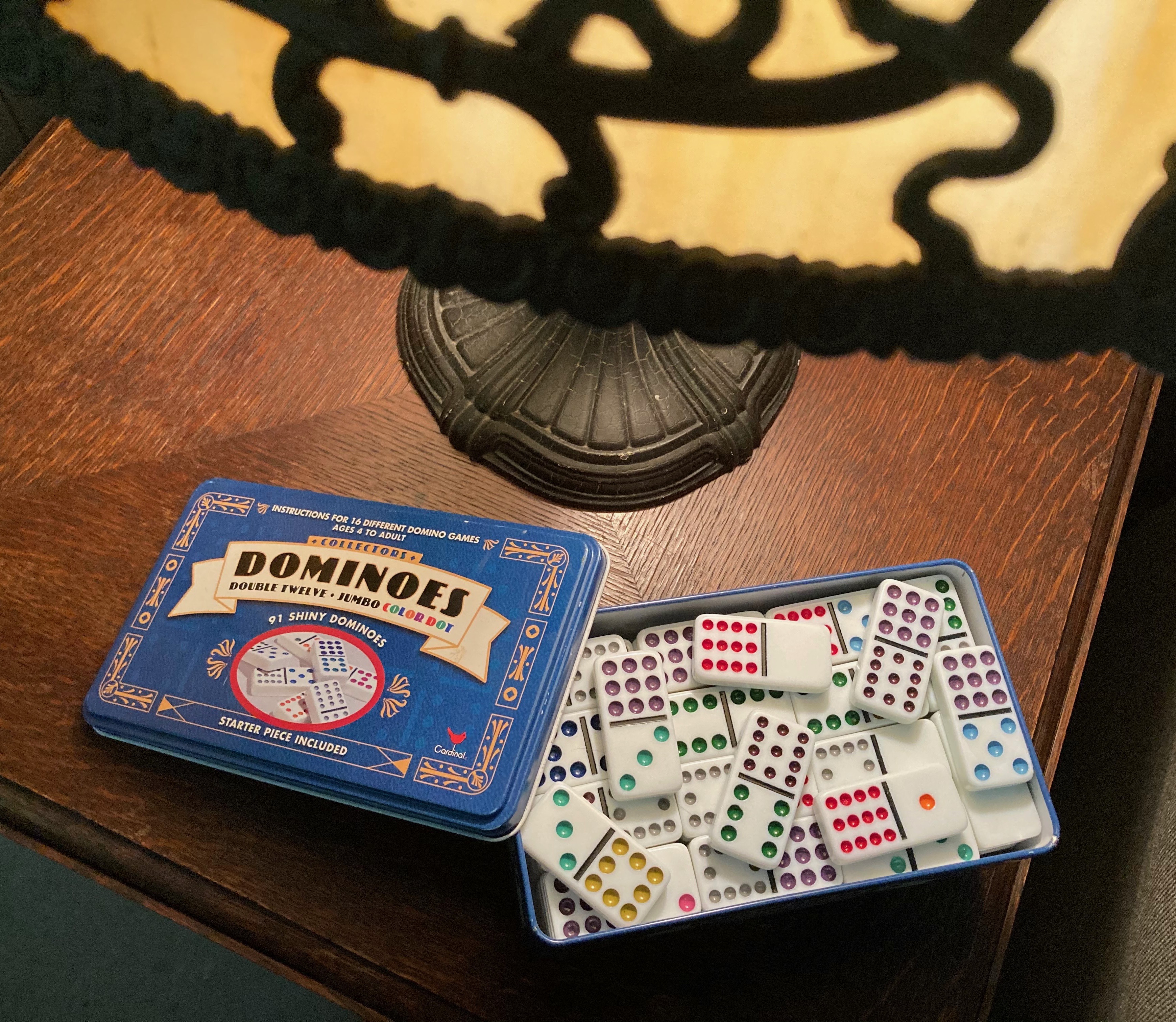
But for most of us, the notion of the original game is a sweet trip down memory lane—some family fun at Grandma’s house. Regardless of the origin or the evolution, Dominoes continues to exert a subtle presence in our lives. Even with a potent magic spell you probably couldn’t make that timeless, tried and true game disappear—hocus pocus domino-cus—It’s still there!
Watch the highly evolved version of that simple 12th century Chinese game of Dominance.






 Quality time is undeniably great for relationships. We've discovered that quantity of time can provide that quality. Perhaps it takes Time to Partner.
 Uncommon promise