The incomparable Vespa is known around the world, but that’s just one minor detail in the vast array of Italian accomplishments. The distinctions are many, including: food, art, the Renaissance, the Roman Empire, the Vatican, incredible villas, world-class fashion, fast cars (Lamborghini, Ferrari, Maserati ), passionate lovers, espresso, the original organized crime group (a dubious distinction), beautiful cities, culture, opera, and the list goes on and on. But, in addition to the many significant accomplishments over literally millennia, there is nothing quite like the unique Italian personality—a tireless energy, generosity and unmistakable presence, easily seen in their facial expressions, synchronized with flamboyant gestures or easily heard in their voices, as they speak. Spoken words sound like poetry, lyrical and lilting. The Tuscans are particularly proud of their language, since their favorite son, Dante Aligheri, invented it. Traveling around Italy, wandering the towns and narrow back-streets, one can find all sorts of clever, cute, hilarious and sometimes downright unbelievable Italian sights. Following is a gallery of some surprising and often quirky discoveries we’ve made over several decades of living amongst the amazing Italians. They offer a seemingly endless source of inspiration, and yes, humorous, free entertainment. Their most fascinating contributions can be found scattered around in the every-day activities. You absolutely have to love the Italians!
Something happened as we drove home the other day.
Skinniest two-way traffic in Borgunto
Returning from a routine visit into Fiesole to buy a few groceries and for Em to get a haircut, we rounded the curve just beyond the small town of Borgunto, home to the “bottle-neck capital” of Italy. To our surprise, an oncoming car flashed its headlights. It was broad daylight and we wondered, “What’s that about? Was that a friend and we just didn’t recognize their car?” A few more yards and we encountered another oncoming car. Again, headlights flashed. “What’s going on here? Is there something wrong with the car that we don’t know about?”
Lollipop police
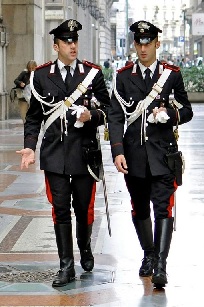
Then, just after the last turn off (and the final escape route) we saw them: Two police officers were randomly signaling cars to pull over for a routine check. Their style and flair in doing such a mundane task was actually a thing of beauty. They each wore the recognizable uniform of the Carabinieri, local police—navy blue head to toe, single-breasted blazer, silver braid around the red and white collar and cuffs, red piped epaulets on each shoulder, single red stripes down each trouser leg, a dramatic white diagonal sash, and black boots, where they store their little hand held “stop sign on a stick” when it’s not in use.
Carabinieri in action
We amuse ourselves by calling those ridiculous signaling devices “lollipops,” and so of course we refer to the historically significant and highly esteemed carabinieri as the “lollipop police.” Oh yes, they carry another piece of equipment at all times, a holstered pistol, which is classified as an “ordinary” weapon. But, as beautiful as they are, these dedicated enforcers of the law are far more than “eye candy.” They are the keepers of all things lawful.
We thought little of the request since we had all the necessary documents—title, registration, and international driver’s license—neatly stashed and at the ready in the glove box. We were seasoned “residents,” models of perfectly honest, part-time Italians with flawless organization skills. We had been randomly pulled over before, so this seemed somewhat routine. We soon discovered that it was anything but!
The rule book looked sorta like this
One officer strolled over to the driver’s side window, while the second remained at a safe distance, evidently serving as the back-up “protector” just in case a fight broke out. The impressive figure at the window examined the neatly stacked documents in his gloved hand, and then without a word, walked over to his colleague. Together they looked at our documents as we watched their faces change from “cool Italians” to “puzzled police officers.” Then, after several minutes, they opened the trunk of their subcompact Fiat squad car and took out a voluminous book of rules—so massive, it took both of them to pick it up. One started leafing through the pages and then turned it over to his partner, pointing to a particular place on the page. His forehead wrinkled and eyes squinted. We laughed to each other thinking that maybe we had a couple of trainees on our hands. In previous checks, the officers had only made cursory glances at the documents. These guys clearly didn’t know what they were doing—or so we thought.
The first officer returned to our car and said, “C’è un problema. Parlate italiano?” “There is a problem. Do you speak Italian?” Since our language skills were iffy at best, we said, “No.” We thought under-stating was the best strategy—they might feel sorry for us and let us go.
Sidelined—our little car given a “time-out”
Without hesitation, the officer continued his explanation in full speed Italian. We clearly understood key words like, invalido, invalid, and knew that we indeed had a problem. We just didn’t know exactly what, yet. Time to call our friend and attorney, Barbara. After about 5 seconds of hearing our explanation, she asked to speak to the officer. We heard her muffled chattering and his responses. We understood quasi niente, almost nothing. The officer handed the phone back and Barbara’s instructions were clear, “You have no chance. You must pay il multo, the fine, sulla strada, on the road. And you cannot drive la macchina, the car—ancora, again.
WHAT?!! A FINE?!! CAN’T DRIVE THE CAR?!! BUT, BUT . . .
A lot, but not nearly enough
Once we realized that we had to pay, we asked, “quanto costa, how much?” (Even tourists can ask “how much” but usually to buy souvenirs and pay the check after lunch). 275 euro was the reply, plus an additional 73 euro for something else, yet unidentified. Nearly 350 total! We asked, “How do we pay?” “In contante, in cash,” came the answer.
Okay. Let’s review.
We just received a fine of over 300 euro that must be paid in cash right now. We usually have about 40-50 euro between us on a good day. We can’t drive our car to the bank in Fiesole to get the money. Our international driver’s licenses were useless. The only choice was to ask the carabinieri to give us a ride to the bank.
The Shaq in action
At first they seem surprised, but soon realized that it was the only possible solution. So we climbed into the backseat of the subcompact Italian squad car, sequestered criminals locked in, and headed in the direction of town. One officer apologized for the inconvenience. “Mi dispiace per questo, I’m sorry for this.” Then, the other officer decided that small talk was in order, probably since they didn’t often have captive Americans on board. “Gioca pallacanestra?” We gave each other blank stares in disbelief. Then he offered in stilted English, “Bahs-keet-ball, you play?” Oh yeah . . . that question. Em is 6’5” and so it’s the single most-asked question of his entire life. (But in Italy, his height earns him the distinction of fetching top-shelf items at the grocery stores for many Italian mammas). The officer went on to say that it was his dream to play basketball—with Shaquille O’Neal. Shaq is 7’-1”. Mr Carabinieri is maybe 5’-8” in his police boots. The idea made us chuckle but we didn’t let on—B-ball talk or not, we were still in trouble with the law.
As luck would have it, the local carabinieri headquarters is directly across the street from Banca Toscana. Once out of the car, we headed into the bank before returning to finalize our paperwork at the carabinieri headquarters. Fiorella, our favorite teller saw the looks of dismay on our faces and immediately asked, “Che è successo, what happened?” We mumbled our new vocabulary words and phrases, “la macchina, multo, sulla strada, carabinieri.” She said, “Mamma mia! Quanto costa? She shook her head side to side, grimaced and offered her condolences with a deeply sincere sadness, “Mi dispiace. I’m sorry.”
Off to Driver’s Ed—Italian style
After making the report and paying the fine, we were told that neither of us could drive the car. The car documents showed that we had not done the mandatory revisione, which is the bi-annual service/safety check required by Italian law. Unfortunately, we didn’t know such a law existed. The car was to be parked until the revisione could be scheduled. In addition, they confiscated Em’s US driver’s license just for good measure, since we had resident status and were required by Italian law to have patenti italiani—the much dreaded Italian driver’s license. Oops!
So here’s the riddle: Can a car, that can’t be legally driven, arrive across town for a scheduled appointment, when driven by people who can’t drive because they don’t have valid driver’s licenses?
Answer: Maybe.
This is actually a trick question. The answer is always forse, maybe in Italy, no matter what the question is.
A friendly hello, or goodbye—you choose
The two pleasant carabinieri officers kindly returned us to our car with strict orders not to drive it—except for our immediate drive directly home (that favor required some significant begging and groveling). We were under strict orders that the car was to remain parked until we were legally able to drive it again. We promised to comply as we climbed out of the back seat of the tiny squad car. Then, in one wonderful moment of total linguistic confusion, rather than saying “Goodbye,” Mr Carabinieri extended his hand, and in an effort to close on a high note of international accord, simply said, in English, “HELLO.” Then he turned in confident military fashion and climbed back into his government-issued Fiat squad car. Their work was finished.
They surely went immediately to Riccardo‘s bar for coffee, but as for us, our “problemi“ problems had just begun!
This is a true “Italian Moments” story that took place in Fiesole Italy in the spring of 2005.
You might be interested in another kind of “Italian car story,” except this one has a happier ending—called “True Italians.”
The Espresso experience is so much more than drinking a cup of coffee.
Of course the ultimate espresso can only be found in Italy. Case closed. Nothing can match the total experience of the morning espresso and pasta, pastry at a real Italian neighborhood bar. What makes it unique? Hmm, well . . . we’ll take a shot at it?
Caffè Lorenzo
It all starts at Caffè Lorenzo, in the small burg of Pian di Mugnone just outside of Firenze, Florence. In this example, the barista is called Fiore, standing in position wearing a black apron, facing the beautiful stainless steel espresso machine with his back to us as we walk in. A quick glance into the gleaming mirror alerts him of our arrival. Without a second’s hesitation, he slides two more mini saucers with bitsy spoons onto the counter and continues his finely choreographed moves in pursuit of the “real” thing. No motion is wasted. Time is of the essence. He prides himself in knowing what each of the regulars drink, so the option to change-it-up is pretty much nonexistent, unless you yell it out immediately. Otherwise, it’s business as usual. Fiore and his cohort Marta both know that we’ll be choosing a delicious pastry as well, and Marta stands poised with tongs in hand to claim our prize.
Artistic expression
There’s a captivating rhythm to the process—a morning cadence of steady percussive sounds: the hissing of milk being steamed; constant clinking of the tiny ceramic cups lined up like soldiers guarding the bar; the relentless banging of the spent grounds into the handy pivoting bin; all punctuated by random plucky calls of completed orders. Ahh, music to our ears!
Okay, but what’s so compelling about such an ordinary “Italian breakfast” experience?
Well, all of the regulars are there with warm greetings as we walk in the door. Some, inevitably offer our little doxy Sara a handy, pocketed doggie treat. If no goodies are forthcoming, Marta may disappear into the kitchen to fetch Sara some pastry scraps. She’s done this so often that Sara watches for Marta to duck into the adjacent room. Intense excitement ensues.
Tasty treats from the kitchen
People are packed into the small space, so there’s a sense of being in a tiny kitchen, having to turn sideways to let someone by, or carefully reach over people to grab an extra napkin. Of course, the true Italian downs a classic espresso within two quick sips—maybe three. Any longer and you risk having your cup swiftly swooped away to make room for the next one. So, we’ve learned never to take a finger from the cup until we’ve completely finished our morning elixir. The staff watches every move to insure that each customer’s completely satisfied.
Since there aren’t any rules about lines in Italy, it’s a bit of a fast action free-for-all where courtesy counts and patience matters. Italians typically don’t queue in any obvious order, but are quite generous in letting someone ahead of them at the cashier (their least favorite part). It’s a messy process for sure, but maybe that’s what makes it so endearing.
No Roberto today
Although the coffee is delicious, it’s just one small piece of the overall experience. An image of the coffee bar is the first thing that comes to mind whenever Italy is mentioned. It’s definitely the first thought upon waking up to an Italian morning. Strangely enough, it takes us 20 minutes just to get to Caffè Lorenzo, and we’re only there about 15 minutes max. As we leave, we look for our friend Roberto, sitting on his balcony above the bar, waving friendly hellos and remarking about the day. We always leave smiling, satisfied and certain that everything is right in the world, or at least in that small part of Italy—and that’s well worth the hour spent and the 2 euro price tag.
In the hills of 12th century China, domino tiles were purportedly invented. That said, there are pesky rumors of earlier Egyptian and Arabian origins that have persisted over the centuries. Everyone wants the prestigious honor of having dreamt-up one of the greatest games ever made. But regardless of the domino creation story, it’s fair to say that Italy was the first country in Europe to adopt and adapt il gioco da tavolo, the table game, with its irresistible ivory tiles. Let’s fast-forward 500 years from the hills of China to Italy in the 1600s and take a closer look.
Early game of Dominoes
The game of Dominoes mysteriously appeared in 17th century Italy, in a “new and improved version.” With Italian enthusiasm behind it, the popularity of the game spread across Europe and the rest of the world like wildfire. In China, the game had been called “Pupai,” which means to “lay out.” Although somewhat descriptive, that name was less than dazzling. So, some Italian marketing minds, eager to claim the game, apparently came up with the name Domino to give it more popular appeal.
Palazzo Vecchio Florence- Medici Stronghold
The Latin word dominus means lord or master, which makes some sense since the first player to use all of their tiles becomes the “MASTER” of the game. In addition to the Latin, the Italian word dominare means to dominate, so domino il gioco would literally translate into “I dominate the game.” Given the many power shifts throughout Italy’s history, that name would appeal to those living in the shadow of the forceful Florentine Grand Dukes de’ Medici, or the Vatican’s powerful presence in Rome. Imagine the vicarious sense of strength and authority that dominating a game would give to the powerless in those historic times. So, even though the Italians didn’t invent Dominoes, they did rename it and went on to introduce it to the rest of the world, making it a remarkable success.
Clergy in hooded black cloaks
There’s another theory in favor of Italian authorship of the game name. Since the Vatican has been the heart of Christianity for centuries, it makes sense that the church would influence the naming of an important cultural pastime. Dominus, meaning Lord, was a pretty direct God reference to the Church. After all, there was nothing much separating Church and State at that time—they were essentially one and the same. The Church wanted the association between the Divine and everyday, ordinary life to be emphasized.
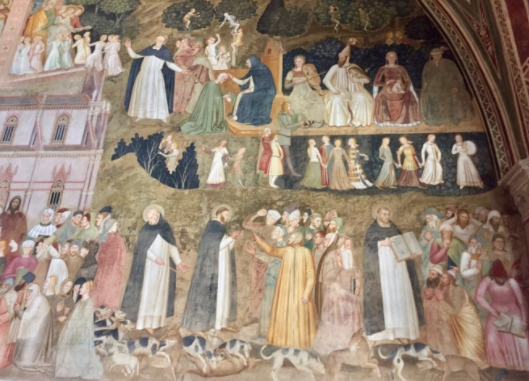
Fresco of the Dominican Order with dogs
The traditional garb for priests and monks were hooded black cloaks. Curiously, early European game pieces were made with an ivory or bone front with a contrasting back made from ebony. In the mind’s eye, the subtle association was made to the black-shrouded clergy—creating Holy intrigue for the popular game, complete with spiritual force, mystery and authority. Even more specifically, one religious order followed the teachings of Saint Domenico, and so became the Dominicans, a relatively austere order (often contrasted with the Franciscans). Their order name was frequently slurred to Domini-Canes, dogs for God, due to their stringent adherence to scripture. Once again, the connection to the church is quietly reinforced.
The Domino of Carnivale
A third theory to support the Italian influence over the game is based in Venezia, Venice. During the famous Carnivale, costumes are traditionally worn so that the wearer remains anonymous. The cloaks and masks underscore elements of adventure, intrigue, and mystery. Questionable behavior is protected and class differences dissolve for a time. The traditional black-hooded robe with a white mask called a Domino is worn by both men and women. Just by donning a small covering across the eyes, anyone could change their gender and status. The Church obviously frowned upon bad behavior, so wearing a disguise was flaunting individual action over authority. During Carnivale, anyone can be powerful and influential, or at least present the illusion!
Domino theory in action
Even though Dominoes seems old-fashioned today and most likely a relic to be discovered in Grandma’s closet, the game remains compelling. There may be a sentimental longing for the tactile, a need to physically lay the pieces on a table. There’s something soothing about the unmistakable click and clatter of the tiles. In fact, there seems to be a universal compulsion to line the tiles in vertical rows and then listen to the staccato percussion as they knock each other over. In fact, the tiles have gone from simple games at Grandma’s table to complex displays in huge auditoriums. We now have “Domino Competitions” where they’ve become strategic, artistic, mechanical creations. Just tap the first tile and watch the lines of standing pieces cascade into one another.
Then in 1954, President Eisenhower christened the “Domino Theory,” suggesting that a series of countries could also fall in rapid succession to political power. The once humble game of Dominoes has literally shown-up in so many aspects of our lives—our homes, churches, classrooms, thoughts and war rooms.
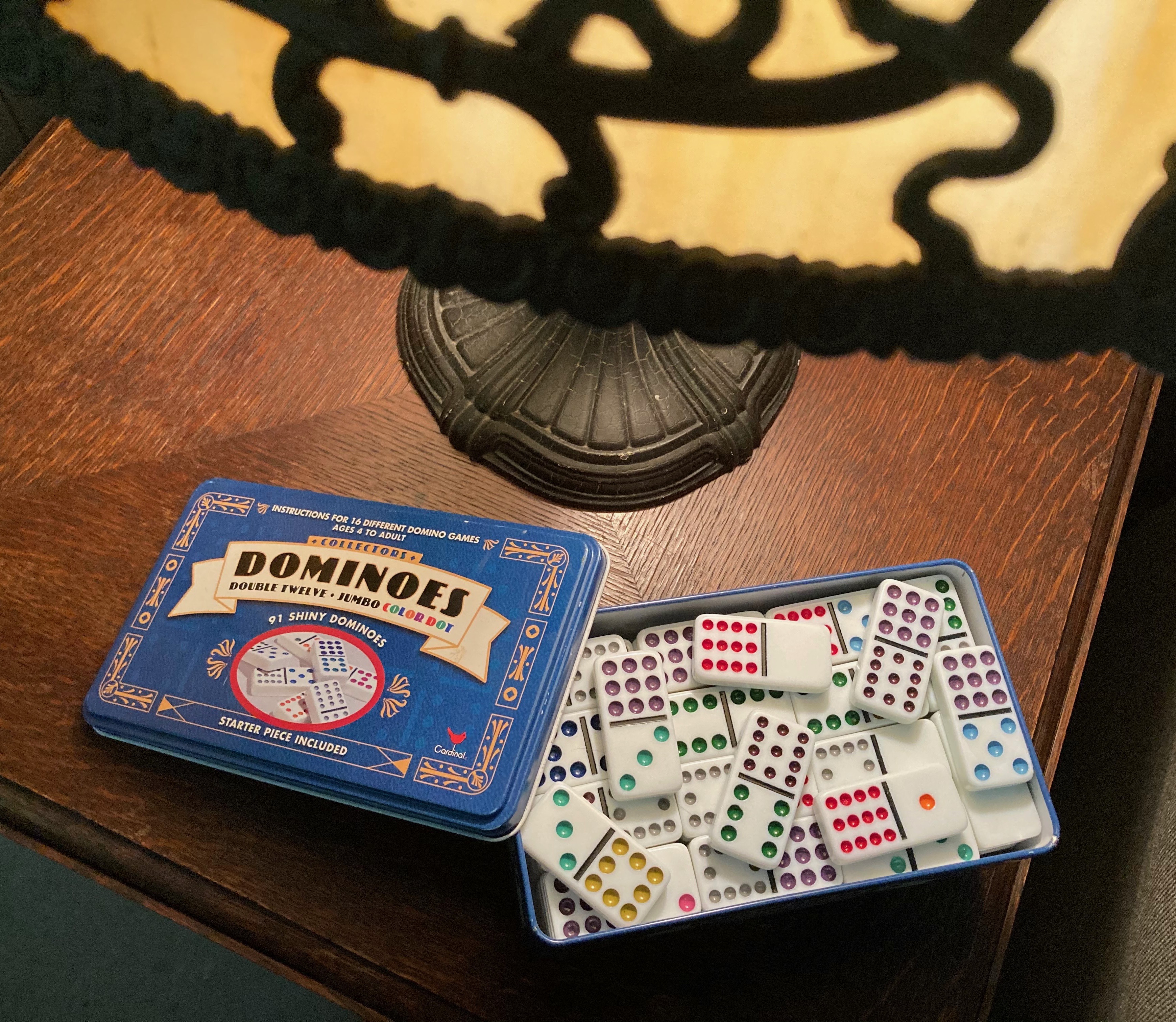
Grandma’s game table
But for most of us, the notion of the original game is a sweet trip down memory lane—some family fun at Grandma’s house. Regardless of the origin or the evolution, Dominoes continues to exert a subtle presence in our lives. Even with a potent magic spell you probably couldn’t make that timeless, tried and true game disappear—hocus pocus domino-cus—It’s still there!
Watch the highly evolved version of that simple 12th century Chinese game of Dominance.
Turning from warm summer breezes in the shade, to cool gray rains, the fall season clearly was approaching. Winter wouldn’t be far behind. We were grateful to be staying in a friend’s small unused apartment in Florence, just across the Arno river, with easy access to the historic center—a delightful 10 minute walk. We enjoyed being in a different part of the city, which offered us new perspectives.
We had stayed in many different places over the past four years as we waited for the long-delayed completion of our dream-studio in the nearby Florentine countryside. Our romantically naïve plan was to run off together to a peaceful place of inspiration, leaving behind the often hectic pace of the Silicon Valley. The Tuscan hills beckoned.
Awesome view
We imagined ourselves living a simple life in nature with just the bare necessities—a small stone one room studio with an awesome view, where we could write stories and music about our experiences of life in Italy. We planned to share heartfelt conversations in front of an old open Tuscan fireplace, while sipping on hot mugs of coffee—dreaming, creating, spinning story and song into contemporary fables and fairytales that could actually come true. Still very much in love after nearly 30 years together, we were up for the challenge of taking our relationship to the next level, whatever that meant—longing to find out.
We decided to recommit
The message of another delay in the project arrived on that cold rainy day, and we felt our patience fray. Frustrated and deeply saddened by the thought of yet another problem, we actually considered ending the project. Just call it quits. As we talked it over, though, the vision slowly started coming back into view. We reminisced about our feelings and desires that led to this dream in the first place. We found ourselves re-engaging, breathing new life into our intentions. Determination and commitment rallied to fill in the gaps as we took a collective deep breath. Looking into each other’s eyes, we both felt a shared resolve.The answer: the dream must continue. The strength of our partnership literally rose-up in that moment of need to protect our fragile possibilities.
As is our custom, we turned to music and story to sort out the jumble of feelings we were experiencing—the hope, love and appreciation for both the challenges and successes. We decided to write a song to commemorate that time as if we were getting married again—recommitting to our shared vision, the romantic dream, the Tuscan studio. It became a ceremony of rebirth (Renaissance) in our little borrowed home in Florence.
Music can sort things out
Friends Patrizia and Virginio dropped by for an unexpected visit later that evening. We had just finished a rough version of the song, and decided to sing it for them. They quietly listened as we stumbled through our newly penned lyrics and still-settling melody. Little did we know, that song would became the touchstone for this journey of the heart. We were delighted to share that moment of celebration and hope with them as they unknowingly became silent partners in our autumn sojourn.
On that cold, damp fall night, we did exactly what our hearts desired, fulfilling the essence of our shared dream. We vowed an Uncommon Promise to one another, knowing that it would be strong enough to carry us through—whatever was to come!
Music
Uncommon Promise
Here’s the song we wrote nearly 20 years ago to commemorate that turning point—commitment no matter what! It remains a touchstone for our relationship to this day. The name is as you might expect, “Uncommon Promise.”
Note: This post became the first to be recreated into a podcast with additional commentary, also under the name of “Uncommon Promise.”
We awakened to a gray morning in the valley with fog just outside the window so thick you could see it hanging in clumps. Cheryl turned to me and said “Come stai oggi, how are you today?” “Sto male, I’m not well,” I said with a coarseness in my voice. It seemed that my sinus condition had worsened in the night and had reached a critical point. It was clearly time to see Francesco, our local pharmacist to ask what could be done for my deteriorating condition.
We got dressed and went downstairs, and as was our custom, we flipped through the Italian dictionary to make sure that we had all of the words we needed to get right to the point. This was not the time for a miscue in communication—say it right one time, get some medicine, and then back home into bed.
Feeling well-prepared for the conversation, we got in the car and Cheryl drove us to Fiesole, the nearest town, where we hoped the pharmacy would be open. (We’ve been told by many shop owners that they are ALWAYS open, unless they’re not.) I went in while Cheryl kept watch with the car, illegally parked on the sidewalk out front (that’s normal). To my dismay, Francesco wasn’t there, so I had to explain my condition to his associate/pharmacist I had never met before. I thought to myself, “My issue is rather simple and fairly common so it shouldn’t be a problem. With the season change, surely sinus issues are addressed daily.” With my confidence bolstered due to my self-reflection and recent language lesson brush-up, I approached the counter and stated my case.
I’ll never forget that look!
I began my explanation in a pleading tone befitting someone not feeling well. I said, “Ho un’infezione nel mio seno, I have an infection in my sinus.” The look on the pharmacist’s face was one of both astonishment and confusion. Checking for possible errors, she cautiously asked me to repeat what I had just said, and so I did—loudly enough for everyone in line behind me to hear. Each customer was suddenly privy to the personal details of my condition. She then repeated it back to me in a questioning tone, with a look of slight repulsion, she began pointing to her breasts. What!?
My new best friends
Now, this really confused me. At first, as unbelievable as it may seem, I thought there was an outside chance she was hitting on me. Was I delirious? Surely, in my condition and in the pharmacy line, of all places, this could not be the case. Then, I instinctively pointed to my nose. Instantly, she was relieved about our seemingly imminent first date, and the issue was suddenly clear. There was an almost audible sigh of empathetic relief from all of my “new best friends” behind me. I turned and offered a polite but awkward smile. The pharmacist quickly prepared an appropriate remedy. I paid her in cash and gathered my gift-wrapped package (they sometimes do that in Italy and we have no idea why). I shuffled through the door, breathing a raspy sigh of relief, eager to begin administering my new healing regimen.
As I approached the car, I detected a look of embarrassed concern on Cheryl’s face. It seems that while I was inside the pharmacy, she was outside, practicing her reading skills. There was a large poster in the pharmacy window advertising a cream for breast enhancement. She had spotted the word seno and knew that I was inside at that very moment, asking for some help with my seno. Oooff. She knew before I did that, depending on the context, the word seno is unfortunately, the same for both sinus and breast (why oh why would they do that?) With 450,000 words in the Italian language, evidently, they couldn’t add one more? There was no pronunciation or even a grammar error this time.
I’ll do better next time
To this day, I’m still troubled by the incident. Why, given the two choices between sinus or breast, did the pharmacist think that I meant breast, since I am obviously a man (I did though, at that very moment question my own masculinity). I was sure she could clearly hear the raspy nasal tone in my voice that indicated a sinus infection. Maybe I inadvertently placed my hand on my chest, giving her the wrong visual cue.
So from that day forward, I’m extremely careful to make sure my hand gestures are tightly synchronized with what I’m trying to say—just like any good Italian!
It seemed a simple question to pose to two Italian realtors. Without hesitation, we soon had our answer. Almost immediately, the more practical of the pair, feisty Inga, was at the wheel, maneuvering the old Jeep up the steep terrain. Her associate, Patrizia, stunning in her white knit pants, fitted shirt and lavender scarf tied stylishly around her neck, occupied the passenger seat. As Inga revved the engine, Patrizia turned and smiled to reassure us that everything was okay. Just after we turned off of the main road, Inga immediately threw her weight into the steering wheel for a hard left and we continued a steep climb. At one point, all we could see from the back seat was the dashboard because the road was completely obscured from view, due to the car’s jolting angle. Surely, this must be the top, we thought, as the grade leveled out a bit and we found ourselves passing between enormous old vacant barns and rusted grain silos. Inga paused only momentarily, grimacing as she engaged a stubborn gear, and then yanked the steering wheel hard to the right and away we went into the woods.
Arriving at the top of the mountain
Surprised, we continued to climb up the rugged hillside, while brush and bushes slapped both sides of the Jeep. Rocks rolled down the hill while others crunched beneath the spinning tires as we bounced and jostled our way along. We felt a sudden lurch as Inga course-corrected after unintentionally dropping a tire into a huge pothole. Patrizia turned once again to offer another cautious, silent smile of reassurance. A few hundred feet further, Inga nearly stood on the brake pedal, bringing the Jeep to an abrupt halt. She then shifted into neutral, cut the engine and with a sharp tug, engaged the parking brake. Just for good measure, she kicked a large stone under the back tire. Then, as if nothing unusual had just happened, Patrizia smoothed her hair, adjusted her scarf and said with a gracious smile, “Andiamo, let’s go!” We emerged from the back seat to see—ruins. Not just something in need of minor repairs—serious ruins.
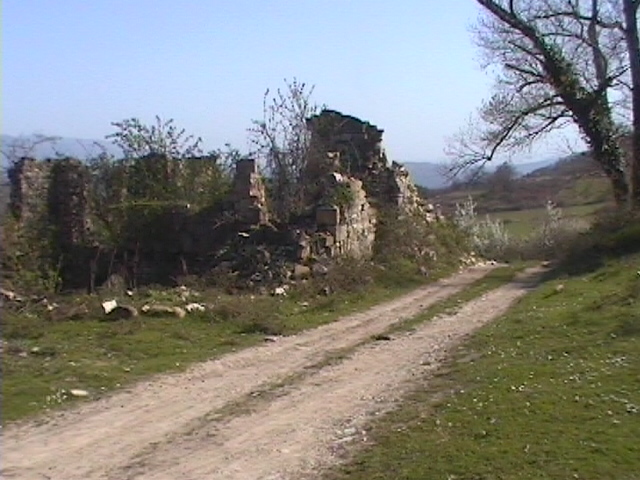
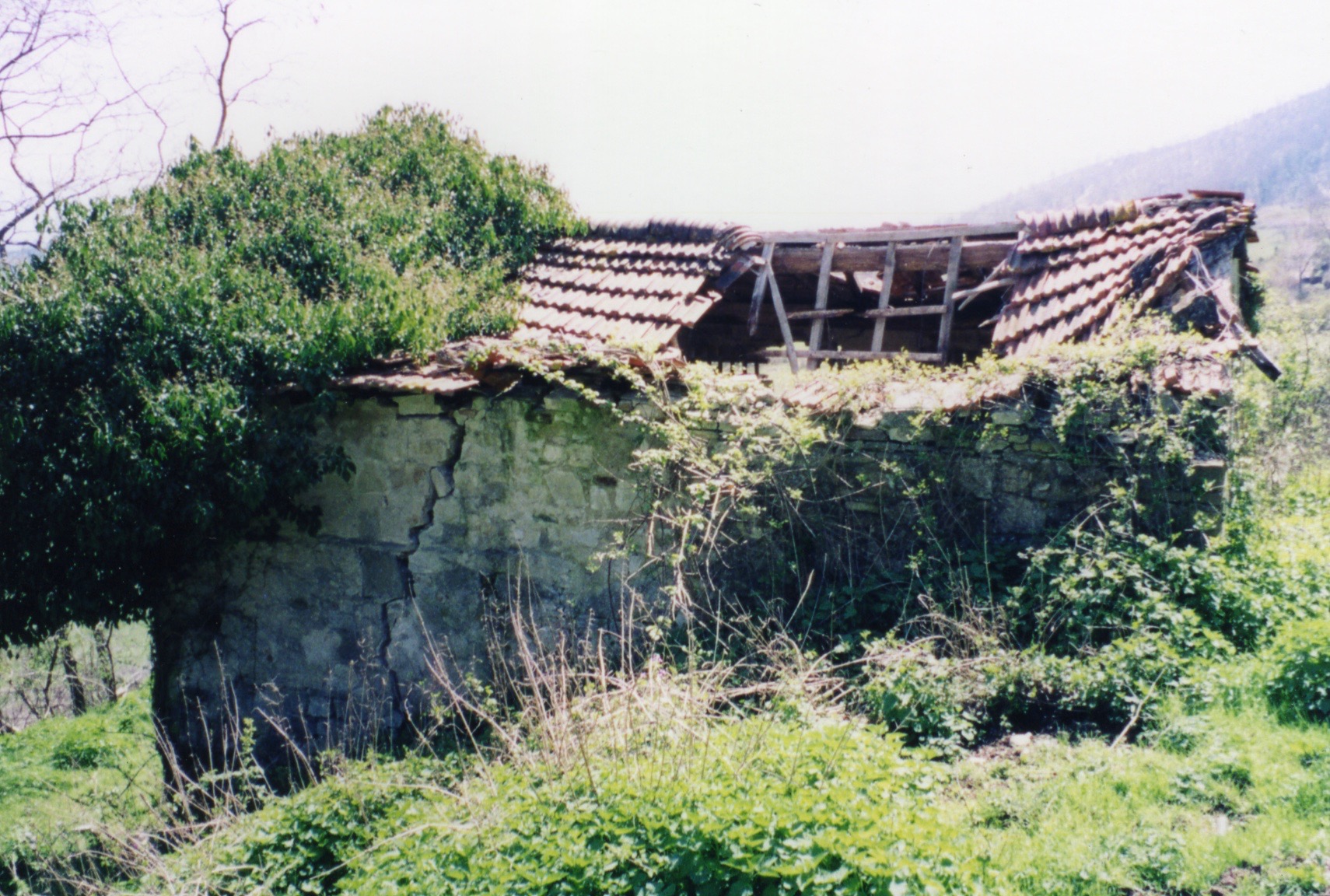
Barn In Ruins
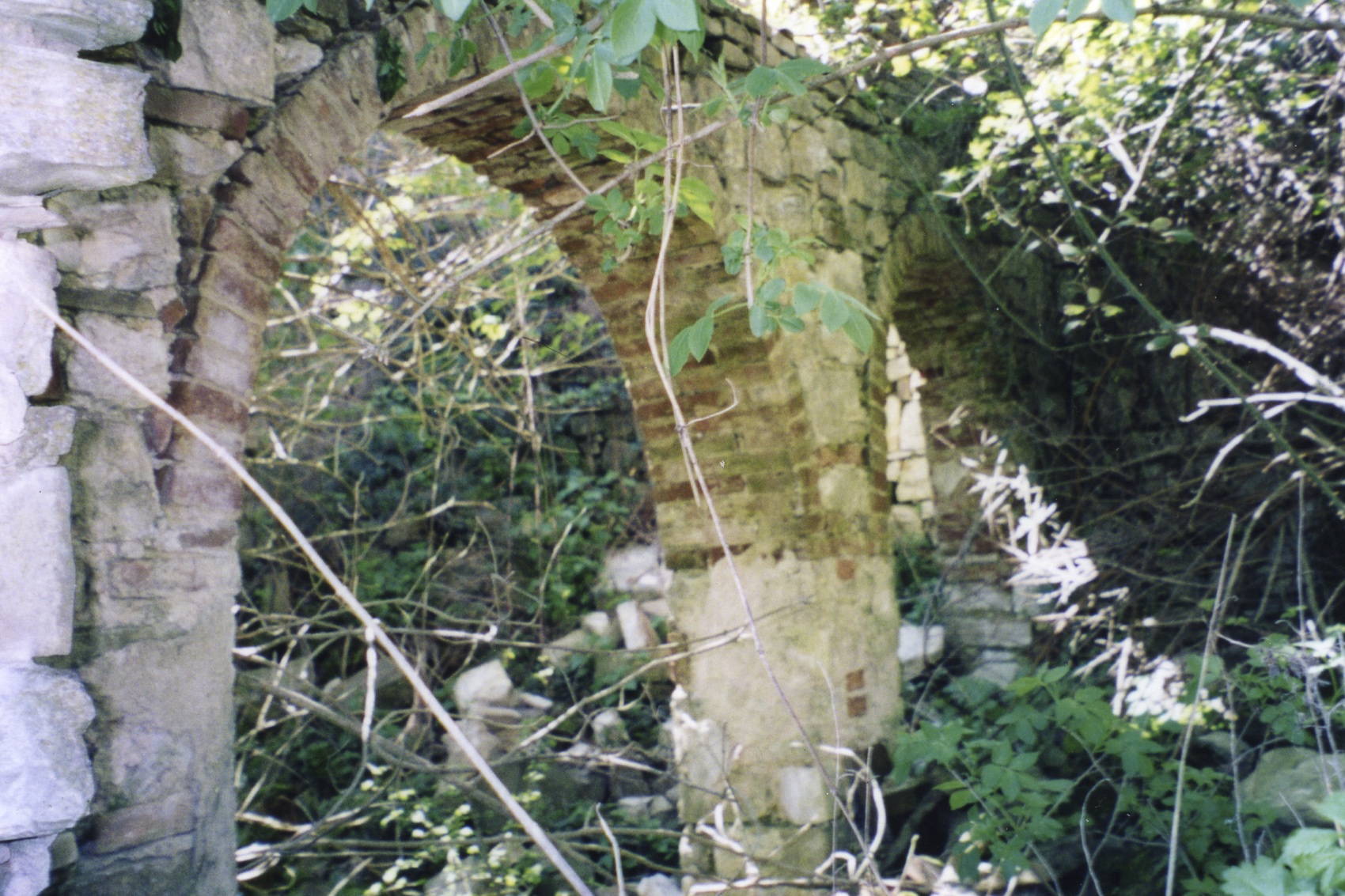
There before us, was a small, dilapidated stucco, terra cotta and stone barn with a 3-inch wide diagonal crack running from its fallen roof all the way down past its dirt floor. Near the barn stood the delicately balanced pile of stones that once was a large house, as evidenced by a remaining 10-foot high stone corner. One wall jutted up far enough to hold the crumbling remnants of an old stone window opening. The adjacent partial wall was completely overgrown with vines that had surely gone unchecked for at least—umm, maybe 100 years?
Overtaken by nature
We couldn’t get too close to either the barn or the house, since brambles and weeds obstructed our way, completely covering the lower levels. We heard wild pheasants warbling in the nearby meadow. With nimble fingers, we lifted thorny branches and edged cautiously closer, remembering that in the undisturbed, abandoned parts of Tuscany there were undoubtedly many resident snakes—vipers among them—watching our every move.
The peaceful valley
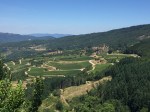
We stood, staring from the ruins into the magnificent valley below. From that perch at the top of the hill we saw multiple layers of blue and gray mountains receding into the distance. Directly below us was an intimate valley in various shades of lush green vegetation. The landscape was broken with the occasional yellow stucco farmhouse, a castle tower and a couple of grand old villas. Silvery grey olive groves dotted the hillsides. Vineyards followed the contours, rolling like gentle green waves. On our far left, nestled within a distant pine grove stood a centuries-old monastery, Madonna del Sasso, with its own commanding view of the amazing valley. We were mesmerized, taking it all in, gazing into the distant past, smitten by the current breath-taking view—lovestruck.
Patrizia casually mentioned that Dante Alighieri, had a country home just down the hill in the late 1200s. She went on to say that he even penned his famous Divine Comedy while staying there. We were lost in thought. Then, after several minutes of silence, she said, “Allora, che pensate, so, what do you think?”
Her question snapped us back to reality. With a quick glance and subtle nod to each other, we answered, curiously at the same time, “Perfetto, perfect!” Inga and Patrizia locked eyes and slightly raised their eyebrows. We’re sure we heard one of them utter to the other, “Pazzi Americani, crazy Americans!” Yet, we knew better. These RUINS would be the source of our inspiration. To rebuild the fallen stone walls was the perfect metaphor we needed to begin building our own dreams.
This story is a true “Italian Moment” that took place in the spring of 2000.
The farmers of Tuscany have faithfully tended this rocky Italian soil for many hundreds of years—even millennia. Perhaps that seems like an over-statement, but it’s true. The name Tuscany actually derives from the earliest settlers of the region in pre-Roman times, namely the Etruscans. They developed an advanced culture and were known for their peaceful nature. They created transportation systems, mining, art, and of course agriculture. Masters at working the land, their adept hands were the first to fell the trees and pull countless stones from the terra firma. That was 900 BC, which makes for nearly 3000 years of commitment to the land, as of this writing.
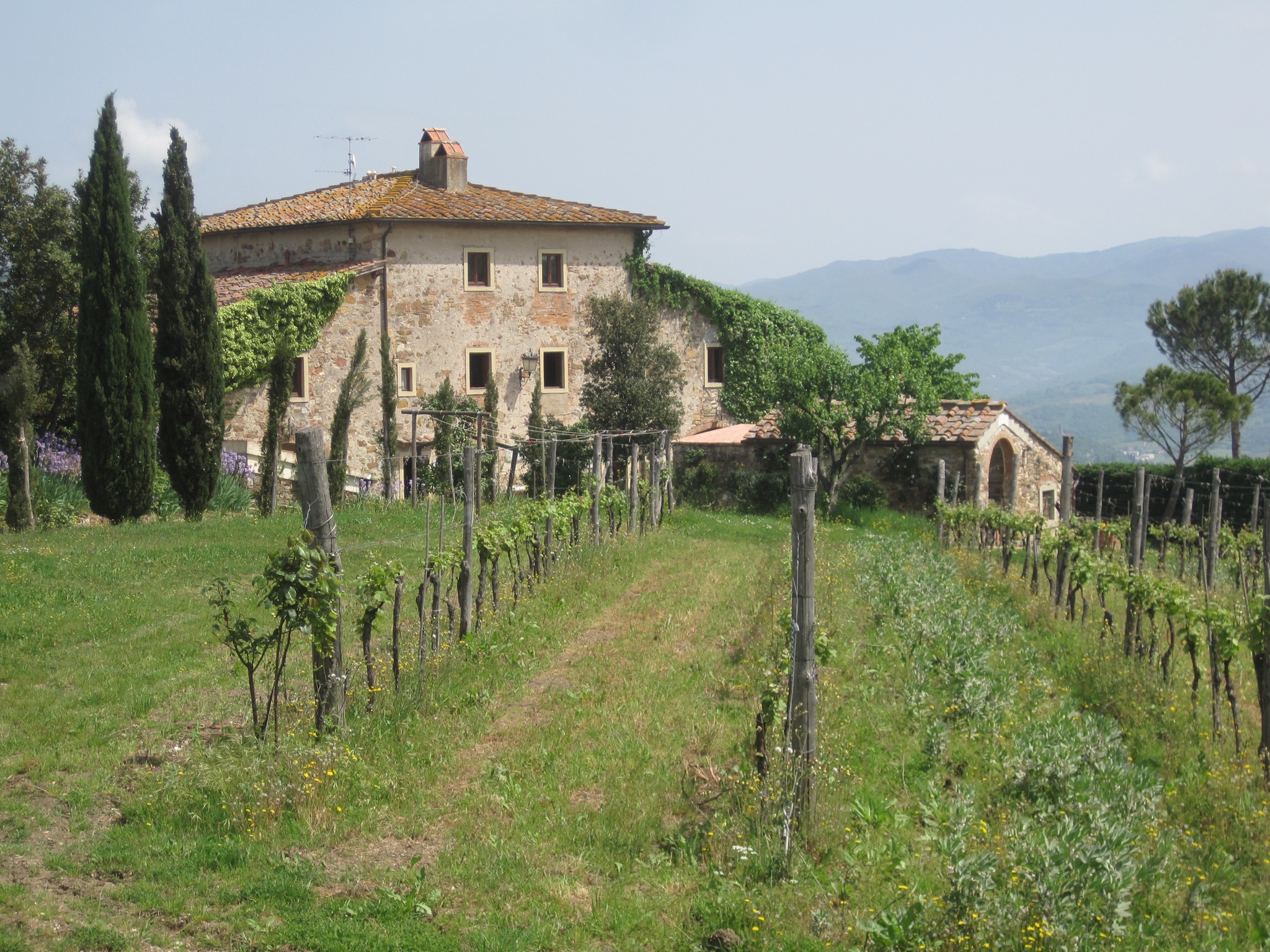
Tuscan Farmhouse
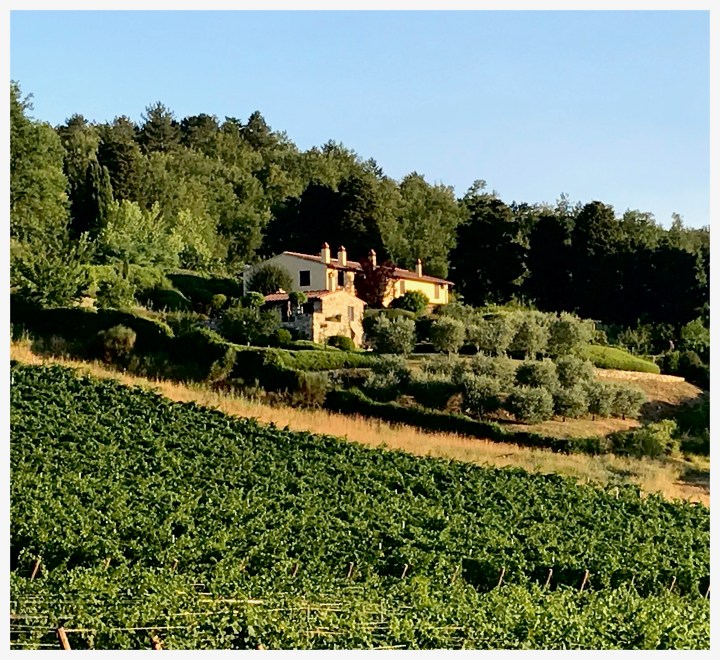
When we first came to Tuscany in the year 2000, we were captivated by the natural beauty. But, even more, we were mesmerized by the impeccable instinct to “design with nature.” Especially in the countryside, the villas, landscaping, colors, materials, the reflection of the sun, all worked together to create this seamless tapestry called Tuscany. We were fortunate enough to find our own piece of that landscape. From our simple hillside farmhouse, overlooking the valley, we’ve developed a deep appreciation as well as an obligation to maintain and preserve that which has come before us—for those who will come after.
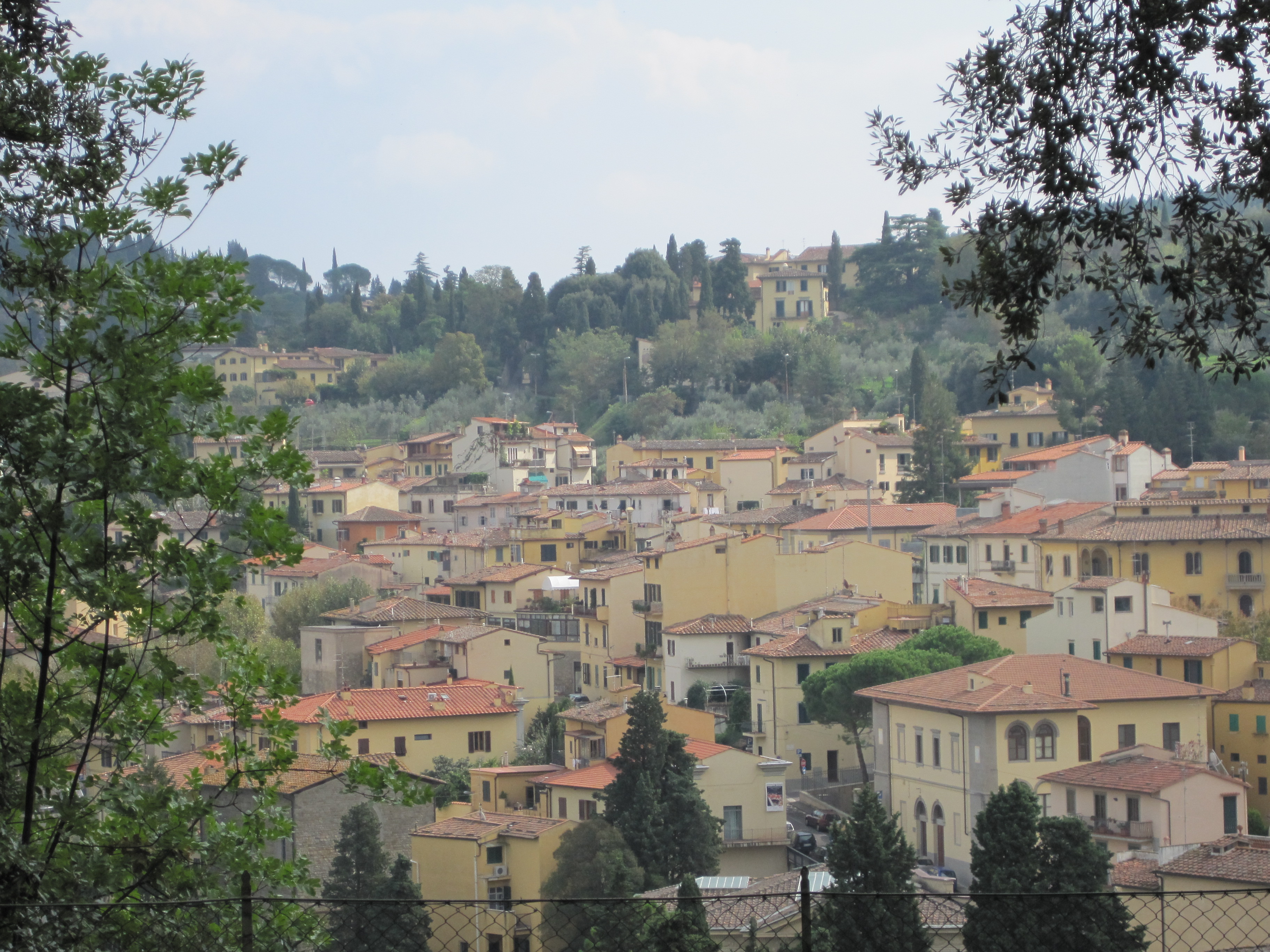
Fiesole Today
The name of our farmhouse, which we share with two other Italian families, is Casale Pretena, which simply means, Pretena Farmhouse. But, there’s a twist. It turns out that the name isn’t exactly Italian, and that Pretena is most likely an Etruscan word that has been handed down through the generations. The local lore suggests that this land may very well have been part of an Etruscan settlement on the outskirts of the nearby famous Etruscan town of Fiesole, just three miles down the road. Many generations of farmers who tended this land over the centuries left their indelible mark and name. Just imagine: countless families were raised here; animals provided sustenance; healthy crops fed the young families and animals. Surely artists and artisans were among the early inhabitants, facing life’s many day-to-day challenges. Doubtless, tragedies occurred. but the hard-working people persevered. Because they did, we consider this a sacred site, where that collective soulful energy is still felt today.
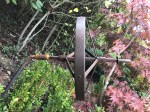
Ancient Garden Spade
Indeed, this place has always been special to us, and we’re humbled by the opportunity to momentarily “tend the soil” in that long line of caretakers. We decided to use the beautiful garden as a canvas of sorts, to honor the memory of those families who came before. As a symbol of their labor, we have planted various ancient farming implements throughout the garden. These are tools that were essential to their lives—held in their hands. Each iron piece peeks out from the lush greenery to remind us that, ” This sacred place belongs to all of us. Take good care!”
Farmers Memorial
Iron Wheel
Wheel as Sculpture
Music
We wrote this song 20 years ago when we first found Pretena , conjuring the magic and mystery that surrounds this place. After all these years, this land continues to provide awe and inspiration for us! If you want to read the original story along with the lyrics, you can find them by clicking this link: “My Treasured Heart.”
Photos
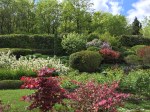
Following is a photo gallery of the Pretena flower garden. We don’t tend crops and animals anymore like they did over the centuries, but we have done everything we can to create a special sense of the natural beauty of the place in honor of those who preceded us.
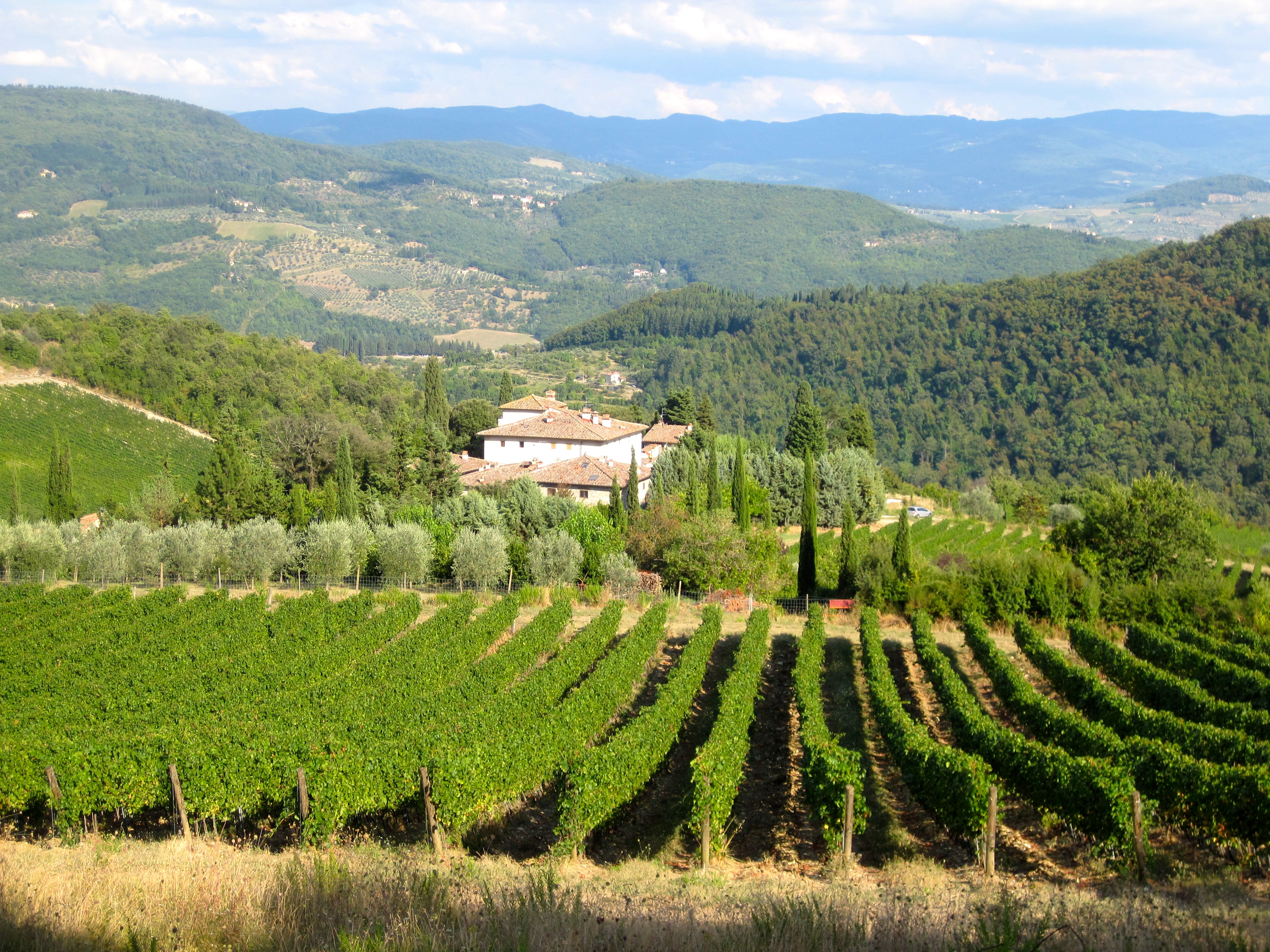
We are surrounded by vineyards of Antinori. Fortunately, they are one of the oldest wine-making families in the world and have learned quite a few things over the past 600 years. As a result, everything they do is precise, immaculate and beautiful. Perfect neighbors.
The vineyards are irresistible. They change constantly with each season, daily and even hourly. The meticulous rows mesmerize us, forming the perfect backdrop for far-off-gazing, solitary contemplation or soulful conversation. But, beyond distant admiration, it’s even better to traipse silently into them. Walking through their alluring geometry has become an important morning ritual—with dawn’s crisp air, the natural cadence of muffled footsteps, the sight of an occasional leaping deer, darting rabbits, and the sun peeking over the distant mountain ridge. Nature’s wholesome aroma gently fills my lungs to the brim. Day after day I honor the beauty of the vineyards.
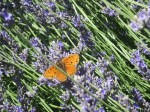
Purple Wildflower
This morning was even more delightful than usual. In summer, the paths surrounding the vineyards are dotted with purple wild flowers. They are hearty varietals indeed, because when I bent down to pick one for Cheryl, it was difficult to break the stem. They grow in the toughest conditions, so durability is required for survival. With persistence, I freed the tiny flower and held it close. It was even more beautiful than I expected—strong yet delicate. I carried it home as a present for my true love, like a naive schoolboy with my first girlfriend (nearly 50 years after our first encounter).
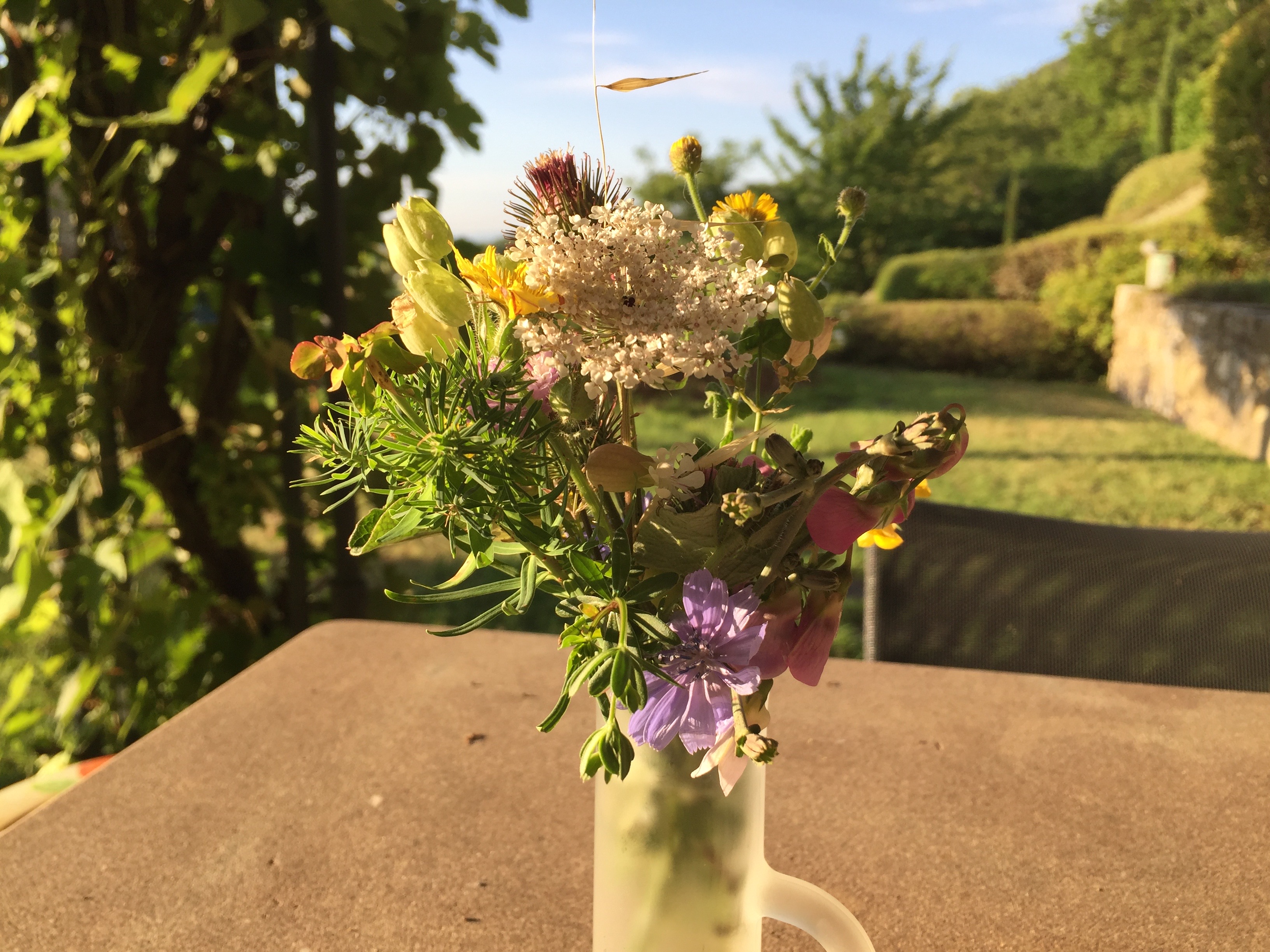
Then came the surprise. My focus on the purple flowers caused me to look closer still toward the ground-covering wildflowers. First, I saw the most colorful ones. Then, I started to see other less obvious flowers nearby. There was an obscure yellow bloom, then I noticed an unlikely tiny white-lace canopy that I had previously seen as a weed. Each blossom was now more interesting than before. I found myself standing in an abundant garden of everyday, unassuming flowers. Upon closer inspection, even the brown-red spiky thistle I always avoided became one of the most unique of the bunch. I plucked it from the dry earth, adding to my collection.
Wildflowers for my Love
What a wonderful metaphor for life! Incredible beauty is literally everywhere. We wander obliviously through a veritable garden, side-stepping that which we haven’t yet learned to appreciate. Value appears only when we have a shift of perspective. Certainly, everything is inherently valuable. Then suddenly, we simply decide to see it.
The tiny vase of wild flowers took its rightful place at the center of our table and our lives where we could be reminded daily of simple overlooked joys—those that await an aware gaze. Our eyes open, and a tiny new panorama is freshly taken in. Exhilarating!
The Pratomagno mountains near Florence are full of wonderful moderate hiking trails. Many of them are anelli (rings) that are relatively easy half-day treks, perfect for a cool early-morning start that finishes before the summer day heats-up. The trails wander through the dense wooded hills, crossing small villages with charming farm houses, ruins, villas, country churches and castles. Everything is picturesque so there are photo-ops at every turn.
Ferrano Castle Tower
One especially interesting circular hike is called the Borselli-Ferranoanello, where you will find the beautiful Castello di Ferrano and Chiesa di Santa Maria (1574), along with interesting country farmhouses and knock-your-socks-off panoramas that are sure to slow you down for a prolonged gander. Following are some photos we took that will give you a feel for the historic buildings, terrain and scenery.
We have written two other related stories about similar hikes, in the same area that you might want to check out: the ruins of Lavacchio and the Nippozzano castle. Both hikes, guarantee a delightful morning in nature, with significant Tuscan scenery in which to contemplate. We’re definitely not in Kansas anymore!
Road to Castle
Ferrano Castle Entry
Ferrano Castle Gate
Roadside View
Ferrano Gate Detail
Along the Trail
Country Church
Old Farmhouse
Country Gate
Cactus On Stone Wall
Country House
Renovated Barn
Church of Saint Mary
Farmhouse
Nearby Pomino
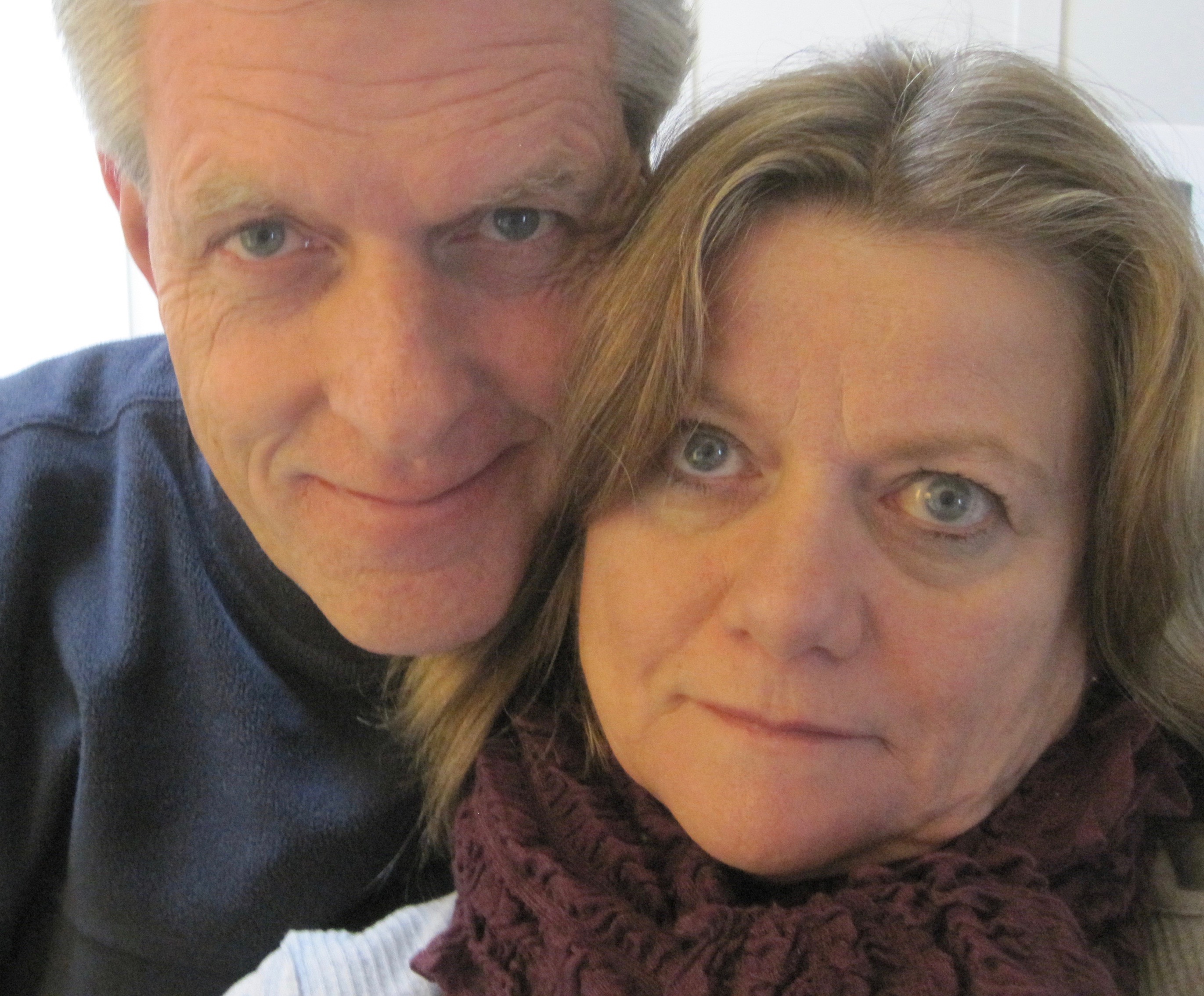
Cheryl & Emerson
Quality time is undeniably great for relationships. We've discovered that quantity of time can provide that quality. Perhaps it takes Time to Partner.



































































 Quality time is undeniably great for relationships. We've discovered that quantity of time can provide that quality. Perhaps it takes Time to Partner.
 Uncommon promise