
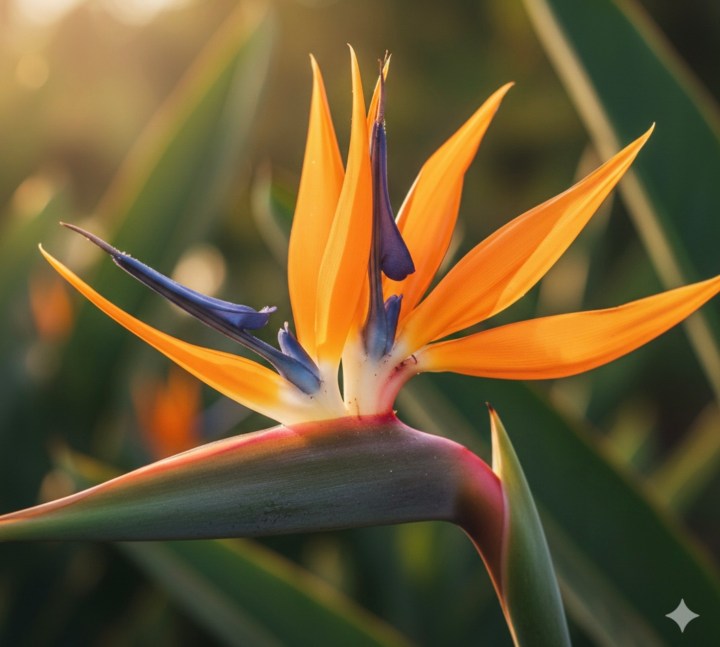
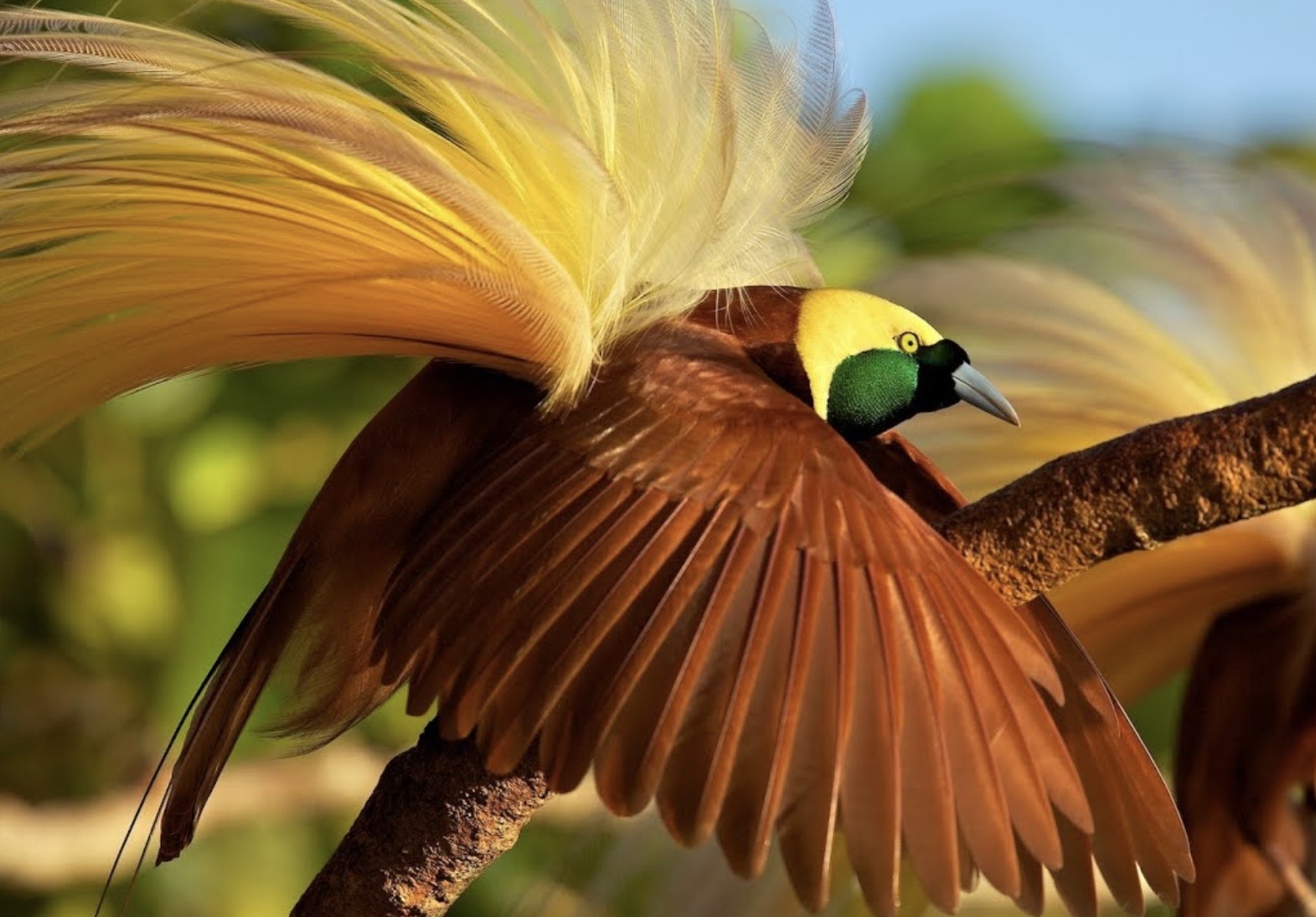
The name Bird-of-Paradise, although originally intended for an exotic bird, is also the popular name of a beautiful flowering plant. After all, the flowers bear a striking resemblance to the bird’s colorful plumage and the shape of its beak. First observed in New Guinea by Europeans in 1522, the bird’s unforgettable appearance spawned myths of having arrived directly from heaven. As a result, the storied fowl became synonymous with power and wealth. Eventually the bird achieved peak status as the National symbol for Papua New Guinea representing freedom and independence.
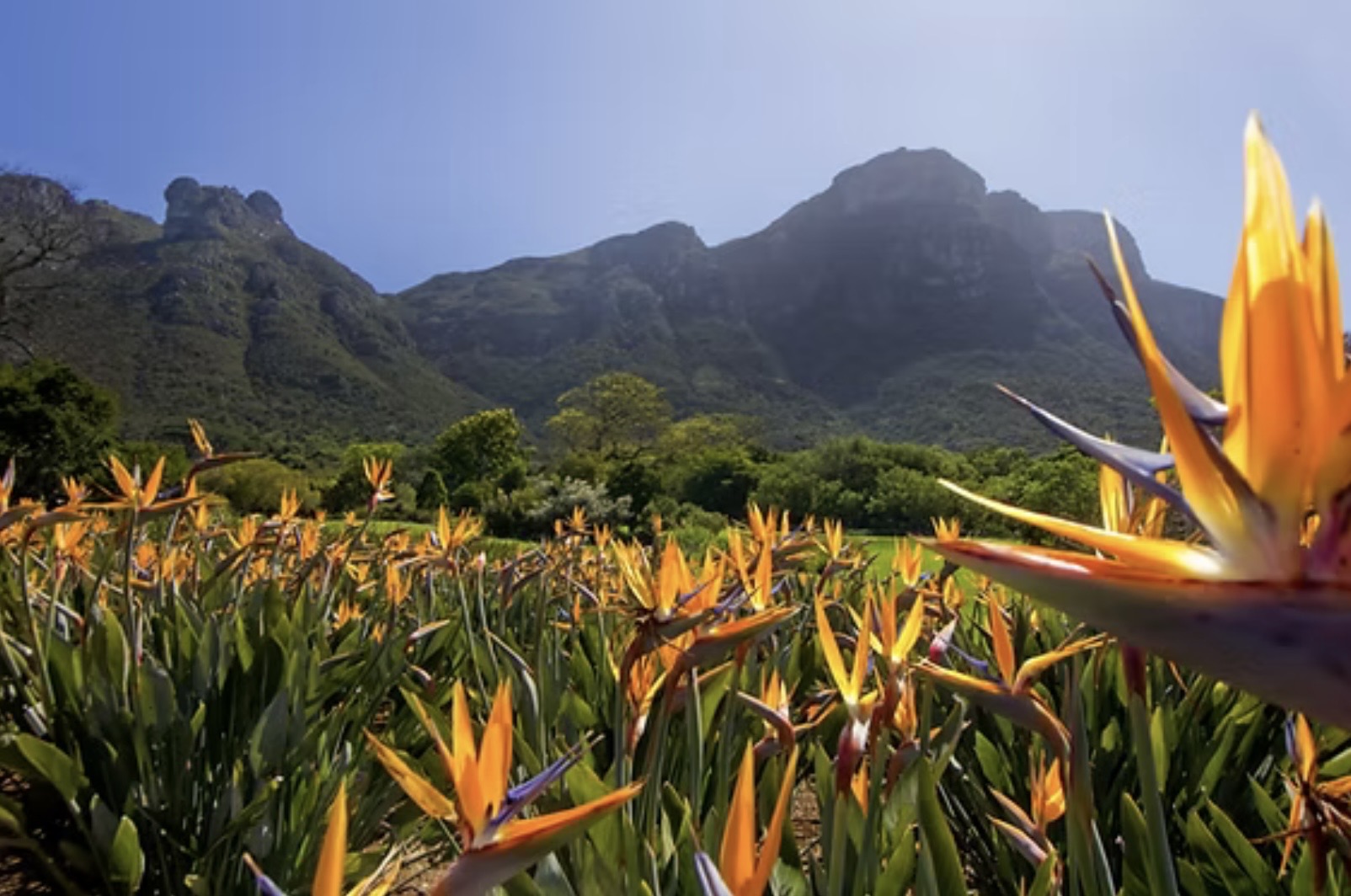 In contrast, the flower by the same name hails from South Africa, growing wild along the coast and river banks. You might say they are “normal” there. However, in 1773, along came Sir Joseph Banks, a Botanist who recognized the flora as extraordinary, and took the treasured plant back to his home in England, placing his prized specimen in the Royal Botanic Gardens. Due to the striking resemblance between the flower and the bird, the borrowed name “Bird of Paradise” stuck and became the common moniker that followed the exotic plant as it migrated into every warm, frost-free climate around the world.
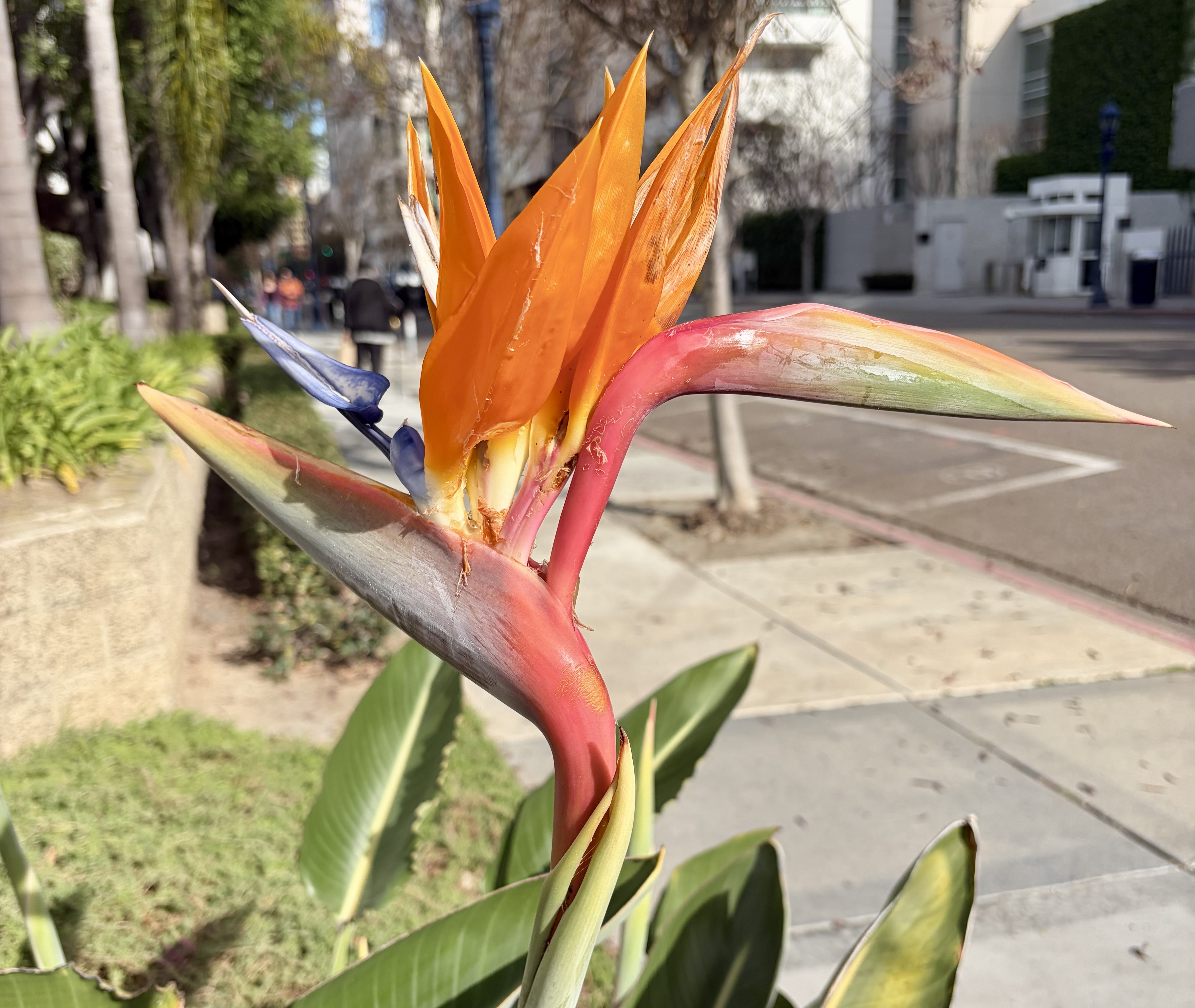
That brings us and our story to one of those warm climates some 250 years later. We were walking in downtown San Diego the other day, as part of our daily routine to a favorite coffee shop. We passed apartments and condos along the way, and by chance, came upon a couple photographing a particular flower (He was apparently the designated photographer while she provided the necessary narrative). There in a flowerbed outside their condo stood one of those gorgeous “bird/plants,” strutting its stuff. We paused to watch as she circled the bloom, swooning and describing its unique qualities. Evidently, what we were looking at was no ordinary “bird-flower.” This one boasted two opposing “beaky things” rather than just one. She declared the anomaly to be a “twin,” and excitedly proclaimed its virtues. This phenomenon of “twin beaks” may or may not be rare, but she was quite taken with it and so we chose to accept her narrative.
For us, this chance encounter with the enamored couple and their flowering Bird was a classic moment where a variety of interesting details came swooping together. A coincidence? A serendipity? Who can say?
In this curious age of AI and “created” reality everywhere we look, we intuitively stopped to briefly connect with real life. We were reminded that there are flashes of sweetness all around us all of the time, we just need to stop and notice. Sometimes we get distracted with “Breaking News,” politics, and world events that are overwhelming. Yet, on a regular Monday morning walk, out of nowhere, various snippets of life from hundreds of years swirled together into a magical encounter. We experienced a heavenly Bird of Paradise that metaphorically flew down and landed at our feet.
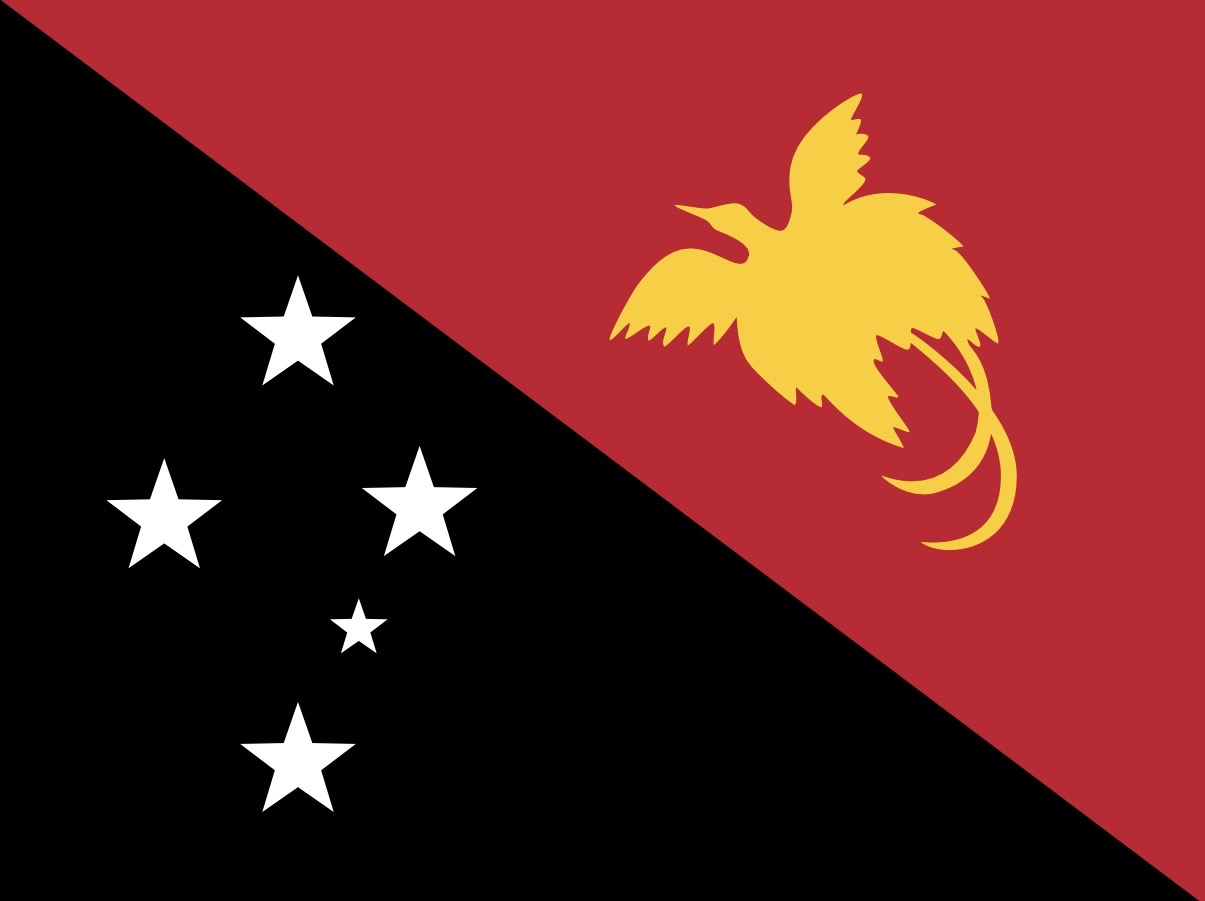
Note: The famous Papua New Guinea National Flag with the Golden Bird of Paradise representing freedom and emergence, and the five stars representing the Southern Cross—their proud Pacific location and cooperation with the other Pacific Nations.
Related Story

Today, an unexpected guest arrived at our home. On a beautiful sunny, cloudless June day in San Diego, something amazing happened. Following our lunch on the patio, we left the door wide open to let outside breezes in. Suddenly, there was a fluttering—a shadowy silhouette against the stark white ceiling.
 Quality time is undeniably great for relationships. We've discovered that quantity of time can provide that quality. Perhaps it takes Time to Partner.
 Uncommon promise