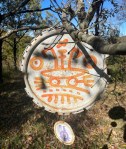
On a backroad between Borgo San Lorenzo and the small town of Polcanto, in Tuscany, just north of Florence, an unknown artist has taken an open, sunny patch of meadow and created an outdoor exhibit, a seemingly permanent Art Gallery of sorts. Each unique piece is weathered and worn, allowing the natural patina to be the final artistic touch. The exhibit appears to be a dynamic, additive process, with some pieces showing more age and weathering mirroring the passage of time (perhaps years), while others seemed like more recent additions.
Two of the sculptures were quite detailed and complex, using a very modern-day material, Corten steel (a special alloy that forms a stable external layer of rust). The large heart-shaped steel plates were incised with the first stanza of the Rumi poem: Ode 314—which offers commentary on our choice of living our lives “asleep” or “awakened.” He suggests that life is to be lived with intention and reflection. Without judgment, he suggests that the alternative is simply sleep. He even advises against disturbing this sleep. It’s sort of a live and let live perspective. Perhaps he’s posing the question of readiness. But clearly his choice is to take the way of intention. The first stanza is shown below.
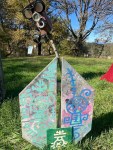
In stark contrast, another sculptural piece is in the form of a collage. Another, is a fluttering collection of random neck ties, suspended from the branches of an oak tree. Do the ties relate to the steel heart? Or to the other pieces? Are these expressions from the same artist, or is this an open invitation to anyone who feels inspired? Either way, it is compelling enough to warrant a closer look from any passersby, either on foot or enjoying a peaceful drive on a typical Tuscan side road.
Signature?
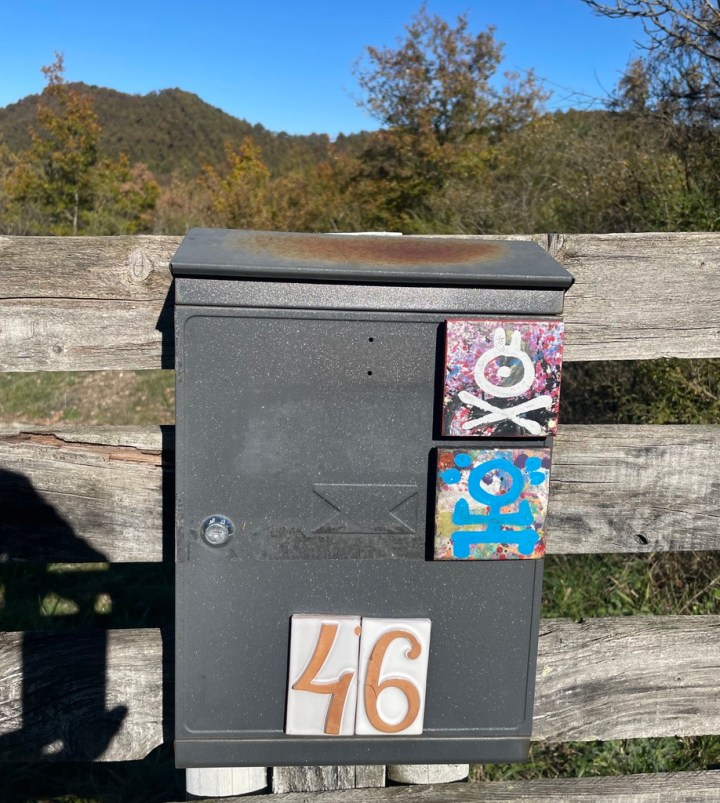
We found what could be an artist’s name in only one location, but couldn’t verify it. So, this “pop-up gallery” appeared to be a relatively anonymous gift offered freely without recognition or reward. All we know about the prolific creator(s) is the number 46 adjacent to a gravel drive that disappears down the hillside. We wonder what lies at the end of that ordinary country drive. One day, we might take a walk down that meandering road to see what’s at the other end. If we discover more to this story we’ll definitely let you know.
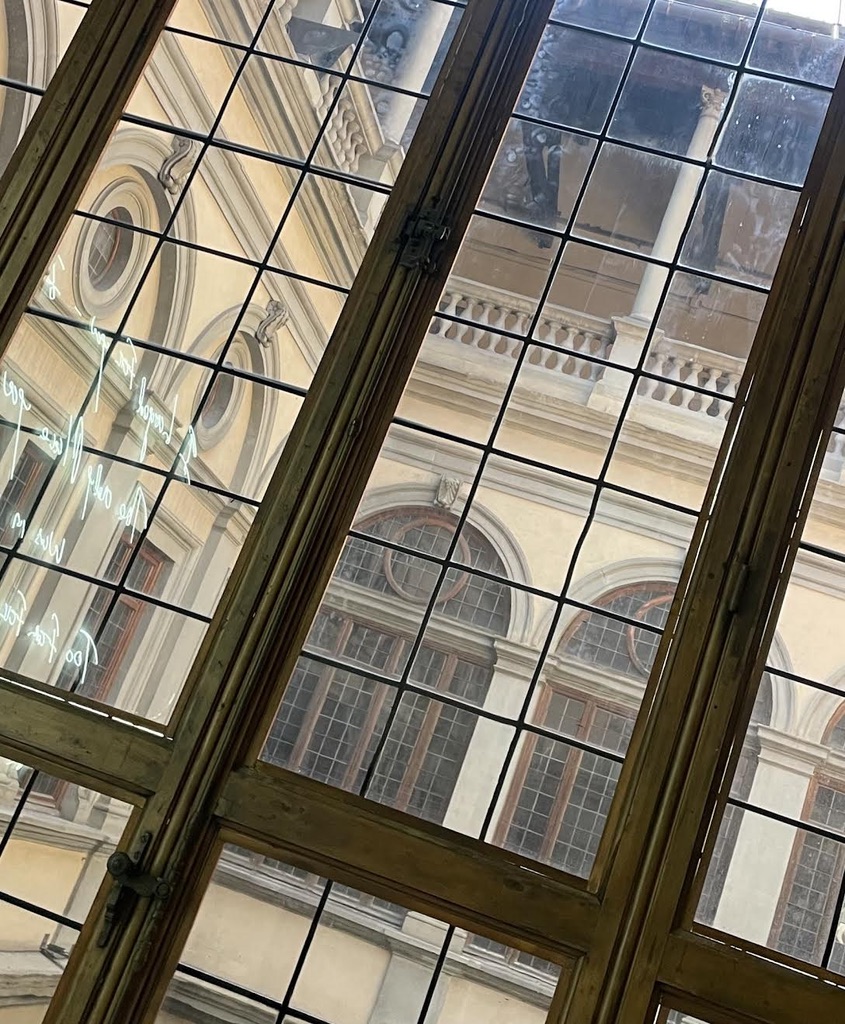
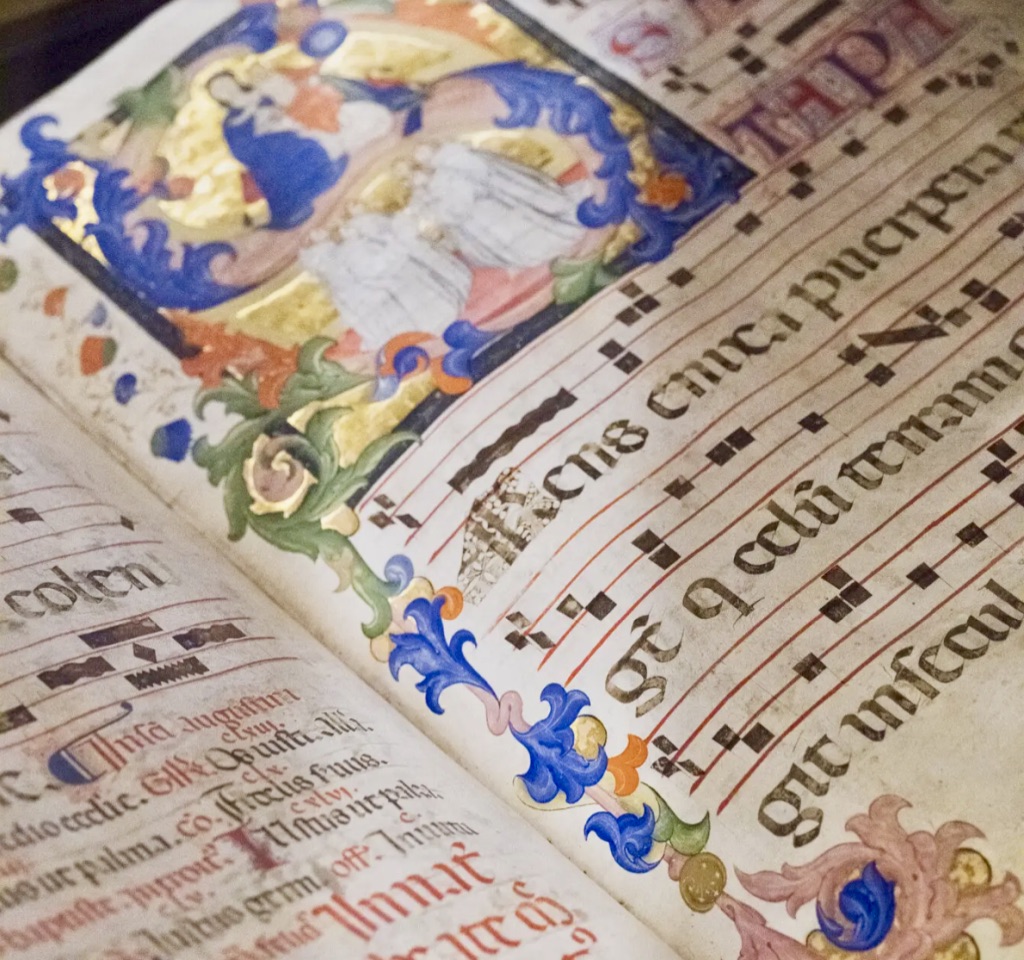
Side Note:A few days before discovering this Roadside Gallery, we visited the Palazzo Strozzi exhibit in Florence, viewing the collected work of Fra Angelico—what a fascinating contrast to the Roadside Exhibit.
To read that story, go to Perspectives: Immersion Into Religion Through Art.
Gallery of Roadside Art
Broken Heart of Rusted Steel (Right Side – Poem by Rumi)
Ode 314 (First Stanza) Those who don’t feel this Love pulling them like a river, those who don’t drink dawn like a cup of spring water or take in sunset like supper, those who don’t want to change, let them sleep.
Broken Heart of Rusted Steel (Left Side – author unknown) The last stanza – translated from the original Italian version:
Imagine utopia
Dream of Ithaca and hope the road you choose is long
Live in the moment, the emotion, the desire
Now.
We went to an exhibit at the Palazzo Strozzi in Florence, which is an incredible experience, even without an exhibition. Fortunately, the Palazzo was the site chosen for a once-in-a-lifetime collection of paintings from around the world by the Renaissance artist Beato Angelico. He was also known as Fra Angelico (Dominican Friar 1395-1455) prior to being canonized by the Catholic Church. He is now acclaimed as one of the greatest artists in all of Italy—ever! That’s a significant statement.
The exhibit was truly amazing. Ever loyal to his faith, Fra Angelico was a painter, sculptor, and creator of Illuminated Manuscripts (texts decorated for the reader’s enlightenment or illumination). He expressed his religious awe through a unique ability to render his subjects nearly translucent. The luminosity of the skin tones and his use of color is absolutely magical. The addition of gold leaf to highlight the halos of the saintly religious figures, as well as the intricate attention to detailing is quite mind boggling.
There are, of course, many fierce competitors in the Italian lineage of great artists like: Michelangelo, Botticelli, Giotto, Leonardo da Vince and Caravaggio, just to name a few. But after the exhibit, we had to agree that Fra Angelico’s art and impeccable character seemed inseparable and incomparable. If you ever get the chance to experience his artistic gifts to the world, seize the opportunity.
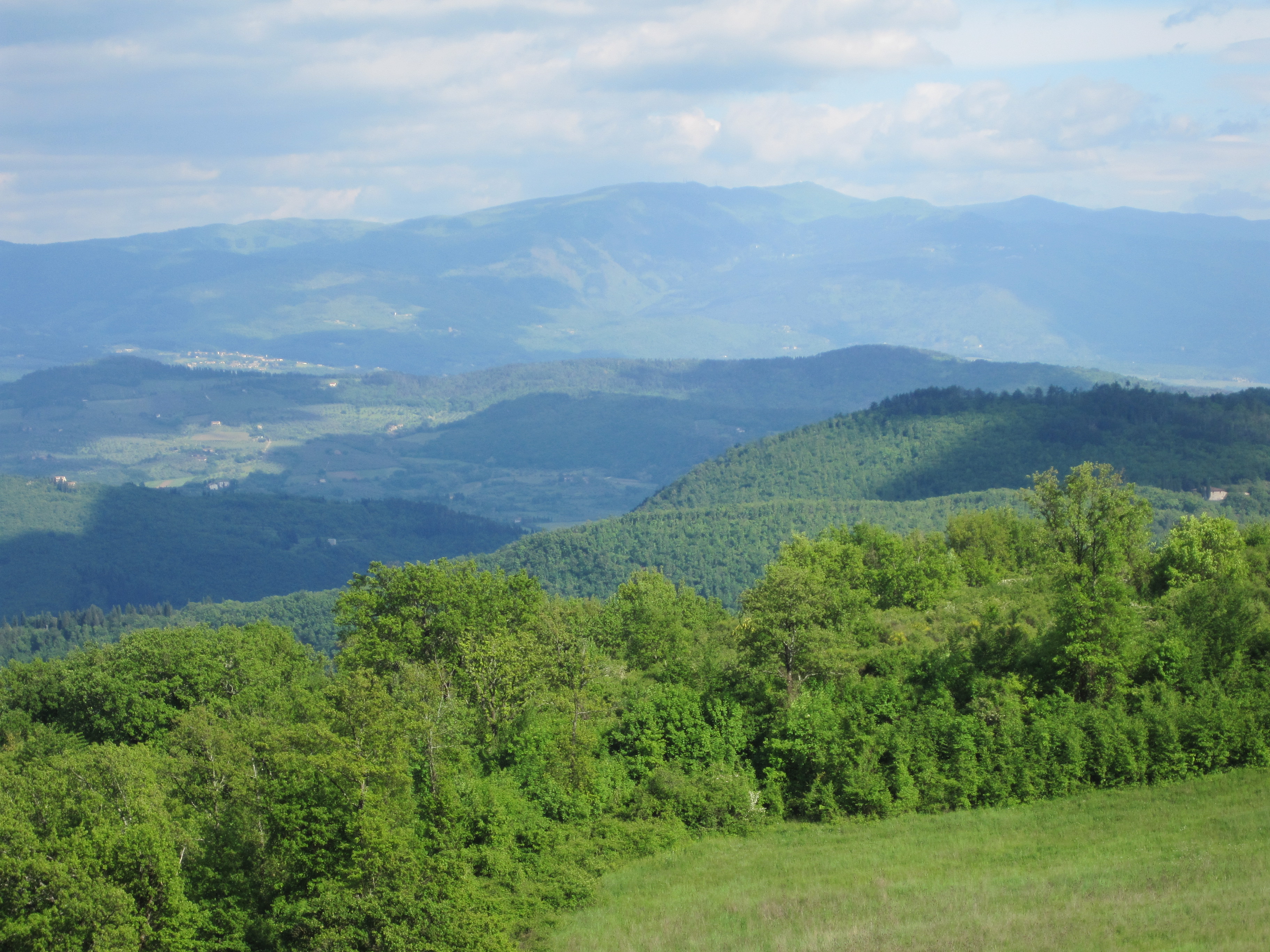
A few days after the Strozzi exhibit, we were in the countryside just north of Florence and happened upon a different artist’s work in a very different “Gallery.” The contrast with the Fra Angelico exhibit was remarkable and quite thought-provoking. Watch for another story coming soon—part 2 of Perspectives: Free Spirit and Free Form.
Related Music
You might also enjoy some music written about the Spiritual Quest and how the deep, personal changes find their way into Each Cell of our Being. We imagine the young Fra Angelico moving quietly through stone arches, meditating as he struggles with a longing to serve as both loyal friar to the religious order, while accomplishing his patrons’ requests for commissions. With his art, Fra Angelico elevated his patrons’ status, while making his unique way through a humble monastic life.
Each Cell
You can also find the original story and video that accompanied the song called Each Cell, from 2005, as we visited the beautiful Italian Monestery of Madonna del Sasso in Tuscany.
Credits (Each Cell Music)
From Where I Need to Be, track released June, 2005
Cheryl Martlage – Lyrics and vocals
Emerson Martlage – Music, guitar and vocals
Tom Tomasello – Producer/Arranger
Jim Bruno – Vocal producer
Mr Toad’s San Francisco – Mastering
Inspiration – The kind Monk from Madonna del Sasso
Our Tuscan adventure taught us that strength, power, intellect, efficiency, and capability are genderless qualities. And sometimes they are named Barbara.
Tuscan Hills
We were determined to find a one room art/music studio in Italy—full of romance, abundance, creativity, magic, wonder, and beauty. Essentially, we wanted to immerse ourselves in the powerful Feminine Energy of the Tuscan Hills—the epicenter of the legendary Italian Renaissance, that incredible experiment in humanity. Florence (Firenze) whispered to us and its rolling northern hills beckoned. Our plan seemed simple enough. We longed to “birth” something new from deep within. However, life is messy sometimes, and cross-cultural life can be downright chaotic.
Just a one room studio
We found the perfect place, unfortunately in ruins. Our friend Pietro said, “This project sounds tricky. There’re many Italian laws you MUST know and follow. You need a good attorney (avvocato). You need Barbara!” Even though her specialty is corporate law, as a favor to Pietro, Barbara agreed to assist. She was an absolute godsend and without her, our dream wouldn’t have been fulfilled. She not only speaks English, but she’s great fun and definitely knew how to work through the intricacies of the Italian bureaucracy.
It just so happened that Barbara was pregnant with her first child when we started working together. We soon met her husband, Giacomo and our Italian adventure expanded. They were starting their family and we were beginning our dream journey at the same time. As the years passed, we came to understand the significance of Barbara and her baby.
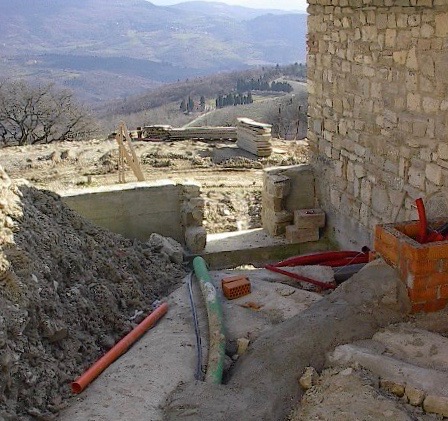
The site was cleared
The spring was filled with tough negotiations, promises, miscues and confusion. The developers were a challenge to work with, but Barbara remained calm and collected throughout the process. She was up against a negotiating team of 80% men, which made the game even more fun for our Wonder-Woman attorney. Single-handedly, she charged forward with confidence and negotiated everything we needed to close the deal. Although Italy remains a patriarchal society and Italian men basically still run the show, Barbara was amazing and a real powerhouse. We were certain that we had tapped directly into the fierce Tuscan heart of ancient Feminine Energy and perhaps we even caught a glimpse into the not-too-distant future. We just stood back and watched her do what seemed to come natural—the impossible.
That summer Barbara and Giacomo welcomed their first daughter. We shared their excitement as we all greeted the new addition to our Female Power Team. We felt an immediate emotional attachment to their sweet daughter. After all, she was in the room with us (in utero, of course) during all of the negotiations and debates. With our young new partner and renewed enthusiasm we turned our attention to the promise of a completed arts studio.
The invisible stuff
The second year of the project crept by very slowly, as the construction company readied the site, cleared and prepped for building to begin. There was visible activity, but at a snail’s pace. We had devastating periods of discouragement, due to the contractors’ inaction and constant internal conflicts. To say that it was exasperating would be an understatement. But soon, we received wonderfully distracting news, Barbara and Giacomo announced that a new baby would be joining the family.
Soon, their second daughter was born and the Power Team increased. Barbara was now super-busy with her full-time job as a lawyer, our project and two little girls (bambine) in tow. Since they had become a family of four, they needed more space. So, Barbara and her husband casually added more construction and relocation projects to their to-do list—without even flinching. They were busy times indeed with many changes, EXCEPT for the studio project which continued to drag along at a the pace of an old Tuscan turtle.
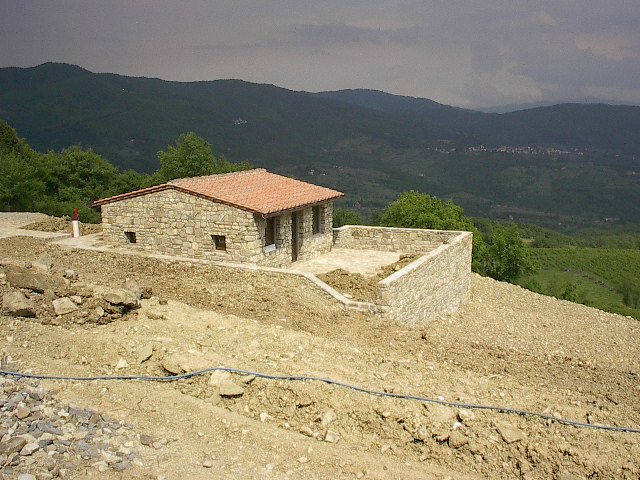
Stone walls appeared
As time passed with very little progress, we were nearing the end of our patience. We even entertained the possibility of scrapping the whole project. Once again. Barbara made a quick intervention, saying “WHEN (more accurately, WHENEVER) the project is completed, it will have definitely appreciated in value.” She emphatically said we would be FOOLISH to withdraw from the contract. Since Barbara was a force of nature to be reckoned with, we followed her advice, immersing ourselves into writing more music and stories—the perfect distraction.
What seemed to be a relatively short time later, Barbara gave birth to her third baby. Unbelievable! Another sweet little girl joined the team representing another substantial increase in Feminine Power. Compared with our slow-motion project, it was incredible to note that 3 perfect little people had been born into our tiny sphere of “family.” How could this happen? How is it possible to create three baby girls in less time than it takes to rebuild/restore an old Tuscan barn?
Finished Studio?
We finally moved into our dream studio at the end of the four-year odyssey. Although no one could deem it “move-in ready” by any means, our studio was finally a reality—just a wee bit late (più tarde). Somehow, all the delays and consternations were curiously within the limits allowed by Italian law (don’t ask). Never-the-less, we had keys in hand. So we turned our attention to the yard, or as the Italians call it, the GARDEN. We quickly learned that trees are masculine and the fruit is feminine as we focused on “bearing fruit.” Soon enough, we had enclosed and surrounded our little stone studio with lush vegetation—a soft green embrace.
The Studio Goddess
Our dream studio could not have happened without Barbara, Giacomo and their three sweet little girls. The overwhelming presence of Feminine Energy inspired us. And yes just like the garden, it takes both the masculine and the feminine to make it work, but we’re thinking about an ideal balance of 80/20—majority Female Power. Our little project nestled in the Tuscan hills remains as a powerful symbol for us as we remember that simple truth: “The future is female!”
This is a true “Italian Moments” story of actual events from 1999 – 2004
Related Stories and Music
The story called “Good Girl” speaks to the essential life-giving power of feminine energy.
We wrote another short story and music a few years back about our romance with Tuscany called “Tuscan Hills.” Check it out if you’re so inclined.
When first arriving at the site of the ruins, we were captivated and swept away in the mystery of it all. We called it “My Treasured Heart.”
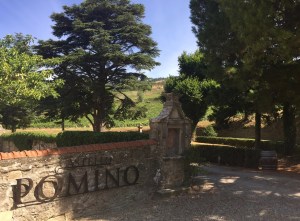
There’s an old saying about Tuscan wines—a Chianti wine you want in front of you at the table. A Pomino wine you must keep by your side—so special, it’s to be reserved for just the right moment.
Pomino
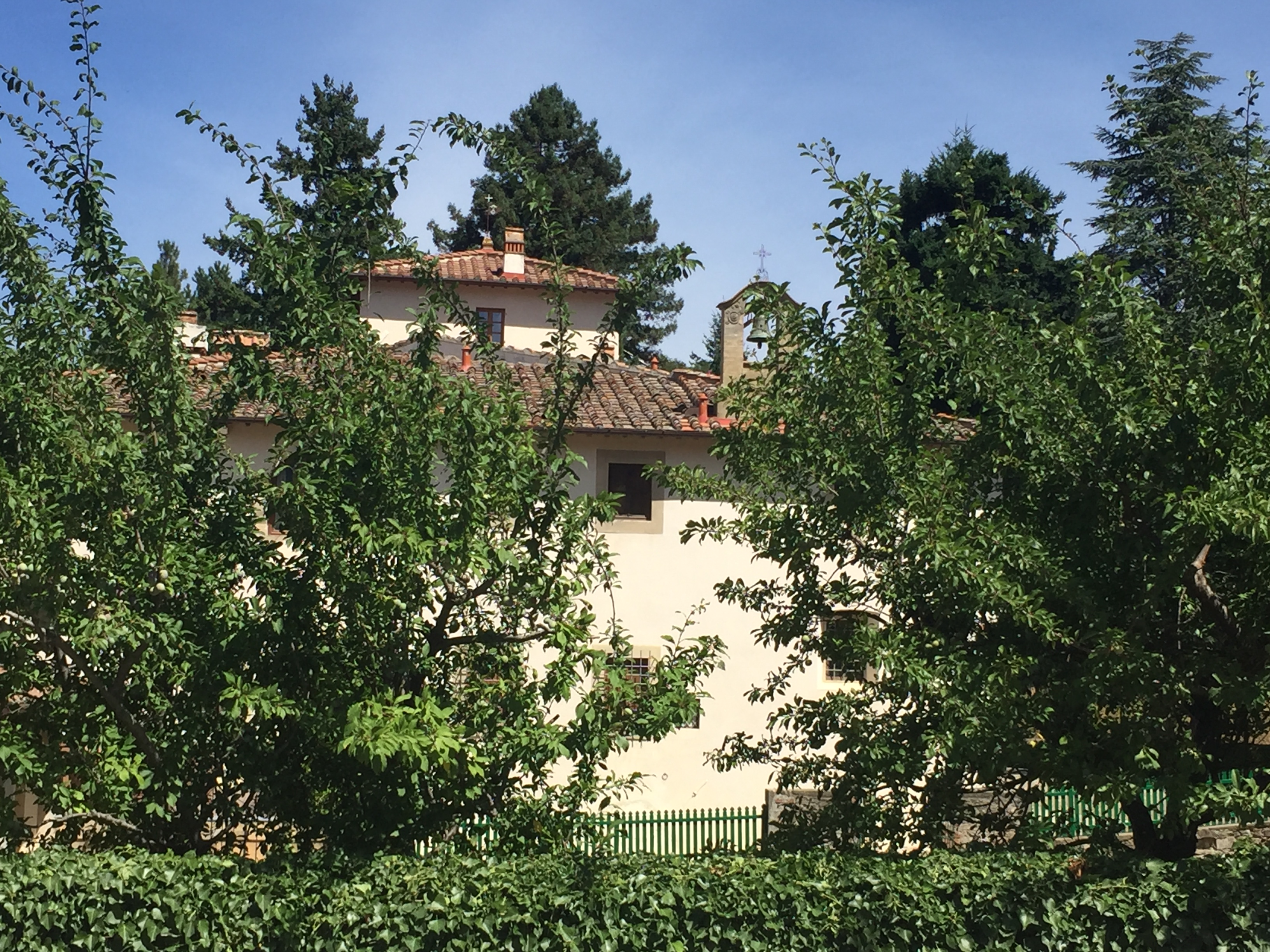
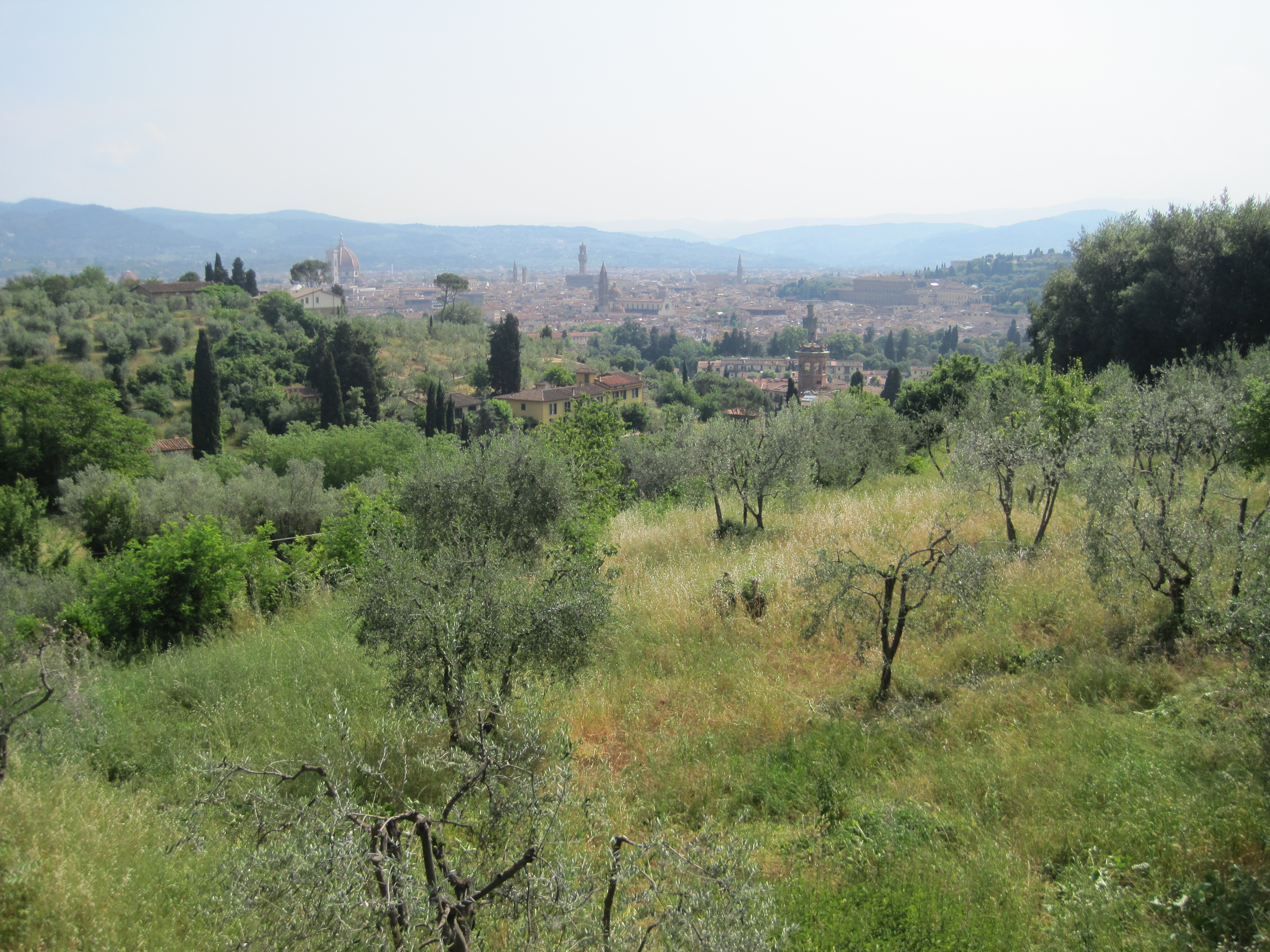
While hiking on a crisp, clear spring morning in the Pratomagno hills of Tuscany, we came upon a valley view that drew us deeper into the Frescobaldi family history. Pomino (which means little apple) is a small town tucked away in the Tuscan Hills that surround the beautiful Renaissance city of Florence, Italy. In 1716, the Grand Duke Cosimo III de’ Medici identified the four most highly prized territories of Tuscany for the production of wines. Today, not many know about the intimate burg of just over 200 people, but they certainly know of the famous wine that’s produced there—Pomino Bianco. The town’s elevation is some 600 meters above sea level, where white grapes grow best, so that’s the specialty in that small region. Pomino and its renowned wines are a relatively small part of the historic Marchesi de Frescobaldi estate, which has remained a family operation for over 30 generations and 700 years.
Castello Pomino
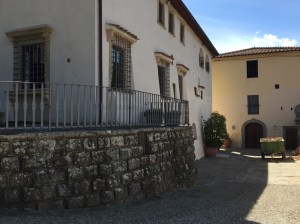
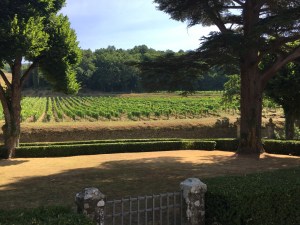
Clearly we are not wine experts, but we are compulsively drawn to the serenity, beauty and history of Tuscan culture. Surrounding the ancient Castello Pomino, lay an incredibly lush valley of vineyards. The castle was built in the 1500s and now serves as the centerpiece for that unique wine-making territory. The owners refer to the area as: “Elegance and femininity. A hidden gem that’s revealed among the woods of the Florentine mountains.” Irresistible!
The Frescobaldi family made wines that were well known throughout Europe. They socialized with the likes of artists, such as Donatello, Michelozzo Michelozzi, and Filippo Brunelleschi. Most Florentines will tell you that their city, although cosmopolitan, actually enjoys a “small town” feel. Everybody seems to know everybody else. So it’s no surprise to learn that Frescobaldi furnished wines to the well known locals, and further afield to the Papal Court in Rome. After all, at the World’s Fair of 1873 in Vienna, the wines of Pomino won coveted awards, and in 1878 took the gold medal at the World’s Fair in Paris, the highest international recognition of its time.
Splash of white wine
You might say that our story is similar to a Pomino wine—you want to save it until just the right moment. We find ourselves reminiscing about those beautiful treks through the rolling Tuscan hills. Now, some 10 years after that quiet hike in the Pratomagno, we decided it was the right time to “uncork this story.” Ahh, breathe in the distinct magic of the elixir! We savor every sip of those memories and hope you too become a bit intoxicated by the romance of it all.
Related stories and music
Tuscan Hills
You might also enjoy another story about inspiration in the Pratomagno mountains called Nipozzano Castle—have a look! And just to get you in the mood for a hypnotic Tuscan adventure, below is our song called “Tuscan Hills” written in 2003. Enjoy!
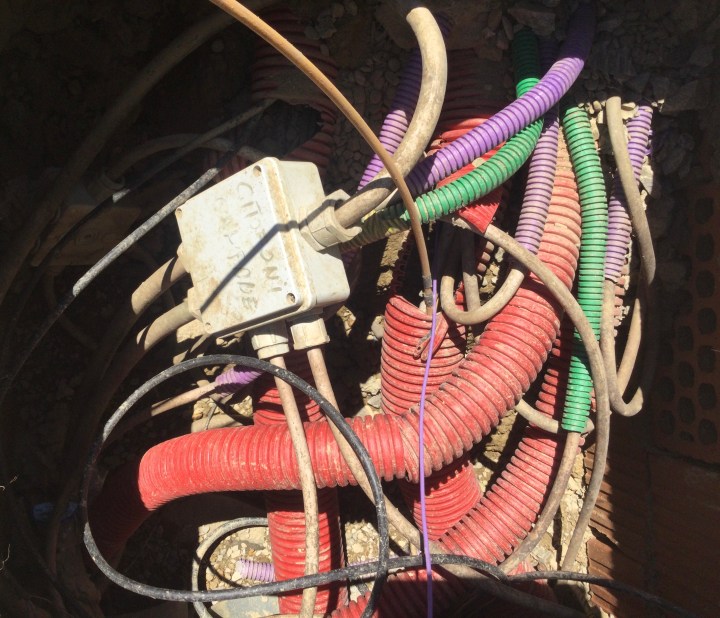
NO! We just can’t find that darn tombino. In Italy, of course, language results in many quizical and/or dumbfounded glances. In this instance the word tombino verrrrry loosely translates to mean, a large underground junction box. It is the heartbeat of many systems that feed into a country dwelling like ours. Running underground for about 120 meters (roughly 400 feet) are electrical cables, telephone lines and water systems. The tombino is a heavy concrete lidded box. In our Tuscan hideaway, stealthily secluded underground are many of these cement cubes about 5 feet on all sides. Typically unseen and NOT generally a topic of conversation. However, in these post-pandemic times, it has earned the distinction of being one of the most important talking points in our little corner of the world. Once found, you could probably hide in one, but we wouldn’t recommend it. But, WHERE, oh where, is my tombino? That’s the million-euro-question. Typically they’re fairly easy to locate, but unfortunately, ours has been covered over by years of crunched and compacted gravel mixed with gritty dirt. You get the picture?
Breakfast, lunch and dinner
It seems that our utilities have been interrupted by a tiny little country mouse who has nibbled through the yummy gray sheathing on the power cable to create a hole for water to seep in. Once the cable gets wet, you’re only months away from full-on corrosion. One day we’re feeling the “power”and the next day our “current” strength is completely gone. Living Without Power is of course, annoying, unacceptable, and even dangerous. The only way to remedy the situation is to locate the exact position of the “nibbled-through nuisance wire”—good luck with that! We had no choice but to locate all 7 of the buried tombini under the driveway as the first step in our problem-solving process. The first six, okay. Number seven, no way. What a challenge—trying to find a “nibble in a dirt-pack.”
The radiator seems so peaceful
Now, electricity certainly is a utility that we have come to enjoy on a daily basis. With the flip of a switch, we have light. The familiar click of a gas stove reminds us that it uses an electric ignition. But more than a mere creature comfort, it’s essential for surviving frigid winters in Tuscany. Without power, there’s NO heat. Without heat, cast iron radiators freeze. When they freeze, they burst. And they are NOT tidy bursters. They spray and spit rusty water as far as their cracks will allow. The force exerted from them mimics little explosions. It’s certainly not a pretty sight, and hopefully you’ll never have to witness or clean up such a disgusting mess.
Sneaky power work-around
During the pandemic, our neighbor informed us that we had suffered a loss of power in the winter. Yikes! We immediately flashed a joint memory of bursting radiators. Since it was too cold and nearly impossible to repair the electrical lines mid-winter, we borrowed electricity from a neighboring building. Using a very LONG extension cord (as a temporary measure), we kept the radiators happy enough that they didn’t crack-up under the stress. So when warmer weather arrived, we kicked into high gear to find a quasi-permanent solution for the electricity issue. Hence, we found ourselves in a desperate search for that seventh elusive tombino, which was the key to our success.
Alongside two trusty electricians, we energetically swung picks at the hardened earth and scraped the loosened dirt with our shoes and shovels to clear the debris. After multiple attempts and without success, we shifted again and again, to a different digging location, every time someone shouted “Let’s dig here!” The driveway started to look like giant gophers had taken up residence, randomly having popped up, leaving gaping holes and massive mounds of gravel. Our day ended on a note of dismay and discouragement.
Could it be?
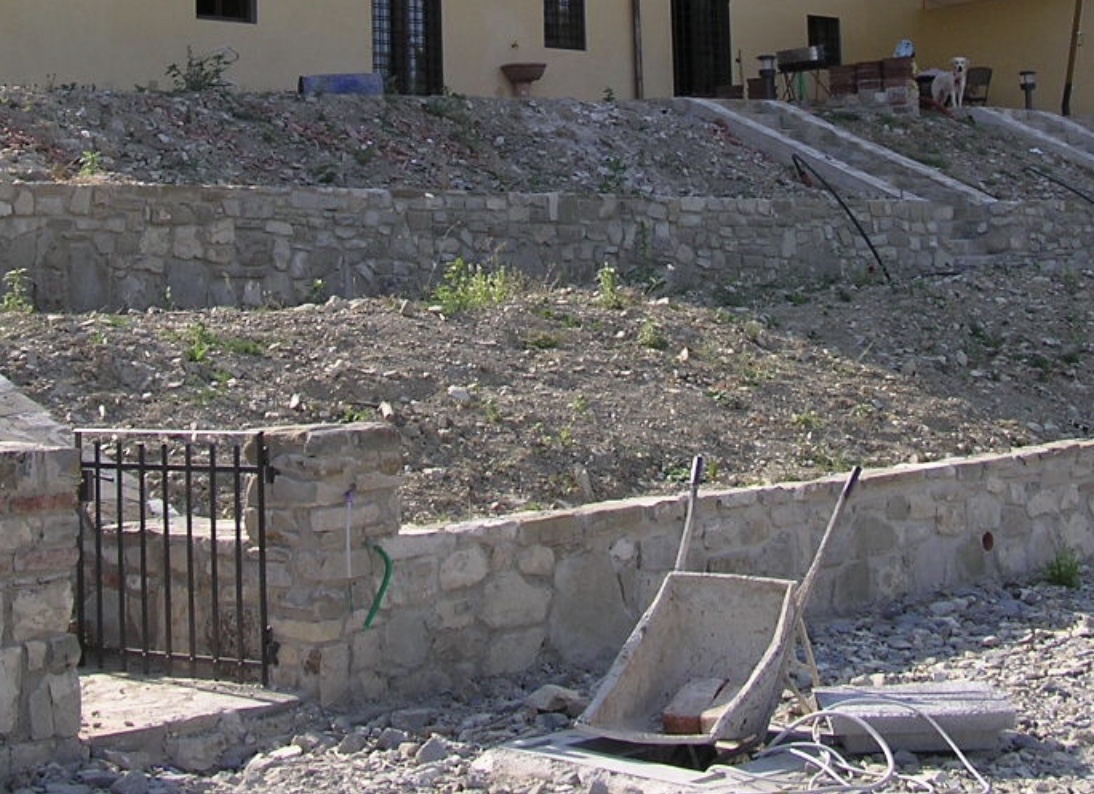
But persistence persisted. Later that evening, our neighbor sent a text, “WOW, I found it.” No, he hadn’t been out digging in the dark, but he had discovered an equally valuable treasure—a single photograph of the house during construction. Some 20 years before, in the foreground, just barely within the frame was an old cement-covered Tuscan wheelbarrow balanced across a hole in the ground—a square hole. Safety first! There, beside that rusty-wheeled implement was a chunk of concrete shaped like—yes, a square lid. In the silence of the night, our sleuthy neighbor dug through hundreds of photos to find perhaps the only picture ever taken of thatlonely tombino during construction.
Don’t let a mouse steal your power!
As with any Italian problem, endless loud talking and arm-waving is required, along with a dash of clever insight. But the noise, persistence and cunning almost always pay off. Fortunately, our neighbor snapped pics of the more mundane phases of construction—capturing momentary glimpses of life “uncovered.” We’re not finished with the repairs yet, but we currently have direction. Having a plan and renewed hope is certainly em-POWER-ing!
Related Story and Music
You might check out another story called “Living Without Power” that we wrote and recorded back in 2009 amid a devastating hurricane. Following is the music if you want a quick listen.
It seemed a simple question to pose to two Italian realtors. Without hesitation, we soon had our answer. Almost immediately, the more practical of the pair, feisty Inga, was at the wheel, maneuvering the old Jeep up the steep terrain. Her associate, Patrizia, stunning in her white knit pants, fitted shirt and lavender scarf tied stylishly around her neck, occupied the passenger seat. As Inga revved the engine, Patrizia turned and smiled to reassure us that everything was okay. Just after we turned off of the main road, Inga immediately threw her weight into the steering wheel for a hard left and we continued a steep climb. At one point, all we could see from the back seat was the dashboard because the road was completely obscured from view, due to the car’s jolting angle. Surely, this must be the top, we thought, as the grade leveled out a bit and we found ourselves passing between enormous old vacant barns and rusted grain silos. Inga paused only momentarily, grimacing as she engaged a stubborn gear, and then yanked the steering wheel hard to the right and away we went into the woods.
Arriving at the top of the mountain
Surprised, we continued to climb up the rugged hillside, while brush and bushes slapped both sides of the Jeep. Rocks rolled down the hill while others crunched beneath the spinning tires as we bounced and jostled our way along. We felt a sudden lurch as Inga course-corrected after unintentionally dropping a tire into a huge pothole. Patrizia turned once again to offer another cautious, silent smile of reassurance. A few hundred feet further, Inga nearly stood on the brake pedal, bringing the Jeep to an abrupt halt. She then shifted into neutral, cut the engine and with a sharp tug, engaged the parking brake. Just for good measure, she kicked a large stone under the back tire. Then, as if nothing unusual had just happened, Patrizia smoothed her hair, adjusted her scarf and said with a gracious smile, “Andiamo, let’s go!” We emerged from the back seat to see—ruins. Not just something in need of minor repairs—serious ruins.
Barn In Ruins
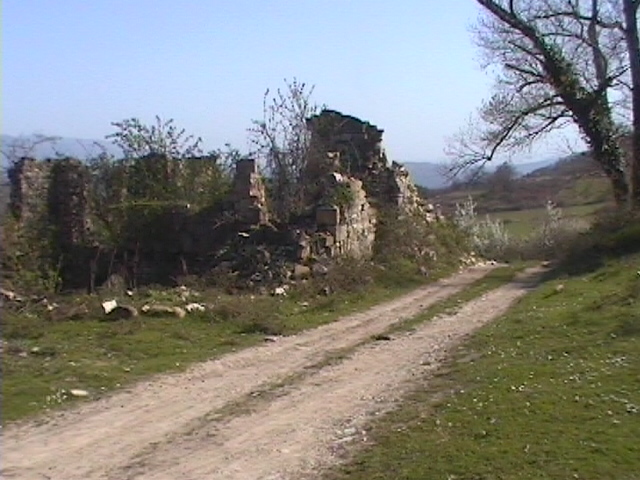
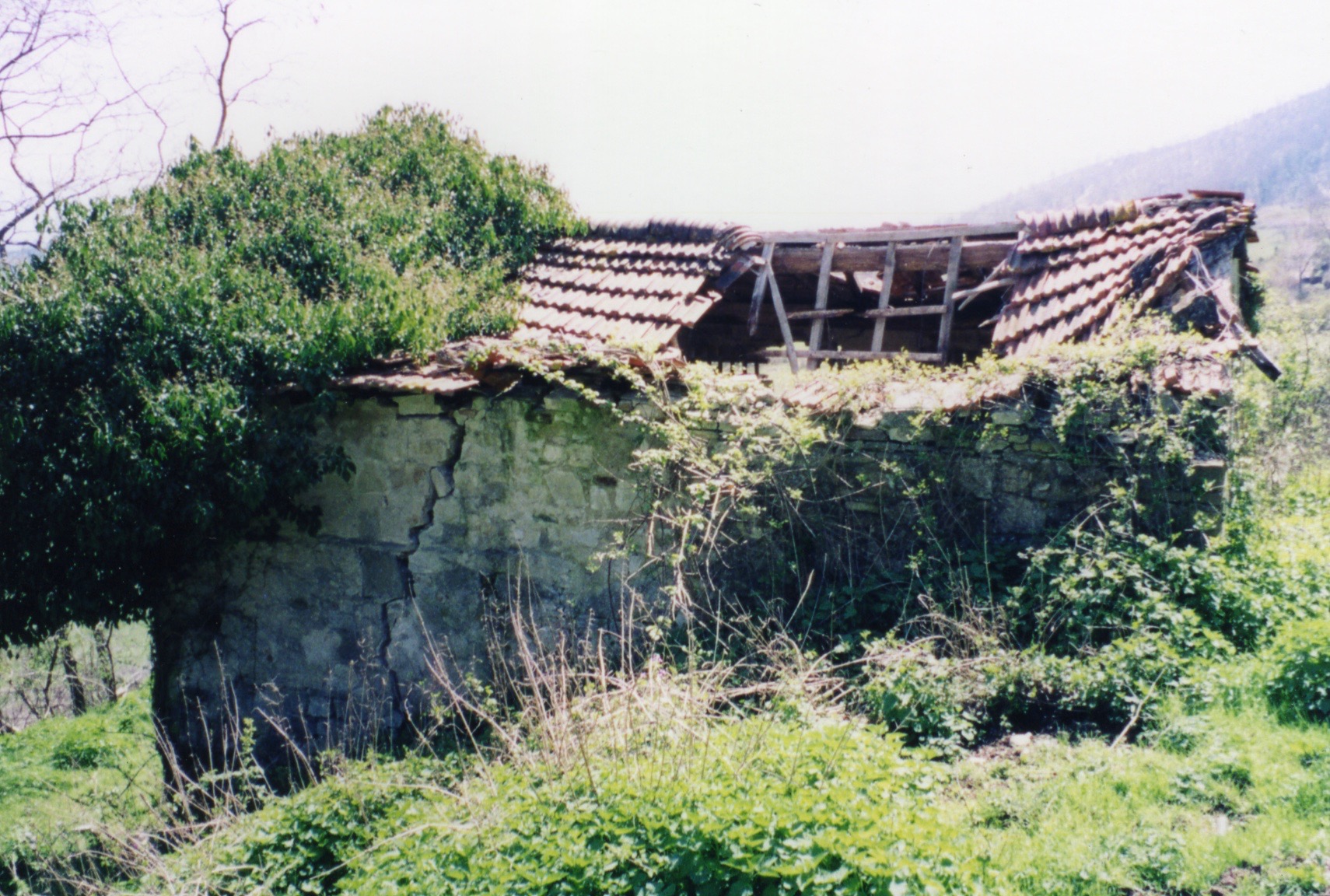
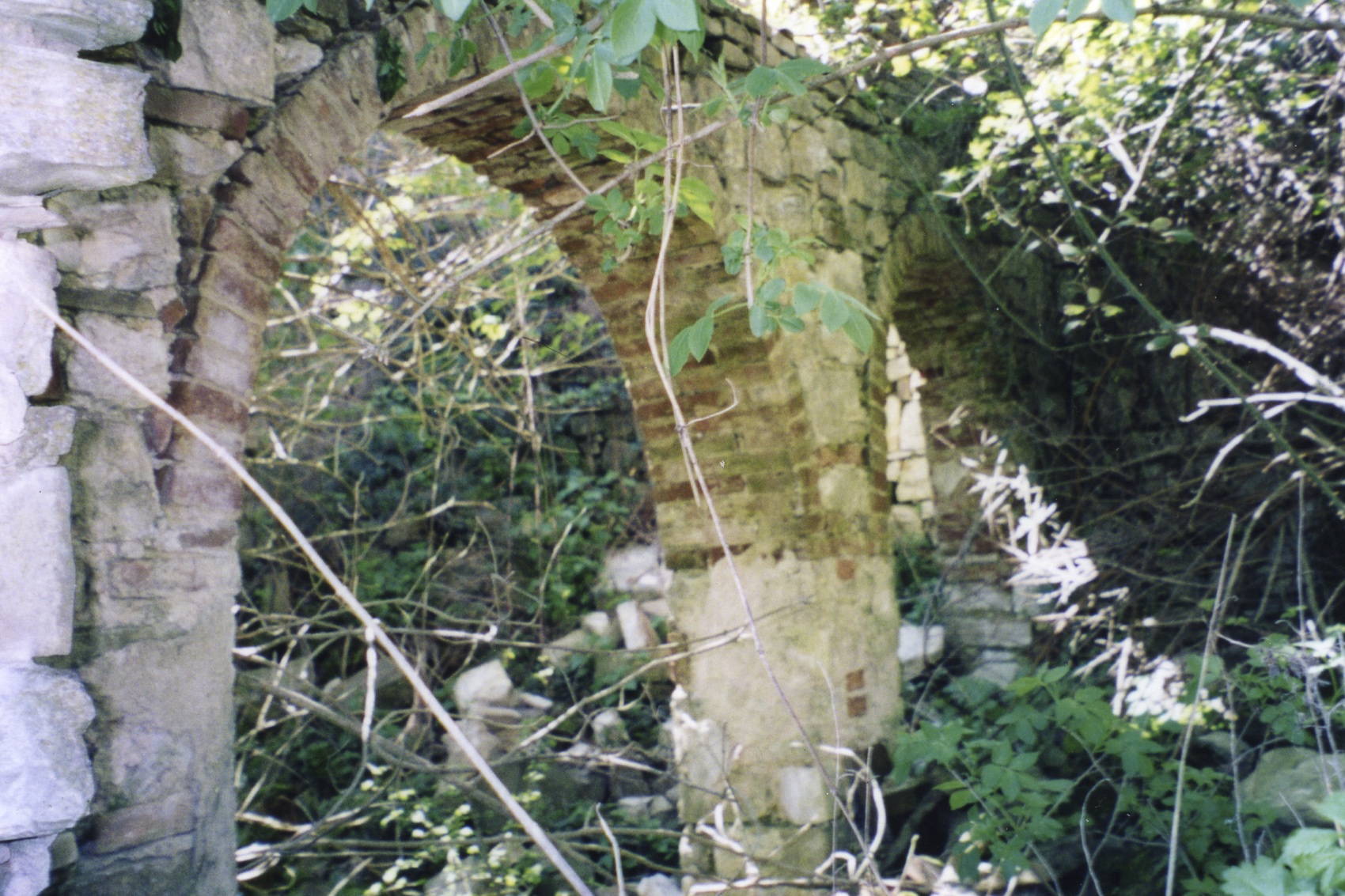
There before us, was a small, dilapidated stucco, terra cotta and stone barn with a 3-inch wide diagonal crack running from its fallen roof all the way down past its dirt floor. Near the barn stood the delicately balanced pile of stones that once was a large house, as evidenced by a remaining 10-foot high stone corner. One wall jutted up far enough to hold the crumbling remnants of an old stone window opening. The adjacent partial wall was completely overgrown with vines that had surely gone unchecked for at least—umm, maybe 100 years?
Overtaken by nature
We couldn’t get too close to either the barn or the house, since brambles and weeds obstructed our way, completely covering the lower levels. We heard wild pheasants warbling in the nearby meadow. With nimble fingers, we lifted thorny branches and edged cautiously closer, remembering that in the undisturbed, abandoned parts of Tuscany there were undoubtedly many resident snakes—vipers among them—watching our every move.
The peaceful valley
We stood, staring from the ruins into the magnificent valley below. From that perch at the top of the hill we saw multiple layers of blue and gray mountains receding into the distance. Directly below us was an intimate valley in various shades of lush green vegetation. The landscape was broken with the occasional yellow stucco farmhouse, a castle tower and a couple of grand old villas. Silvery grey olive groves dotted the hillsides. Vineyards followed the contours, rolling like gentle green waves. On our far left, nestled within a distant pine grove stood a centuries-old monastery, Madonna del Sasso, with its own commanding view of the amazing valley. We were mesmerized, taking it all in, gazing into the distant past, smitten by the current breath-taking view—lovestruck.
Patrizia casually mentioned that Dante Alighieri, had a country home just down the hill in the late 1200s. She went on to say that he even penned his famous Divine Comedy while staying there. We were lost in thought. Then, after several minutes of silence, she said, “Allora, che pensate, so, what do you think?”
Her question snapped us back to reality. With a quick glance and subtle nod to each other, we answered, curiously at the same time, “Perfetto, perfect!” Inga and Patrizia locked eyes and slightly raised their eyebrows. We’re sure we heard one of them utter to the other, “Pazzi Americani, crazy Americans!” Yet, we knew better. These RUINS would be the source of our inspiration. To rebuild the fallen stone walls was the perfect metaphor we needed to begin building our own dreams.
This story is a true “Italian Moment” that took place in the spring of 2000.
The farmers of Tuscany have faithfully tended this rocky Italian soil for many hundreds of years—even millennia. Perhaps that seems like an over-statement, but it’s true. The name Tuscany actually derives from the earliest settlers of the region in pre-Roman times, namely the Etruscans. They developed an advanced culture and were known for their peaceful nature. They created transportation systems, mining, art, and of course agriculture. Masters at working the land, their adept hands were the first to fell the trees and pull countless stones from the terra firma. That was 900 BC, which makes for nearly 3000 years of commitment to the land, as of this writing.
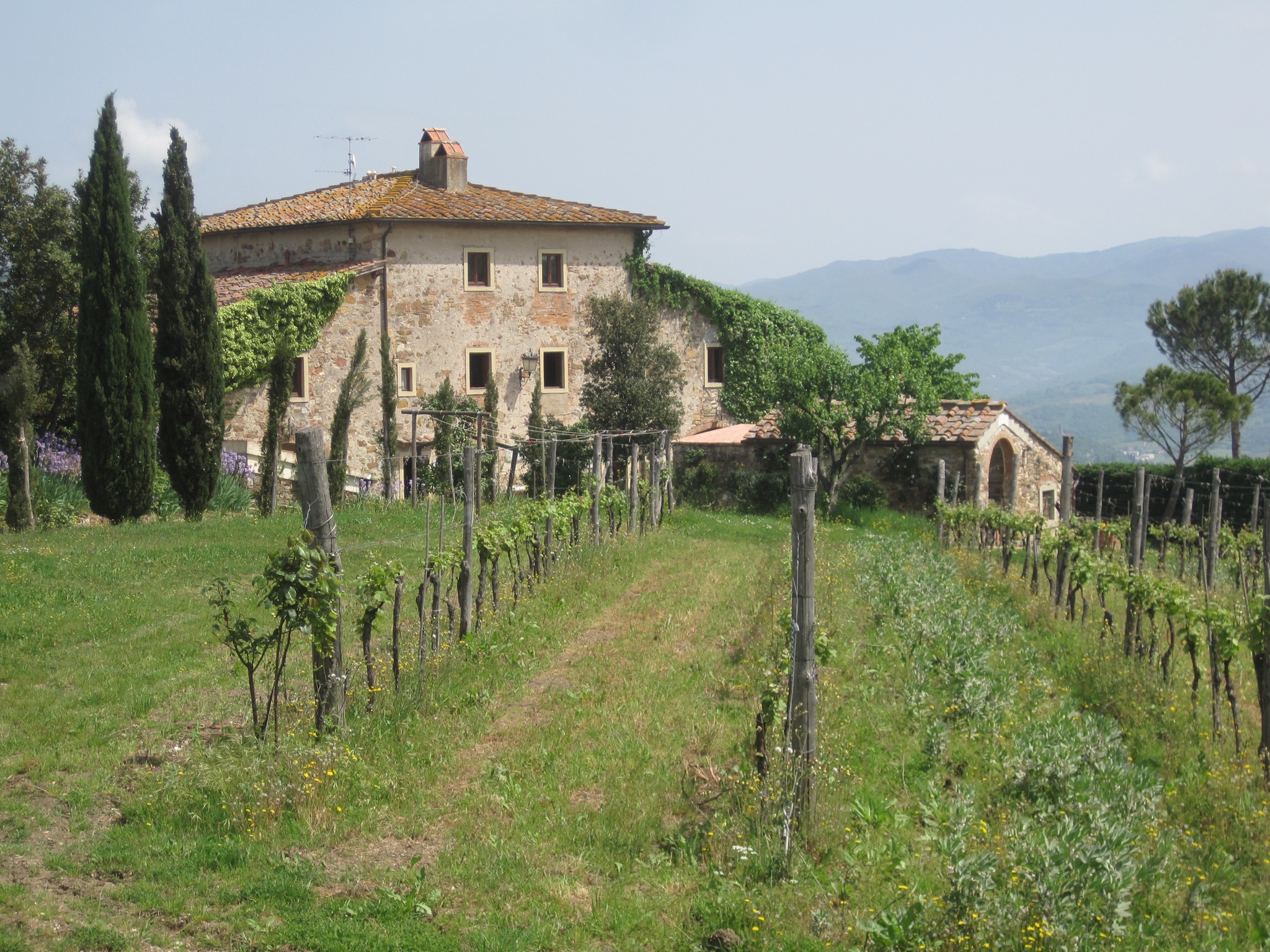
Tuscan Farmhouse
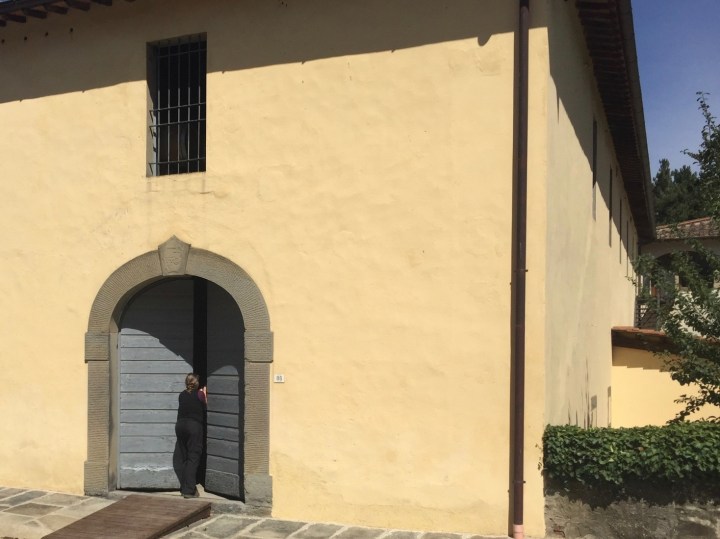
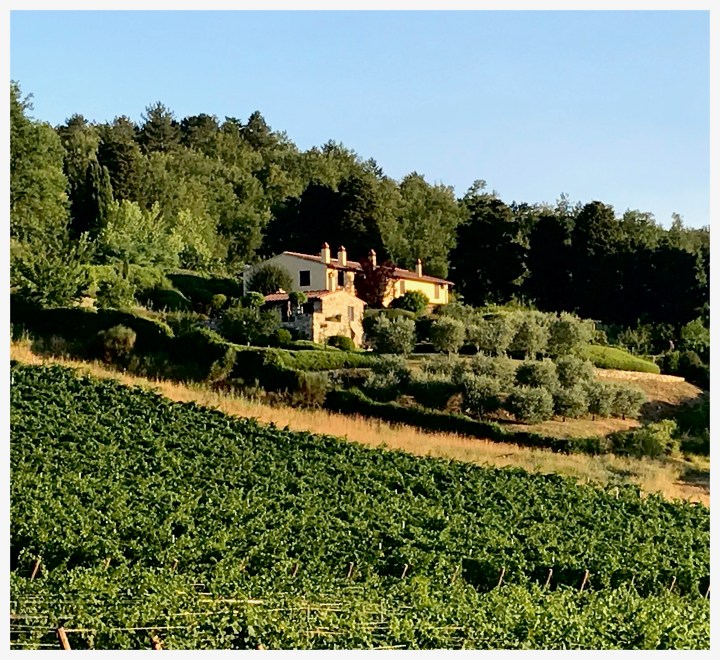
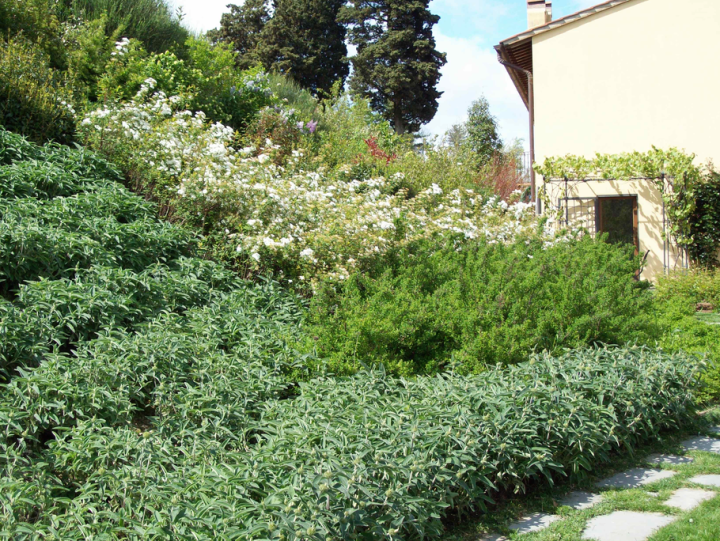
When we first came to Tuscany in the year 2000, we were captivated by the natural beauty. But, even more, we were mesmerized by the impeccable instinct to “design with nature.” Especially in the countryside, the villas, landscaping, colors, materials, the reflection of the sun, all worked together to create this seamless tapestry called Tuscany. We were fortunate enough to find our own piece of that landscape. From our simple hillside farmhouse, overlooking the valley, we’ve developed a deep appreciation as well as an obligation to maintain and preserve that which has come before us—for those who will come after.
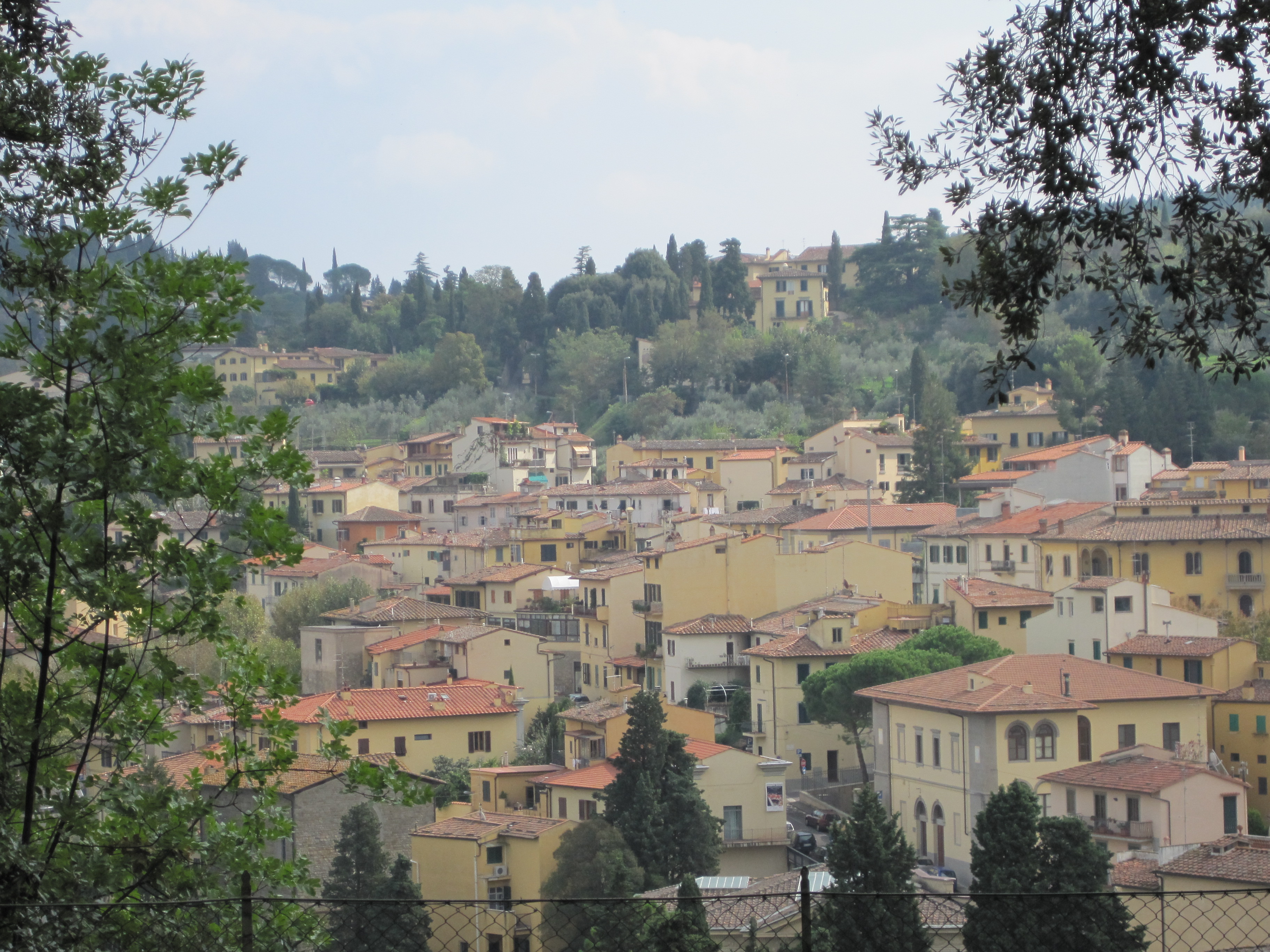
Fiesole Today
The name of our farmhouse, which we share with two other Italian families, is Casale Pretena, which simply means, Pretena Farmhouse. But, there’s a twist. It turns out that the name isn’t exactly Italian, and that Pretena is most likely an Etruscan word that has been handed down through the generations. The local lore suggests that this land may very well have been part of an Etruscan settlement on the outskirts of the nearby famous Etruscan town of Fiesole, just three miles down the road. Many generations of farmers who tended this land over the centuries left their indelible mark and name. Just imagine: countless families were raised here; animals provided sustenance; healthy crops fed the young families and animals. Surely artists and artisans were among the early inhabitants, facing life’s many day-to-day challenges. Doubtless, tragedies occurred. but the hard-working people persevered. Because they did, we consider this a sacred site, where that collective soulful energy is still felt today.
Ancient Garden Spade
Indeed, this place has always been special to us, and we’re humbled by the opportunity to momentarily “tend the soil” in that long line of caretakers. We decided to use the beautiful garden as a canvas of sorts, to honor the memory of those families who came before. As a symbol of their labor, we have planted various ancient farming implements throughout the garden. These are tools that were essential to their lives—held in their hands. Each iron piece peeks out from the lush greenery to remind us that, ” This sacred place belongs to all of us. Take good care!”
Farmers Memorial
Iron Wheel
Wheel as Sculpture
Music
We wrote this song 20 years ago when we first found Pretena , conjuring the magic and mystery that surrounds this place. After all these years, this land continues to provide awe and inspiration for us! If you want to read the original story along with the lyrics, you can find them by clicking this link: “My Treasured Heart.”
Photos
Following is a photo gallery of the Pretena flower garden. We don’t tend crops and animals anymore like they did over the centuries, but we have done everything we can to create a special sense of the natural beauty of the place in honor of those who preceded us.
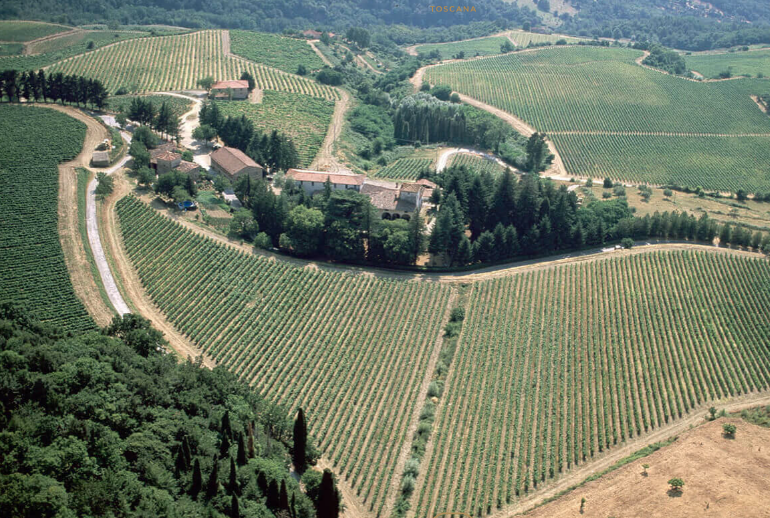
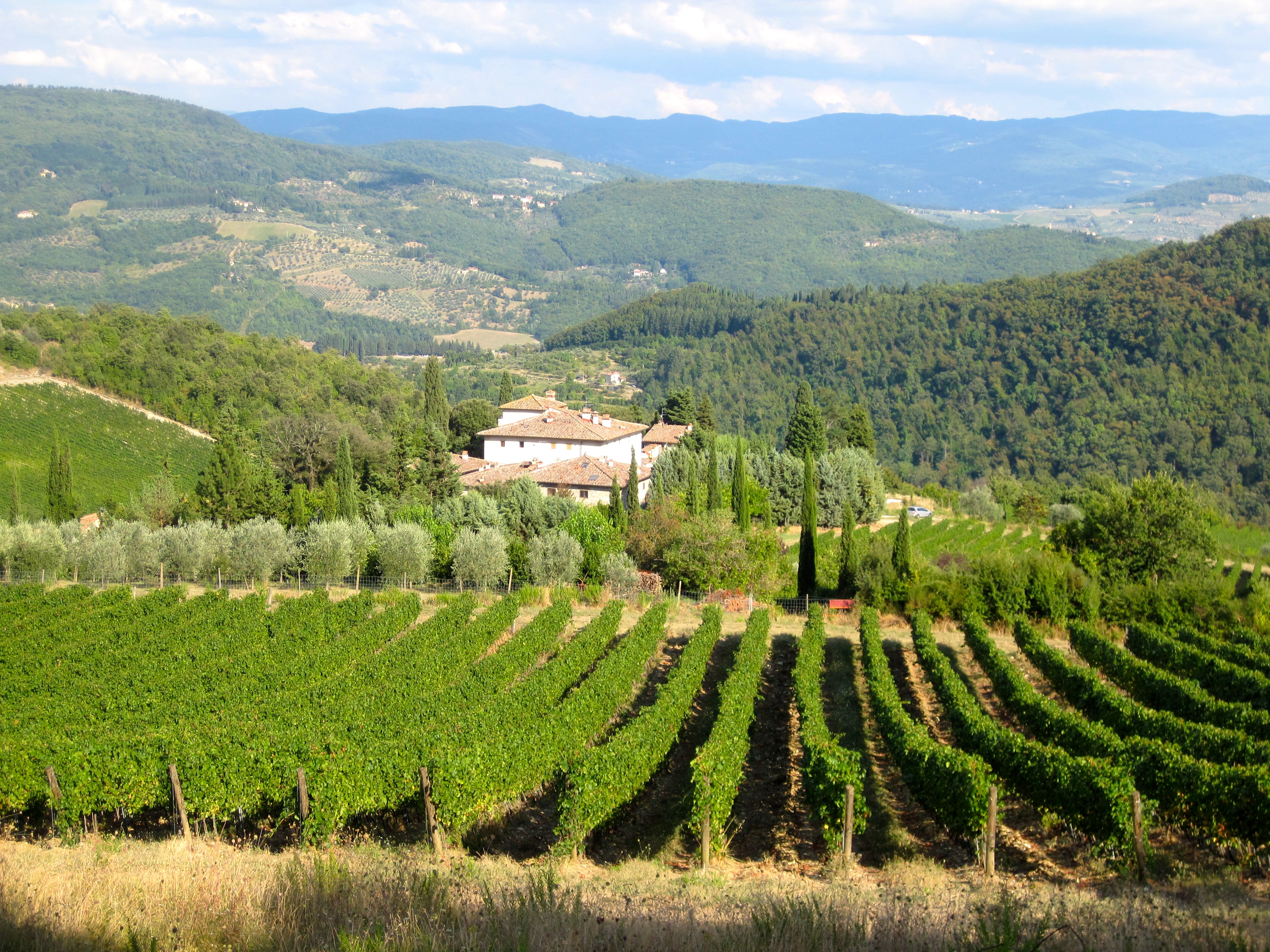
We are surrounded by vineyards of Antinori. Fortunately, they are one of the oldest wine-making families in the world and have learned quite a few things over the past 600 years. As a result, everything they do is precise, immaculate and beautiful. Perfect neighbors.
The vineyards are irresistible. They change constantly with each season, daily and even hourly. The meticulous rows mesmerize us, forming the perfect backdrop for far-off-gazing, solitary contemplation or soulful conversation. But, beyond distant admiration, it’s even better to traipse silently into them. Walking through their alluring geometry has become an important morning ritual—with dawn’s crisp air, the natural cadence of muffled footsteps, the sight of an occasional leaping deer, darting rabbits, and the sun peeking over the distant mountain ridge. Nature’s wholesome aroma gently fills my lungs to the brim. Day after day I honor the beauty of the vineyards.
Purple Wildflower
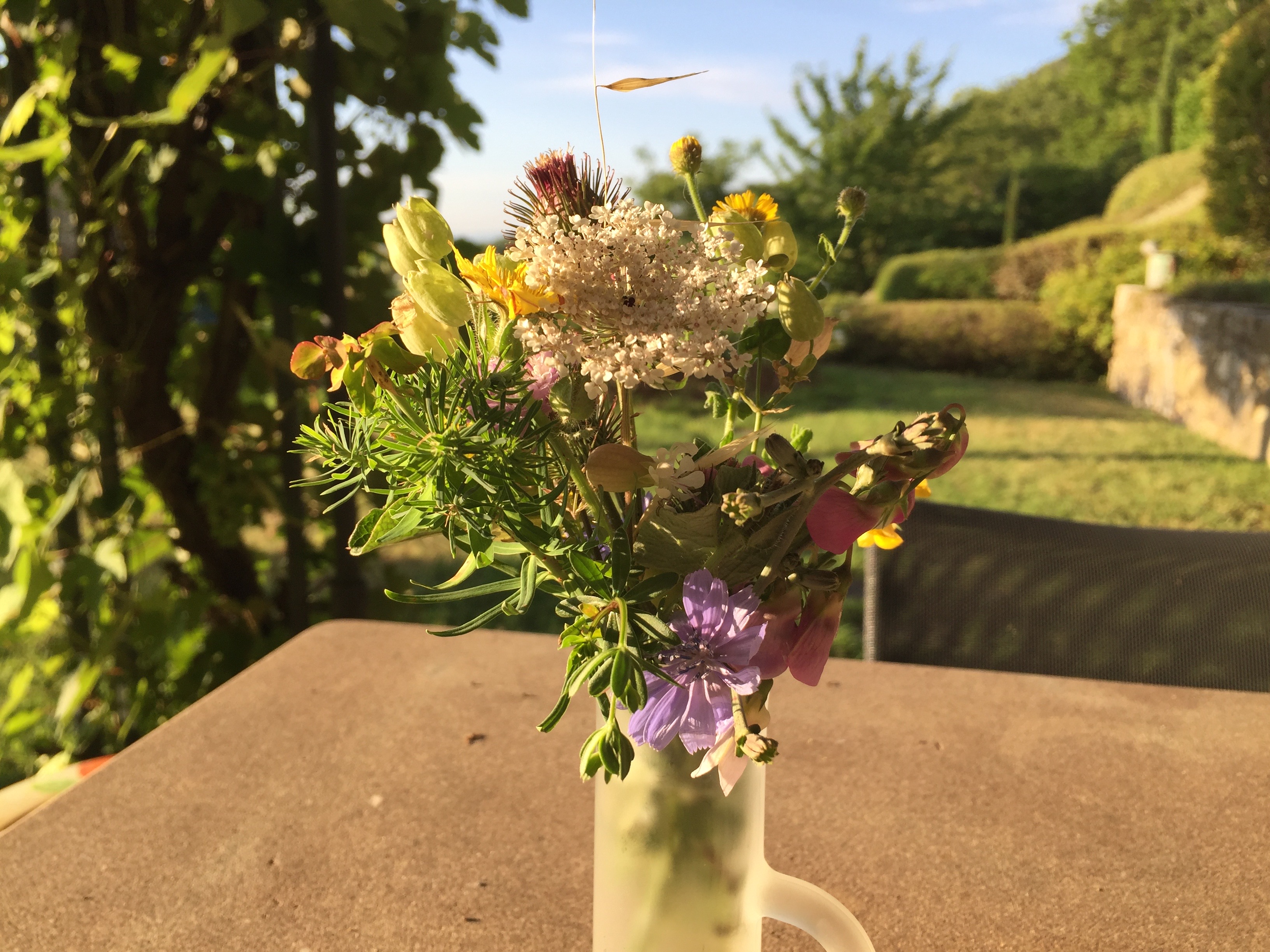
This morning was even more delightful than usual. In summer, the paths surrounding the vineyards are dotted with purple wild flowers. They are hearty varietals indeed, because when I bent down to pick one for Cheryl, it was difficult to break the stem. They grow in the toughest conditions, so durability is required for survival. With persistence, I freed the tiny flower and held it close. It was even more beautiful than I expected—strong yet delicate. I carried it home as a present for my true love, like a naive schoolboy with my first girlfriend (nearly 50 years after our first encounter).
Then came the surprise. My focus on the purple flowers caused me to look closer still toward the ground-covering wildflowers. First, I saw the most colorful ones. Then, I started to see other less obvious flowers nearby. There was an obscure yellow bloom, then I noticed an unlikely tiny white-lace canopy that I had previously seen as a weed. Each blossom was now more interesting than before. I found myself standing in an abundant garden of everyday, unassuming flowers. Upon closer inspection, even the brown-red spiky thistle I always avoided became one of the most unique of the bunch. I plucked it from the dry earth, adding to my collection.
Wildflowers for my Love
What a wonderful metaphor for life! Incredible beauty is literally everywhere. We wander obliviously through a veritable garden, side-stepping that which we haven’t yet learned to appreciate. Value appears only when we have a shift of perspective. Certainly, everything is inherently valuable. Then suddenly, we simply decide to see it.
The tiny vase of wild flowers took its rightful place at the center of our table and our lives where we could be reminded daily of simple overlooked joys—those that await an aware gaze. Our eyes open, and a tiny new panorama is freshly taken in. Exhilarating!
The Pratomagno mountains near Florence are full of wonderful moderate hiking trails. Many of them are anelli (rings) that are relatively easy half-day treks, perfect for a cool early-morning start that finishes before the summer day heats-up. The trails wander through the dense wooded hills, crossing small villages with charming farm houses, ruins, villas, country churches and castles. Everything is picturesque so there are photo-ops at every turn.
Ferrano Castle Tower
One especially interesting circular hike is called the Borselli-Ferranoanello, where you will find the beautiful Castello di Ferrano and Chiesa di Santa Maria (1574), along with interesting country farmhouses and knock-your-socks-off panoramas that are sure to slow you down for a prolonged gander. Following are some photos we took that will give you a feel for the historic buildings, terrain and scenery.
We have written two other related stories about similar hikes, in the same area that you might want to check out: the ruins of Lavacchio and the Nippozzano castle. Both hikes, guarantee a delightful morning in nature, with significant Tuscan scenery in which to contemplate. We’re definitely not in Kansas anymore!
The ancient proverb “Seeing is believing” has been around since 1639, and means that only tangible evidence is truly convincing. However, living in Italy has shown us that just the opposite can also be true—”believing is seeing.” Thus begins a short tale about a window.
Our First Attempt
We live in an old Italian farmhouse in the hills north of Florence. The Italians take tradition and culture very seriously, so the look of the buildings and the landscape are guarded like gold. Construction formulas have been around seemingly forever, so details can rarely change—if ever. In a farmhouse, for example, there’s a formula for natural light-to-interior space. But there is also a formula limiting openings in exterior walls. It was not unusual to have a large blank wall, punctuated with only a single small window and a door. So if you want a second window, for more light or to balance the facade—well, that’s just too bad. There’s no way the formula can be altered. But in our case, the aesthetic sensibilities outweigh the formula. We are bothered by a large bleak, blank wall. Okay, we know that the formula was derived long ago when too many windows meant heat loss. But central heating is all the rage now, right? So what to do?
Inside Window
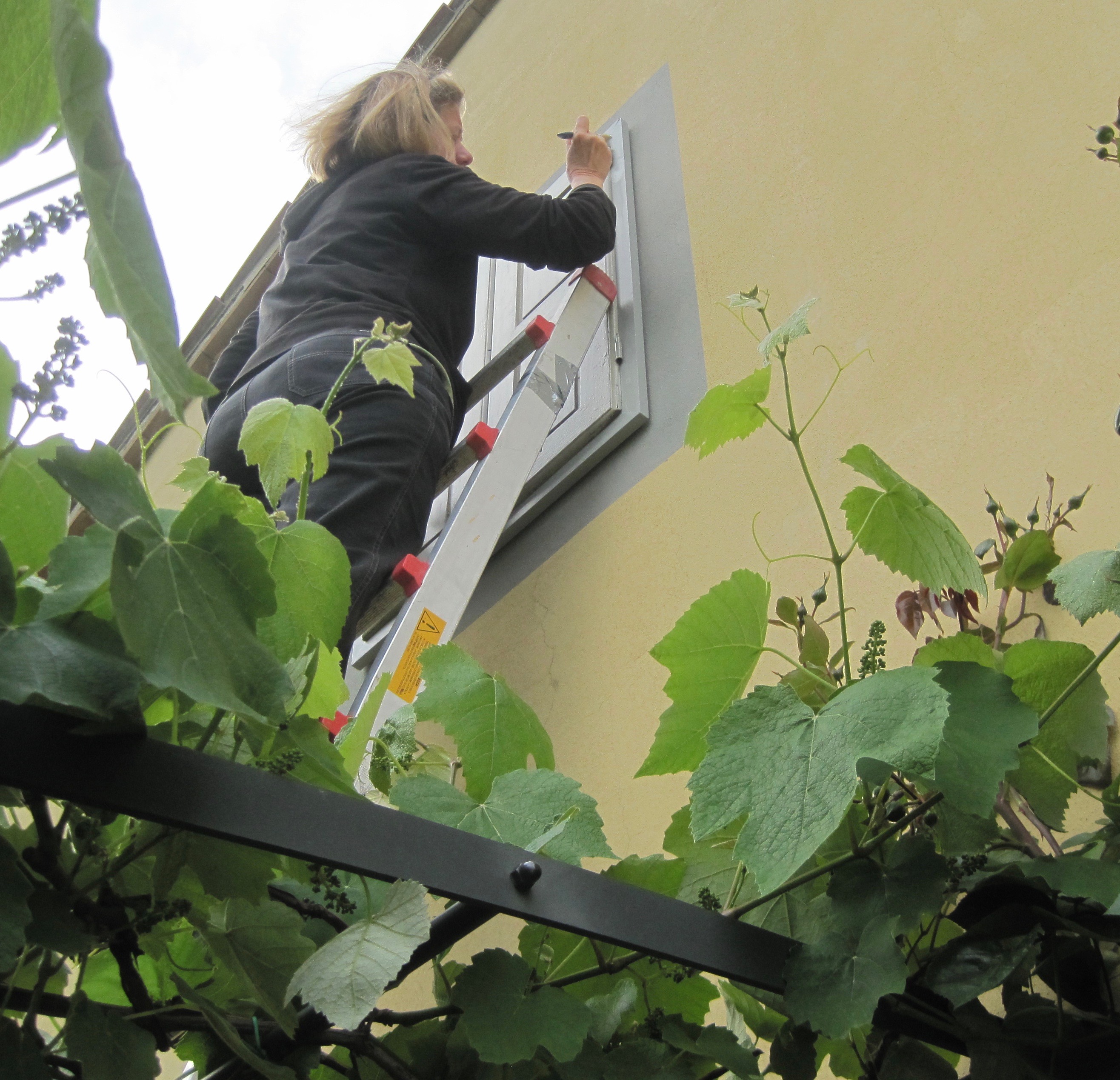
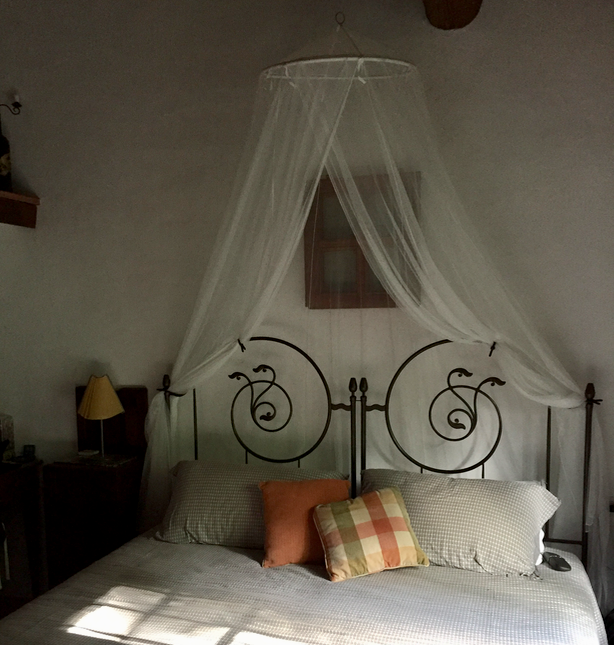
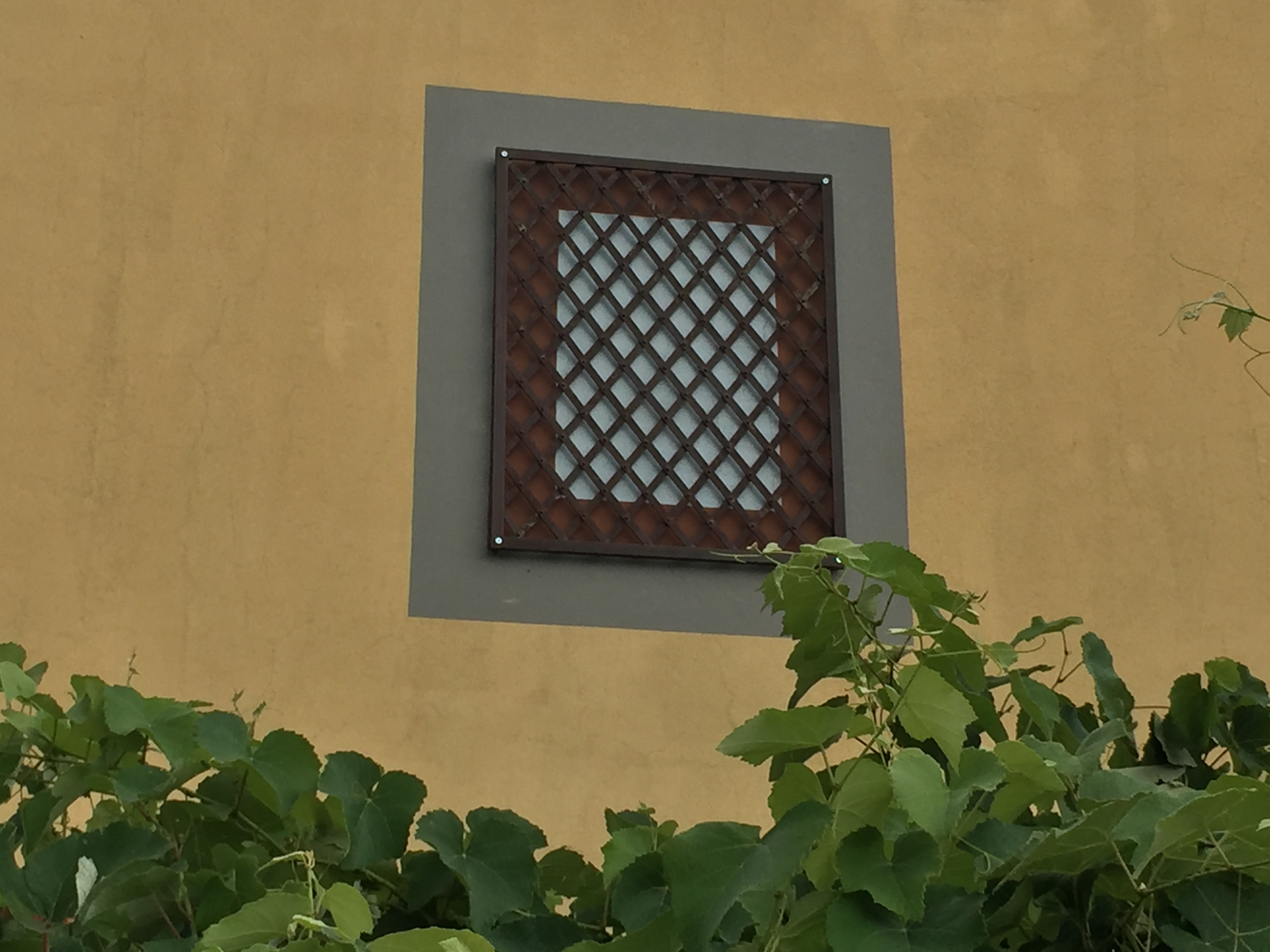
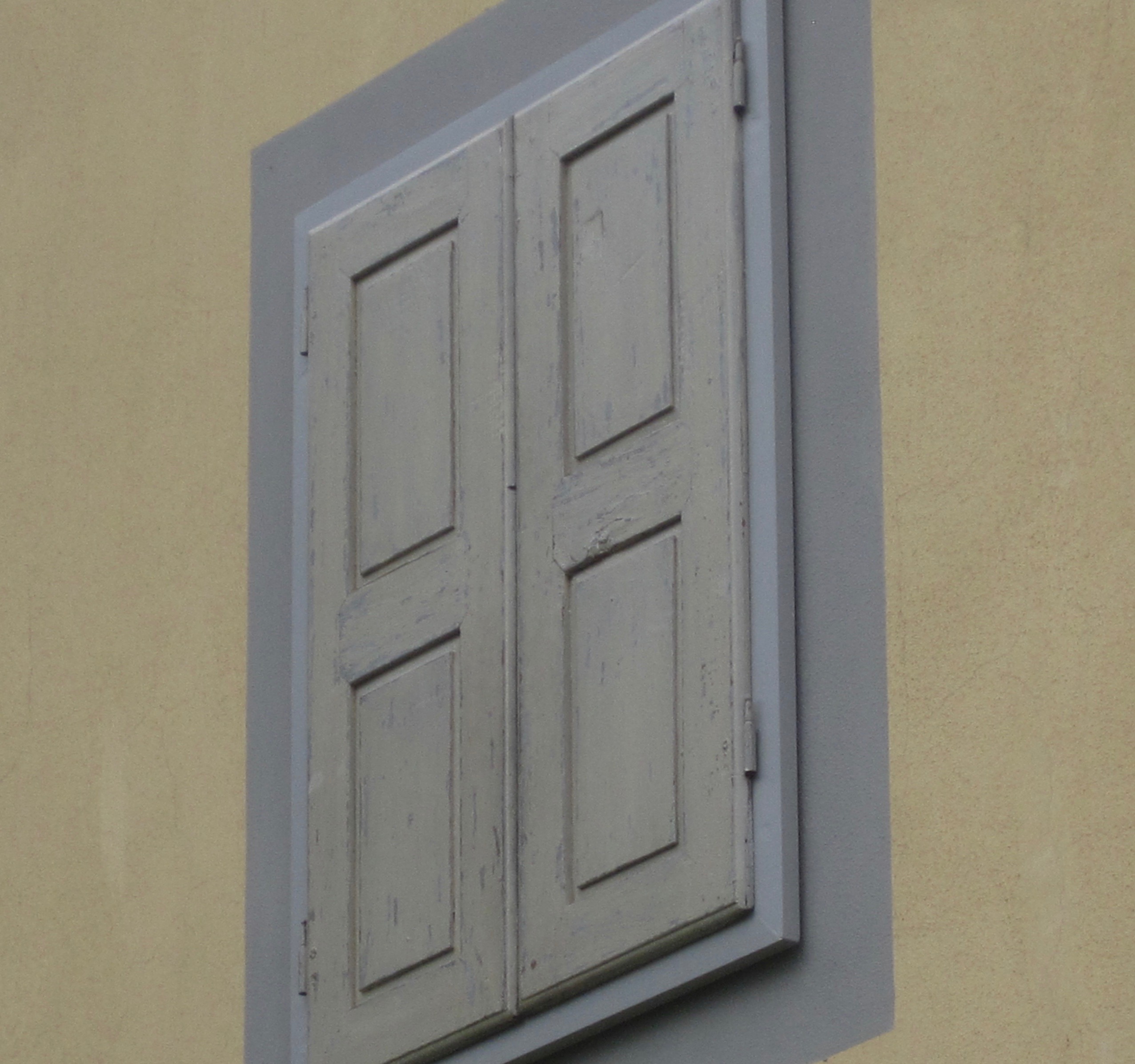
We decided that we could hang an old metal grille on the outside wall. Of course, we’d paint a soft gray border around it to suggest a typical Tuscan window, traditionally framed with pietra serena (stone). So that’s what we did. No wall was pierced in the placement of the “art” as we call it, and everything we’ve done is “temporary,” which means “removable” to the authorities. We could simply paint over our faux window one day, as if nothing ever changed. Our first try was to use wood shutters, but they didn’t weather well. So we moved on to an iron solution which would last a lifetime. Our eventual imaginary window solution was pretty doggone convincing, but we weren’t quite finished yet. No. We realized that we needed a corresponding window on the inside as well. So, we went to the nearby town of Sieci, to a Mercato di Usato (the market for old, used things), where we found a sweet little wood window with beveled glass. After cleaning and refinishing, up it went, behind the mosquito net over the bed in the guest room. Voilà!
The Old Iron Grille
As you can see, our collective imaginations took a slight detour when the real window was vietato (forbidden). Now, we have the window that we thought the blank wall yearned for, some 18 years later, with one little missing caveat—you can’t actually see through it. But that doesn’t really matter. We turned a “No!” into a definite “Yes!” and nobody got hurt or did anything too drastic in the process. Seeing the window is almost believing it. But for us, the notion of believing it first provided the possibility, which ultimately made artistic expression possible. We may not have an actual opening onto the nearby moody valley, but sometimes a vision is better than a view!
First Window – Wood
Second Window – iron
Garden View
Cheryl & Emerson
Quality time is undeniably great for relationships. We've discovered that quantity of time can provide that quality. Perhaps it takes Time to Partner.

 On a backroad between Borgo San Lorenzo and the small town of Polcanto, in Tuscany, just north of Florence, an unknown artist has taken an open, sunny patch of meadow and created an outdoor exhibit, a seemingly permanent Art Gallery of sorts. Each unique piece is weathered and worn, allowing the natural patina to be the final artistic touch. The exhibit appears to be a dynamic, additive process, with some pieces showing more age and weathering mirroring the passage of time (perhaps years), while others seemed like more recent additions.
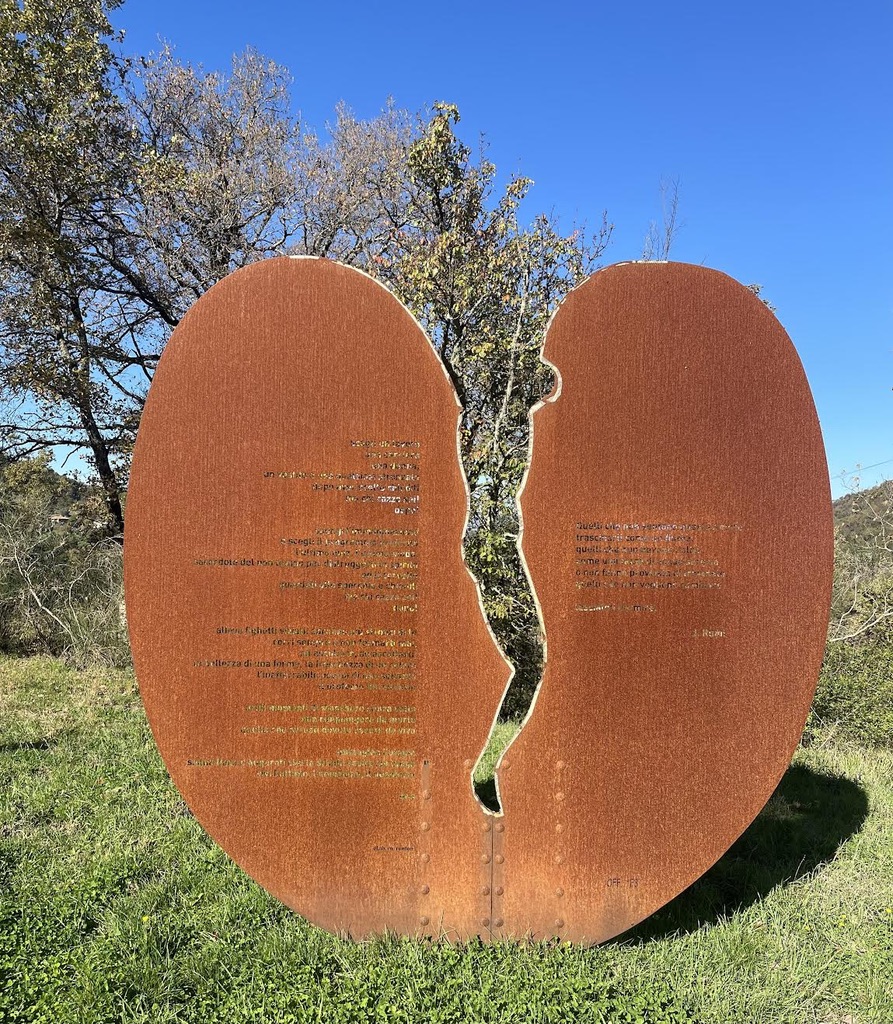 Two of the sculptures were quite detailed and complex, using a very modern-day material, Corten steel (a special alloy that forms a stable external layer of rust). The large heart-shaped steel plates were incised with the first stanza of the Rumi poem: Ode 314—which offers commentary on our choice of living our lives “asleep” or “awakened.” He suggests that life is to be lived with intention and reflection. Without judgment, he suggests that the alternative is simply sleep. He even advises against disturbing this sleep. It’s sort of a live and let live perspective. Perhaps he’s posing the question of readiness. But clearly his choice is to take the way of intention. The first stanza is shown below.
 In stark contrast, another sculptural piece is in the form of a collage. Another, is a fluttering collection of random neck ties, suspended from the branches of an oak tree. Do the ties relate to the steel heart? Or to the other pieces? Are these expressions from the same artist, or is this an open invitation to anyone who feels inspired? Either way, it is compelling enough to warrant a closer look from any passersby, either on foot or enjoying a peaceful drive on a typical Tuscan side road.
 Side Note: A few days before discovering this Roadside Gallery, we visited the Palazzo Strozzi exhibit in Florence, viewing the collected work of Fra Angelico—what a fascinating contrast to the Roadside Exhibit.


























































 Quality time is undeniably great for relationships. We've discovered that quantity of time can provide that quality. Perhaps it takes Time to Partner.
 Uncommon promise