These stories tend to focus on special individuals or couples who have something in particular to say, or represent something specific worth documenting. They certainly aren’t always big names, or popular figures, but can be quiet and unimposing personalities as well—with a story to tell.
How do we know that? Just listen! Aside from English, and of course Spanish, you’ll hear Chinese, Korean, Japanese, Cambodian, Thai, Laotian, Vietnamese and Tagalog, along with other Pacific Island and Asian languages. You’ll notice that the air is laced with spoken melodies of French, Italian, Portugese, Armenian, Persian, Greek, German, Russian, Polish, Hindi, Arabic and Hebrew. Various African words and phrases also float about, intermixed with Navajo and other Native North American languages as well. Some, of course, are more prevalent than others, but they all have their day in the California sun, and they all have their “say.”
“Soul” of the city
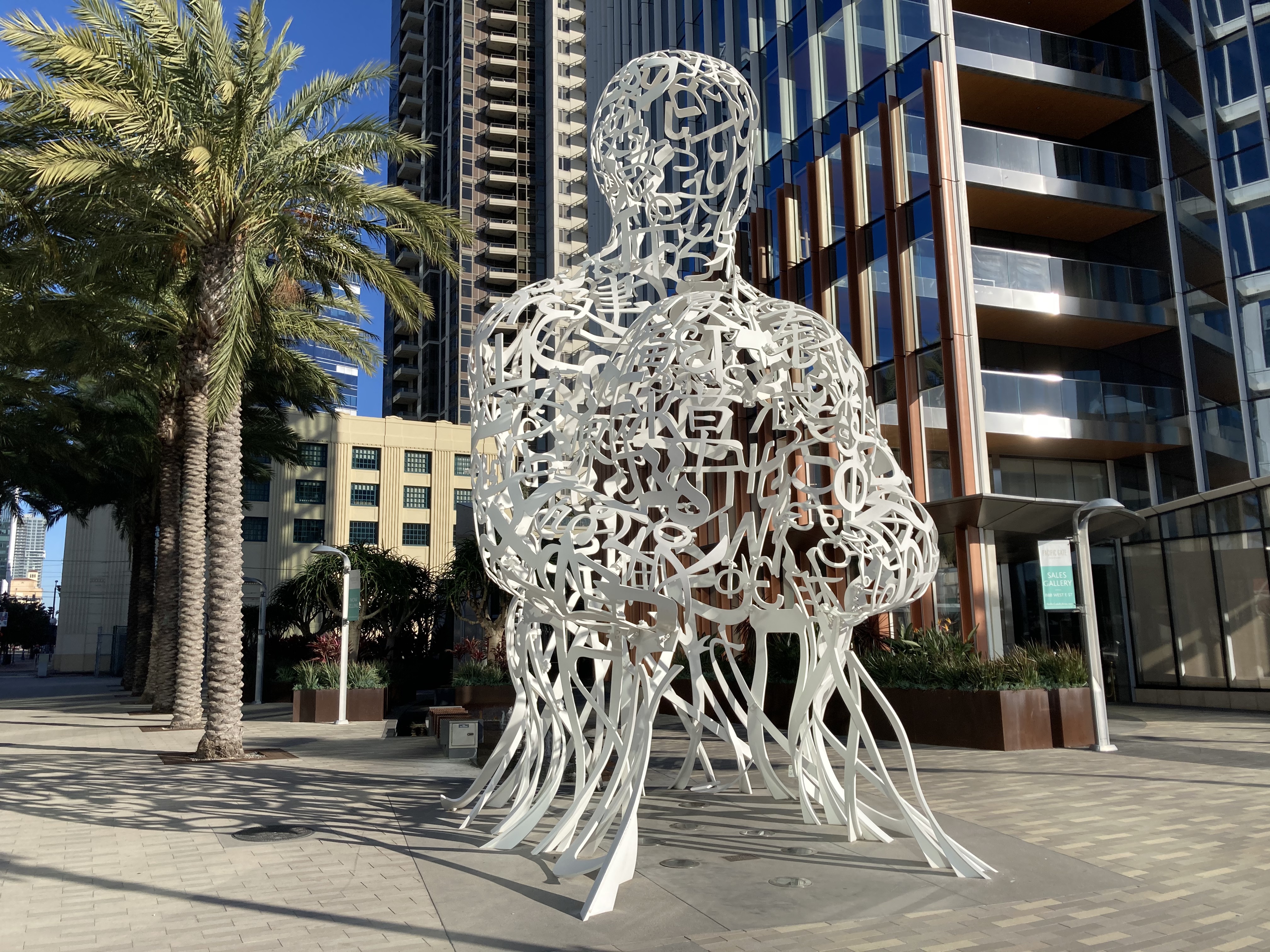
In addition to hearing the multi-cultural diversity, you can now actually see it, thanks to Jaume Plensa. He is a world-renowned sculptor from Barcelona, who has bestowed his sculpture to San Diego, representing his interpretation of the “Soul” of the city. His multi-lingual expression graces the corner of Broadway and Pacific Highway, just outside the new Pacific Gate Tower. The work is an every-day reminder of the importance of diversity in creating who we all are—together.
The human figure, titled “Pacific Soul,” appears to be crouched down, gazing west into the vastness of the Pacific Ocean. The figure seems to grasp a knee with each hand, adding tension to an otherwise serene form. About this work, Plensa explains, “The ocean is always in movement, always changing; we never know precisely where a drop of water will go, or where it has been before. It is filled with potential.” San Diego is much like its ocean companion—always changing and full of possibility. Serenity and tension co-exist.
Roots to the Pacific
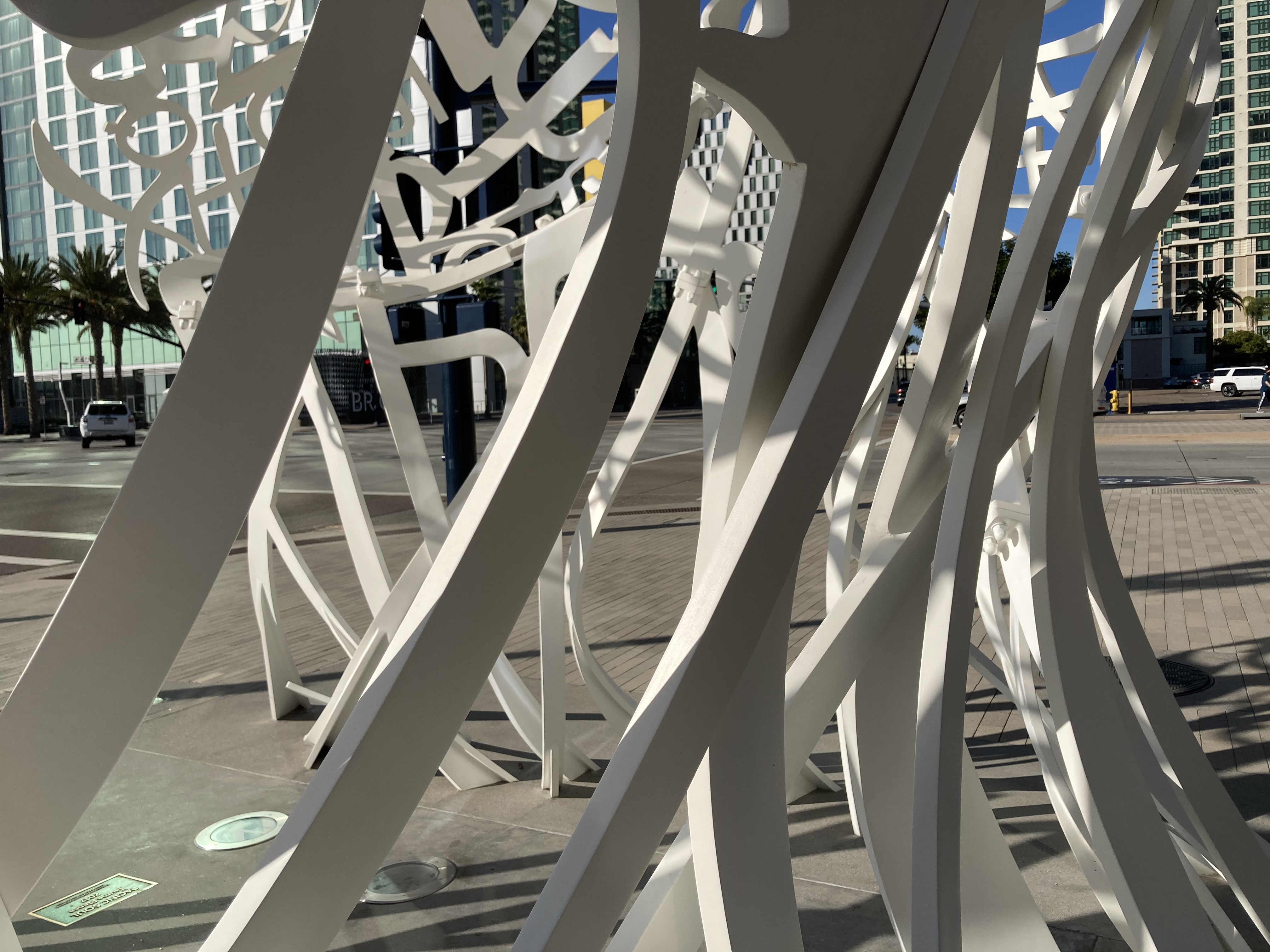
As you approach the imposing figure, you may be drawn to step inside. As you stand there, an infant in a womb, centered in the body, just imagine the magnitude of the idea—The life-giving waters of the Pacific are being drawn upward through the massive “roots” of the sculpture, giving strength and sustenance to anyone inside. We have a sense of being forever linked to the sea. As a baby is linked to its mother, we too are directly connected to the vast ocean beyond.
Looking skyward
The brilliant blue sky creates stark contrast as we gaze upward. Woven together are seemingly random sweeping white ribbons and a variety of shapes. Quickly, letters come into view. These are the lines and figures that enclose us. The myriad diverse letters are gathered from many languages heard within and around the city. Words seem to float in the very air we breathe. You become, and remain an integral part of this bustling metropolis whether living here or just visiting. You can feel the ocean breeze wafting past you, like a balmy current through a screen door on a warm summer day. You are changed.
You begin to understand that your very presence makes you part of Plensa’s multi-cultural “Pacific Soul.” In addition to becoming part of the sculpture, you are also part of the unique, evolving and diverse collective we call San Diego.
Welcome!
Chinese
Latin
Hebrew
Greek
Arabic
Cyrillic
Hindi
Japanese
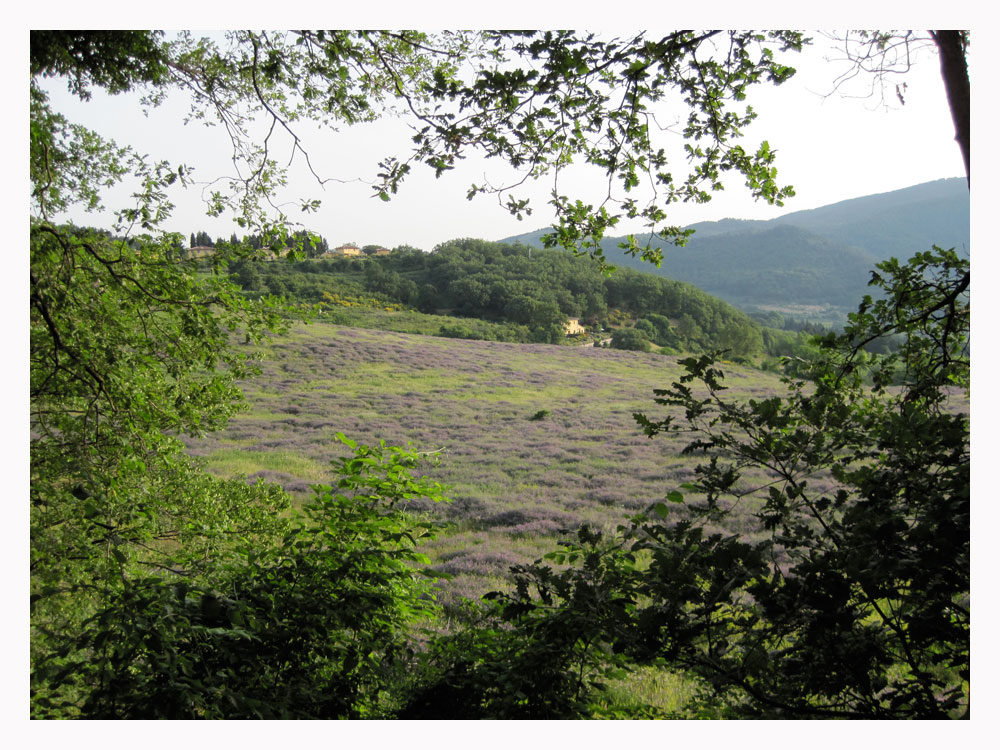
Tuscan Hills
We wrote another story and song about diversity in 2011, called “Layers” that you might enjoy reading. Instead of the warm San Diego sun, we were inspired by the hills of Tuscany, where centuries layer upon each other to create a rich history and incredible landscape. That layering deepens individual lives, as well as the texture of generations, forming unmatched magical diversity.
Wow! Quite a powerful name, don’t you agree? Of course, it is fitting, since she’s such a powerful individual. She’s definitely one of a kind, and today is her 99th birthday. If you were to meet her, we think you’d like her. Oh, sure, she has a few little quirks and peccadillos, but who doesn’t? And if you were to tally the pros and cons of her life, it would be HEAVILY weighted toward the pros—thereby making her an absolute “PRO” at this messy business of living. We’re impressed with her stamina and desire to achieve the sweet age of 99, and offer our congratulations along with a few hearty compliments on her admirable style as well.
A part of the dream come true
Born on April 3, 1922, she was Alice and Will’s third child making her the lucky last one in line to get the lion’s share of abundant parental doting, with the bonus of a big brother and sister adding to the dotage. She set-out to create the best possible version of the “American Dream” (which was impressed onto everyone’s psyche at the time). Her goals were simple: deep and sustaining faith, member of a church that she cherishes, a loving husband, healthy and happy children, and of course a safe and beautiful home in the suburbs. For her, it was a fairy-tale come true, and couldn’t get any better. Even as she lived her dream, she saw her fair share of sorrow and heartache, as well. True to the custom of the day, when troubles arose, she just prayed, shed a few tears, then propped herself back up and started in again—powered by undaunted drive and persistence which was her hallmark.
Rose and sweet daughter Sue
She always told us she was going to live to be 100. We believed her, but never quite imagined what that prediction really meant or would look like. Now we’re beginning to get an inkling. So, in anticipation of her upcoming 100th year, it seems appropriate to honor her magnificent dream as she charges forward toward achieving her goal. We sang “Happy Birthday” to her this morning and she giggled. We don’t question whether or not she’ll celebrate the next one, because knowing her, she WILL, and possibly even set a new goal. She lives life with a Master Plan—the way she wants things to turn out. In fact, we always joked that she was a “dessert-first planner.” When creating a menu for a dinner party she would consistently decide on the dessert, then make the rest of the meal play toward that end. This upcoming 100th birthday is her “icing on the cake,” and you can be sure she’s in the “kitchen” making everything just right!
Cheers!
This story isn’t just about Rose, or the magical age of 100, or the goodness of a life. Rather, it’s about the power of vision, commitment and determination. Those qualities are readily available to all of us no matter what our name, stage or age. They’re free. Please join in a metaphorical toast to all of us—our hopes, dreams, visions and goals. “Here’s to the power of positive thinking!” Mom’s will-power and the way she lives her strategy is a model for us all. That unmistakable approach and style remains simple. She merely sees this complex world through “Rose-colored glasses.” Well done and happy Birthday!
We love you!
Note: The photo of the 99th birthday party was taken by T.C. Christenberry
The Espresso experience is so much more than drinking a cup of coffee.
Of course the ultimate espresso can only be found in Italy. Case closed. Nothing can match the total experience of the morning espresso and pasta, pastry at a real Italian neighborhood bar. What makes it unique? Hmm, well . . . we’ll take a shot at it?
Caffè Lorenzo
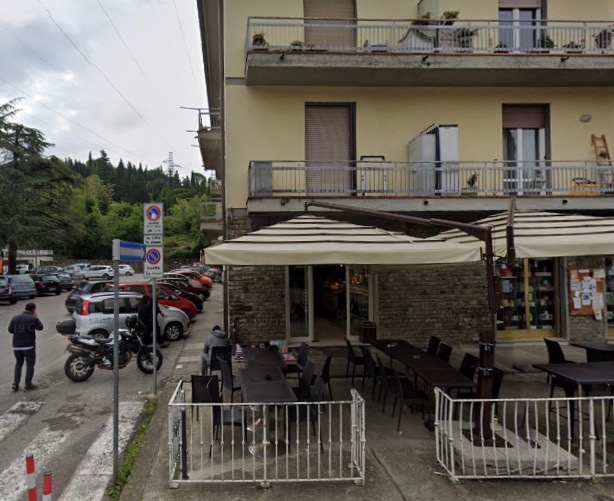
It all starts at Caffè Lorenzo, in the small burg of Pian di Mugnone just outside of Firenze, Florence. In this example, the barista is called Fiore, standing in position wearing a black apron, facing the beautiful stainless steel espresso machine with his back to us as we walk in. A quick glance into the gleaming mirror alerts him of our arrival. Without a second’s hesitation, he slides two more mini saucers with bitsy spoons onto the counter and continues his finely choreographed moves in pursuit of the “real” thing. No motion is wasted. Time is of the essence. He prides himself in knowing what each of the regulars drink, so the option to change-it-up is pretty much nonexistent, unless you yell it out immediately. Otherwise, it’s business as usual. Fiore and his cohort Marta both know that we’ll be choosing a delicious pastry as well, and Marta stands poised with tongs in hand to claim our prize.
Artistic expression
There’s a captivating rhythm to the process—a morning cadence of steady percussive sounds: the hissing of milk being steamed; constant clinking of the tiny ceramic cups lined up like soldiers guarding the bar; the relentless banging of the spent grounds into the handy pivoting bin; all punctuated by random plucky calls of completed orders. Ahh, music to our ears!
Okay, but what’s so compelling about such an ordinary “Italian breakfast” experience?
Well, all of the regulars are there with warm greetings as we walk in the door. Some, inevitably offer our little doxy Sara a handy, pocketed doggie treat. If no goodies are forthcoming, Marta may disappear into the kitchen to fetch Sara some pastry scraps. She’s done this so often that Sara watches for Marta to duck into the adjacent room. Intense excitement ensues.
Tasty treats from the kitchen
People are packed into the small space, so there’s a sense of being in a tiny kitchen, having to turn sideways to let someone by, or carefully reach over people to grab an extra napkin. Of course, the true Italian downs a classic espresso within two quick sips—maybe three. Any longer and you risk having your cup swiftly swooped away to make room for the next one. So, we’ve learned never to take a finger from the cup until we’ve completely finished our morning elixir. The staff watches every move to insure that each customer’s completely satisfied.
Since there aren’t any rules about lines in Italy, it’s a bit of a fast action free-for-all where courtesy counts and patience matters. Italians typically don’t queue in any obvious order, but are quite generous in letting someone ahead of them at the cashier (their least favorite part). It’s a messy process for sure, but maybe that’s what makes it so endearing.
No Roberto today
Although the coffee is delicious, it’s just one small piece of the overall experience. An image of the coffee bar is the first thing that comes to mind whenever Italy is mentioned. It’s definitely the first thought upon waking up to an Italian morning. Strangely enough, it takes us 20 minutes just to get to Caffè Lorenzo, and we’re only there about 15 minutes max. As we leave, we look for our friend Roberto, sitting on his balcony above the bar, waving friendly hellos and remarking about the day. We always leave smiling, satisfied and certain that everything is right in the world, or at least in that small part of Italy—and that’s well worth the hour spent and the 2 euro price tag.
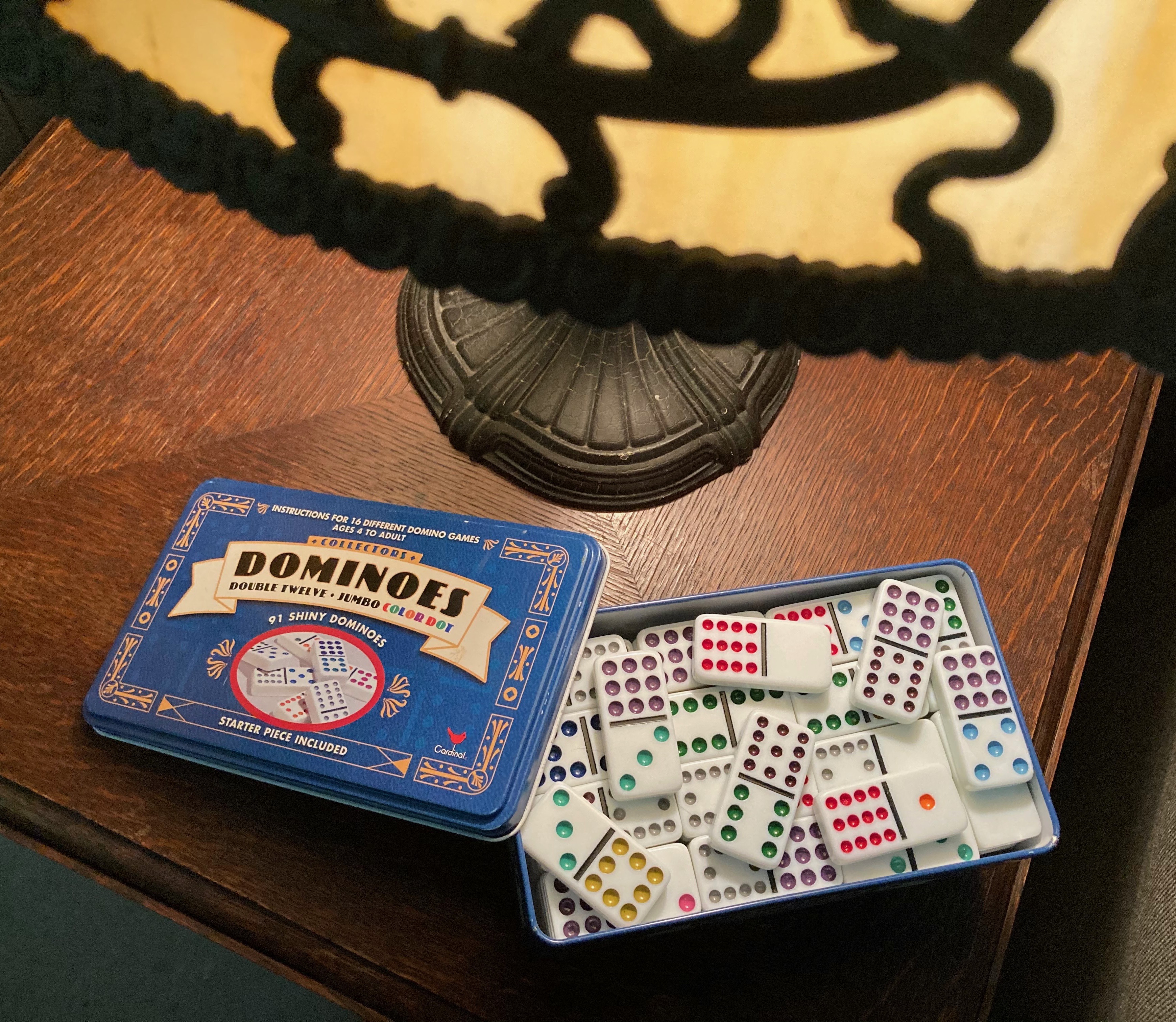
In the hills of 12th century China, domino tiles were purportedly invented. That said, there are pesky rumors of earlier Egyptian and Arabian origins that have persisted over the centuries. Everyone wants the prestigious honor of having dreamt-up one of the greatest games ever made. But regardless of the domino creation story, it’s fair to say that Italy was the first country in Europe to adopt and adapt il gioco da tavolo, the table game, with its irresistible ivory tiles. Let’s fast-forward 500 years from the hills of China to Italy in the 1600s and take a closer look.
Early game of Dominoes
The game of Dominoes mysteriously appeared in 17th century Italy, in a “new and improved version.” With Italian enthusiasm behind it, the popularity of the game spread across Europe and the rest of the world like wildfire. In China, the game had been called “Pupai,” which means to “lay out.” Although somewhat descriptive, that name was less than dazzling. So, some Italian marketing minds, eager to claim the game, apparently came up with the name Domino to give it more popular appeal.
Palazzo Vecchio Florence- Medici Stronghold
The Latin word dominus means lord or master, which makes some sense since the first player to use all of their tiles becomes the “MASTER” of the game. In addition to the Latin, the Italian word dominare means to dominate, so domino il gioco would literally translate into “I dominate the game.” Given the many power shifts throughout Italy’s history, that name would appeal to those living in the shadow of the forceful Florentine Grand Dukes de’ Medici, or the Vatican’s powerful presence in Rome. Imagine the vicarious sense of strength and authority that dominating a game would give to the powerless in those historic times. So, even though the Italians didn’t invent Dominoes, they did rename it and went on to introduce it to the rest of the world, making it a remarkable success.
Clergy in hooded black cloaks
There’s another theory in favor of Italian authorship of the game name. Since the Vatican has been the heart of Christianity for centuries, it makes sense that the church would influence the naming of an important cultural pastime. Dominus, meaning Lord, was a pretty direct God reference to the Church. After all, there was nothing much separating Church and State at that time—they were essentially one and the same. The Church wanted the association between the Divine and everyday, ordinary life to be emphasized.
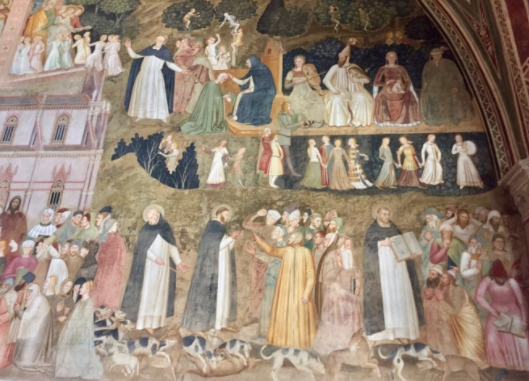
Fresco of the Dominican Order with dogs
The traditional garb for priests and monks were hooded black cloaks. Curiously, early European game pieces were made with an ivory or bone front with a contrasting back made from ebony. In the mind’s eye, the subtle association was made to the black-shrouded clergy—creating Holy intrigue for the popular game, complete with spiritual force, mystery and authority. Even more specifically, one religious order followed the teachings of Saint Domenico, and so became the Dominicans, a relatively austere order (often contrasted with the Franciscans). Their order name was frequently slurred to Domini-Canes, dogs for God, due to their stringent adherence to scripture. Once again, the connection to the church is quietly reinforced.
The Domino of Carnivale
A third theory to support the Italian influence over the game is based in Venezia, Venice. During the famous Carnivale, costumes are traditionally worn so that the wearer remains anonymous. The cloaks and masks underscore elements of adventure, intrigue, and mystery. Questionable behavior is protected and class differences dissolve for a time. The traditional black-hooded robe with a white mask called a Domino is worn by both men and women. Just by donning a small covering across the eyes, anyone could change their gender and status. The Church obviously frowned upon bad behavior, so wearing a disguise was flaunting individual action over authority. During Carnivale, anyone can be powerful and influential, or at least present the illusion!
Domino theory in action
Even though Dominoes seems old-fashioned today and most likely a relic to be discovered in Grandma’s closet, the game remains compelling. There may be a sentimental longing for the tactile, a need to physically lay the pieces on a table. There’s something soothing about the unmistakable click and clatter of the tiles. In fact, there seems to be a universal compulsion to line the tiles in vertical rows and then listen to the staccato percussion as they knock each other over. In fact, the tiles have gone from simple games at Grandma’s table to complex displays in huge auditoriums. We now have “Domino Competitions” where they’ve become strategic, artistic, mechanical creations. Just tap the first tile and watch the lines of standing pieces cascade into one another.
Then in 1954, President Eisenhower christened the “Domino Theory,” suggesting that a series of countries could also fall in rapid succession to political power. The once humble game of Dominoes has literally shown-up in so many aspects of our lives—our homes, churches, classrooms, thoughts and war rooms.
Grandma’s game table
But for most of us, the notion of the original game is a sweet trip down memory lane—some family fun at Grandma’s house. Regardless of the origin or the evolution, Dominoes continues to exert a subtle presence in our lives. Even with a potent magic spell you probably couldn’t make that timeless, tried and true game disappear—hocus pocus domino-cus—It’s still there!
Watch the highly evolved version of that simple 12th century Chinese game of Dominance.
Our daughter Iris has earned the moniker of “Puzzle Master—Master Puzzler,” for a simple and very good reason: that girl can really work a jigsaw puzzle like no one else! She’s been known to stretch across the table to pluck a piece right out of someone else’s hand if necessary. The small cardboard cutouts fly fast and furiously as she pops them in one right after the other. She uses color and shape seamlessly, rarely referring to the box lid for guidance. Upside-down, sideways, sitting or standing makes no difference. Oh, and by the way, she ALWAYS pockets one piece to insure that she gets to make the ceremonial closing play. That’s important to her for some reason, so we all automatically glance her way when searching for the last missing piece. She protests at first, then mock innocently checks her pockets, suddenly feigning surprise. Voila!! She produces the missing piece and righteously pops it into place—definitely one of our best family rituals!
Each day a new piece
Of course, we see a similarity in our tradition of working family puzzles and working through the “puzzles of Life.” After all, every moment of every day we locate a new piece of the “Life picture”—like an opening into the future, an inviting doorway. We carefully check for fit and color-match, experimenting and perhaps asking, “Does that look right?” Even squinting or shifting perspective can leave us with doubt as we ask the person next to us, “I can’t tell, does that piece fit or am I forcing it?”
Rainy day discovery
While on an early morning walk after an evening rain, Em spied something curious on the brick sidewalk downtown. Oddly enough, it was a single jigsaw puzzle piece. How strange! But in that instant, the lonely lost part flipped a switch in his brain. He had been working through one of Life’s conundrums—searching for a clue, a missing piece or two that would lead to a logical conclusion. Suddenly, everything fell into place. Ahh! That’s the way it magically happens sometimes.
However, we’re not all master-puzzlers and we don’t always magically find the missing piece we’re looking for. Wouldn’t it be nice if Life came packaged in a box with a specific number of pieces and a picture on the front? Would you ever agree to work a puzzle without a picture? We think not. Yet, we patiently fit our lives together, piece-by-piece with very sketchy, if not absent information, all the while knowing that we basically have to work it alone.
The missing piece of Life’s puzzle
Let’s face it, our little puzzling metaphor has its limits, but there are still some valuable insights: 1) Even though some pieces my be difficult to find, we have to be vigilant and patient to get just the right match; 2) don’t hesitate to reach across the table if necessary when you finally see what you’re looking for; 3) sometimes we need to shift our position to get a fresh perspective; and 4) humor with some good old-fashioned belly laughter is essential. But remember that there may be a trickster among us. Don’t get discouraged—because someone may have just slipped a critical piece of your puzzle into their pocket, momentarily hiding it from view. Rest assured that eventually all of the pieces will fall right into place. Following is a song we wrote a few years ago about this very process, called: “Fitting Pieces.”
The little turret-shell/tower-shell is the home of the common sea snail. They’ve spent millions of years perfecting the art of home-making and now they’re finally ready to pass their secrets on to us. Shhh—Here’s how it works: We civilized folk think in terms of “time-lines,” past, present and future—an abstraction of our lives. It’s easy to become untethered to those strand-ed “life lines.”
Nature’s spiral
The sea snail, on the other hand, thinks about “time spirals” that become tangible, functional objects—literal home-making. Every day, they are laying down new increments of a continuous spiral that will demarcate, protect and give meaning to their life. There’s never a question about where they started, where they are now, or where they’re going. Life is a tower. Life is a shell!
Artist/sculptor Joe O’Connell understands the lesson of the “tower-shell snail” very well. However, he also knows that the sea snail’s secret is so simple that it’s actually hard to convey to humans. Fortunately, he speaks a unique language that can communicate the story quickly and powerfully—spoken in a way that everybody understands the world around, all 7.6 billion of them. Art!
“Growing Home”
In 2018, Joe got the chance to speak to the world through his art of monumental sculpture, at a project in San Diego, California. Right smack-dab in the middle of a modern day “piazza” at the Park 12 Collection, he quietly placed his statement called “Growing Home,” for all to see—and what a beautiful story he tells. He speaks of people and their city in a way that even a sea snail would understand. This modern-day fable is told in the form of a tower-shell. We suddenly see ourselves like slow-moving sea creatures, rather than fast and frantic. We are methodically creating events that we instinctively lay down in a spiral day by day—building a beautiful soaring form around ourselves that literally becomes the shell/evidence of lives well lived. We magically become master-builders within a universe of master-builders. Meaning-makers on a grand and heroic scale. Most assuredly, we are spiraling down and growing home!
You might also be interested in another story with music that we wrote some years ago called “Homecoming.”
Last night we watched “The World’s a Little Blurry,” documenting the meteoric rise of the American singer-songwriter Billie Eilish, whose actual name is Billie Eilish Pirate Baird O’Connell. In 2015, at the age of 14 she decided to record the song “Ocean Eyes” written by her brother Finneas. Then just for fun, she posted the song on SoundCloud. Almost instantly, she was acknowledged with 10 million hits and her career was launched. Then in 2020 she won five Grammys. That same year Forbes reported that she had an estimated net worth upwards of $50 million, even before the release of her documentary-style movie.
Like many creatives, she expresses herself not only in her art, but also in her appearance. You can’t help but notice her brightly colored hair, baggy eclectic clothing and jewelry—lots of jewelry. She was born and raised in Los Angeles. Billie and Finneas were encouraged to be unique, creative and expressive. But LA and and the US are full of talented people. So we wonder, “Why Billie? How in the world did this success happen for her?”
Gen Z
Billie belongs to Generation Z, sometimes called Zoomers. In fact, she’s one of the charter members of that group—nearly 68 million strong in the US. The general characteristics of this “selfie-generation” according to experts, is that they’re completely comfortable in a digital world, entrepreneurial, and insistent about diversity. They’re mostly unaffiliated with religion, and generally less rigid—blurring traditional “lines,” which results in being very progressive and individualistic.
Reach out and touch someone
But, lurking beyond this seemingly unlimited potential is a blaring contradiction. Although they may be quite connected via technology, they seem overwhelmed with life in general, somewhat lonely and depressed. Why? Of course they exhibit the same needs as every previous generation. Everybody wants love, significance, meaning, and belonging, right? But the Zoomers have the added overlay of the extreme complexity of today’s world. Imagine being a Gen Z whose reality is constantly changing with rapid-fire high-tech information, coupled with an immediacy of communication and potential influence in the world. In this case, writing a song is daunting and the recording process is another task altogether. Then, and only then comes the marketing, right? No! Gen Z’ers write, record and upload all within days or even hours—the entire world is at their fingertips!
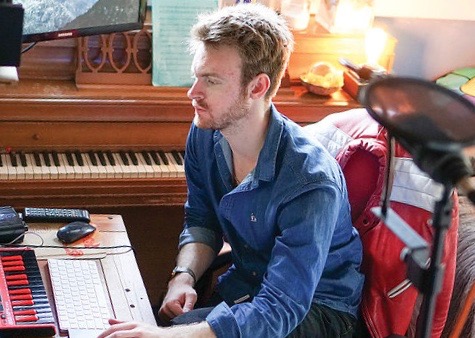
Finneas creating music at home in the bedroom studio
In a way, it all makes perfect sense. Think about it: young Billie is highly charged in a creative environment at home. She considers many different directions for her life, but is naturally drawn to the freedom and expressivity of music which is already a familiar part of her home-life. She adores her older brother Finneas and they develop a collaborative style of writing and producing music together in their bedroom studio. Being spontaneous and comfortable with social media, she probably had no hint of hesitation about putting their first song out on the airwaves.
Billie with her adoring fans
Nearly 70 million young people are listening for words and sounds that reflect how they think and feel about their place in this world. They’re not looking for answers, but rather, a voice that’s poetically and romantically asking their own personal questions. Billie projects a dark but playfully creative persona that resonates with them. Just imagine hearing her music for the first time. Perhaps feeling an immediate resonance, each listener forwards it on to several friends, inviting them, “Listen to this! You won’t believe it. She’s like me. She feels the way I do. She sees me!”
Like magic, suddenly everyone knows and loves Billie Eilish and can’t get enough of her personalized musical view of and from the Gen Z perspective. Creating a musical narrative of her life is just Billie doing exactly what she loves to do with her best friend/brother, all the while being coached and encouraged by loving parents.
Sizzling spark of energy
Billie Eilish is the classic electrical spark, the confluence of powerful forces at play—the right person at the right place on the right platform at the right time. Boom!
There’s really little reason to wonder how or why Billie Eilish became a phenomenon. Her passion is that she speaks (or sings) from the heart on behalf of millions. To quote philosopher, Joseph Campbell, “Follow your bliss.” Seems that Billie’s bliss is both magnetic and magical.
This is the first “breadcrumb” we’re leaving along the path “Toward the Light” of aging.
Rumi speaks to us across seven centuries, as a wise old friend joining us in the shade of the porch on a warm summer afternoon. Perhaps he has come to stay for a few days, or even longer. Wonderful! We sit entranced by his soothing voice as he recites a poem written especially for us. He calls it “The Guest House,” to honor our openness, hospitality, willingness to listen and our love of Life. We absolutely adore his visits—always gentle, kind and gracious. We heed every carefully selected word and subtle inflection in his voice as he begins:
This being human is a guest house. Every morning a new arrival.
A joy, a depression, a meanness, some momentary awareness comes As an unexpected visitor.
Welcome and entertain them all! Even if they’re a crowd of sorrows, who violently sweep your house empty of its furniture, still treat each guest honorably. He may be clearing you out for some new delight.
The dark thought, the shame, the malice, meet them at the door laughing, and invite them in.
Be grateful for whoever comes, because each has been sent as a guide from beyond.
What a beautiful poem to start our journey into the “final stage of life.” We took our first step by cracking open “The Spirituality of Age: A Seeker’s guide to growing older.” The co-authors invite readers to take a new perspective, a new vision toward aging—with a veil of spirituality. Count us in!
Rumi, our first guest
As we all know, in order to begin any new endeavor, we must first be open to listen and then to actually hear. Lao Tsu said, “When the student is ready, the teacher appears.” Hmm. Ahh. We are ready, and Rumi arrives as our first guest and guide. We lean forward to hear his message. Shhh!
Poetry by Rumi, from “The Essential Rumi,” translated by Coleman Barks.
“The Spirituality of Age: A Seeker’s guide to growing older,” by Robert L. Weber Ph.D. and Carol Orsborn, Ph.D.
The first post of this series is called “From Wind-Down to Wisdom,” and can be found with a simple click. To find all of the stories that will follow, just enter the word “Breadcrumbs” into the Stories “Secret Search” box,” on the site’s front page and they will all magically appear for you.
Cheryl’s mom had a funny saying, “One day, we’re all going to wake-up dead.” This may sound like a contradiction, but it’s actually a humorous nod to an inevitable reality.
Kane Tanaka
Hey folks, that’s the truth of the matter. We all WILL die, even though some people seem to defy that reality. For example, the oldest person living (as of Jan 12, 2021) is Kane Tanaka in Fukuoka, Japan—born the same year as the Wright brothers’ first powered flight. Imagine that! For some of us, the earthly end will arrive much sooner than it will for others, but eventually, even Kane will take flight. But at 118 years, she wants to delay her own “take-off.” She thinks she’ll be ready when she’s 120. Why is that any better than 118, you might ask? Only Kane knows?
So, what’s her secret to longevity? She says it’s all about “Eating delicious food and studying,” Okay, we can do that, but frankly, there must be a bit more to consider!
Living well is one desire that many of us surely share. However, for some, the topic of mortality has rapidly moved to the top of the list. We represent just two Baby-Boomers, two septuagenarians. But let’s face it, In order to even consider a powerful “lift-off” from this earthly adventure, it makes sense to examine our pasts—which may then require a little clean-up work. We’ve always tried to “keep house” as we go, checking in with the expertise and wisdom of select therapists along the way. But, over the past several years we’ve decided to “up our game,” deliberately and methodically digging into lingering issues or limiting perspectives. We feel that this deeper dive will help better prepare the Way. Now, together, we are ready to design a “grand finale” for this human experiment. Here we go!
Erik Erikson
We first shifted our gaze to the future when our wonderful therapist Dr. Jody Saltzman referenced the work of the German-American psychologist Erik Erikson. He authored the now famous “Eight Stages of Psychosocial Development”—of which the last and final stage is “Maturity” (from ages 65 to death). Ooff! That last hurrah has also been referred to as the phase of “disintegration.” YIKES! That doesn’t sound good! However, upon further study, the “virtue” of that stage, according to Erikson, is “wisdom.” Hmm. We became intrigued and decided to check that out!
We are stardust
We began our own little research project to uncover the possibilities that lay ahead. We strongly preferred the word “transformation” rather than the ooky term, “disintegration.” Oh, sure, we know about the “ashes to ashes and dust to dust” thing, but disintegration sort of signals a painful “falling apart.” No, thanks. So, our mission is to turn this time in our life from “the beginning of the end” to just “the beginning.” With thoughtful enthusiasm, we jumped right in.
Once we decided to explore the topic, we found ourselves sorting through some amazing information. It will definitely take some time, determination and patience, but early indications suggest that irresistible clues are scattered all around us. Transformation is not only possible, but appears to be the preferable “calling” at this juncture.
Finding our Way
Mind you, our interest is certainly not about “staying young,” (too late for that) but rather about making the most of this truly once-in-a-lifetime chance to “grow old and get wise.” We also suspect there might be others who are approaching similar crossroads. So, as we meander and stumble our way along this trail, we will drop as many breadcrumbs as we can. Perhaps, as we follow the clues left by those before us, we too can find our Way “Home.”
We’ll keep you posted! Cheryl and Emerson—fellow travelers
This initial post will be followed by an ongoing series called “Breadcrumbs.” To find the complete list of entries to date, just enter “Breadcrumbs” into the Stories “Secret Search” box, and they will all magically appear.
You might also check out our related music and story from 2008 called “Toward the Light.”
Niki de Saint Phalle was a French-American artist/sculptor, born near Paris in 1930, and died in San Diego, California in 2002. She was a pioneer and celebrated the world over in feminist and monumental art. During the later years of her life she lived in San Diego, where there are many sculptural masterpieces that can be found throughout the area. If you aren’t already familiar with her work, please allow us to introduce you to Niki by way of this digital “tour” of her incredible legacy—culminating in her magical “Tarot Garden” in Tuscany, Italy. Shall we begin? Please follow us!
Mingei International Museum—San Diego
Huge glass marbles
Balboa Park is legendary in San Diego.
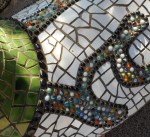
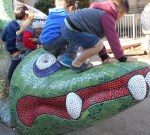
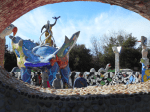
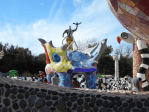
It’s composed of 1200 beautiful rolling acres of urban green space. Several museums, gardens, theaters, and an outdoor amphitheater. Located on El Prado, in the heart of the park is the Mingei International Museum. Outside the entrance is Niki’s “Nikigator—a large lizard-like form made of colorful mosaics and mirrored pieces, inviting children to climb and explore the art from every possible angle. The materials, style and spirit of the sculpture is classic Niki, as we will see throughout this tour. Sit back, spark your imagination and enjoy!
Poet and Muse—San Diego
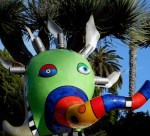
The second sculpture just outside the Mingei museum is called “Poet and Muse,” completed in 1998. This is a two figure piece, featuring a female angel or muse perched atop a male figure. The angel is a favorite motif that Niki uses again and again in her works to represent “feminine energy,” or unbounded creativity. The male form is a bit more buttoned-up in a suit, orange shirt and finished with a red tie.
We wonder if Niki was inspired by Rodin‘s Poet and Muse sculpture by the same name. Perhaps. Rodin also used the female figure as a muse, hovering over a male poet. But, Rodin‘s sculpture created around 1900 is a monochromatic, realisitic, serious carved marble statue, while Niki’s is bright, whimsical, and colorful, with shimmering mosaics. She always enjoyed making her art controversial and certainly used techniques that were unique to her, that others seemingly dared not do. Perhaps Niki was a bit of an idealistic artist contrarian.
Rodin’s “Poet and Muse”
Museum of Contemporary Art—La Jolla
Thirteen miles up the coast is La Jolla Village, where more Niki sculpture lives. Although it’s technically located “in the museum,” it’s actually in the garden area behind the museum which makes it easily accessible, as well as free! The first thing you’ll notice about this piece is that there are no mosaics. Big Ganesh is smooth and painted to be compatible with the previous Niki style, but is made of fiberglass instead—a technique that Niki used for many of her later works.
Ganesh(a) is one of the best known gods in Hinduism and is the remover of obstacles. Ganesh is depicted as having a human form, but with the trunk of an elephant, Traditionally, riding on a lowly mouse. Here, the mouse has gained independence and is actually standing alongside Ganesh—a companion in equal standing—the much preferred Niki interpretation
Sun God—University of California San Diego
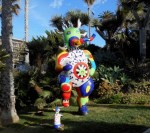
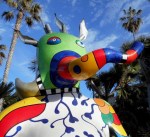
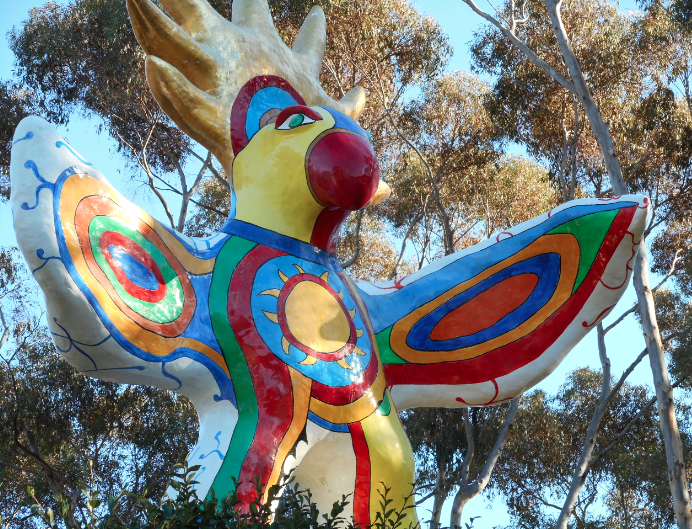
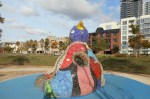
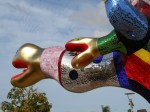
Perched atop a topiary hedge, Sun God watches over a peaceful grassy area on the UCSD campus. Installed in 1983, it was Niki’s first outdoor commission in the US. The fourteen-foot bird is made of painted fiberglass and is carefully hidden from view within the greenery.
The Sun God is a deity celebrated in many myths and religions. In Hindu, it’s a Bird God, while Helios (Sun God) was the Greek version. Perhaps Niki’s Sun God blends these two entities into one magnificent creature.
In July, 2016, Sun God received a “make-over.” Restorers removed the original paint down to its base layer. The paint had suffered cracking due to its proximity to the ocean. After removing the surface damage and sanding the base coat, the sculpture received fresh acrylic paint. Finally, clear coats were added to seal out the harsh elements. The next restoration will most likely not be needed for another 20 years. We hope!
Kit Carson Park—Escondido
About 17 miles northeast of Sun God, is the town of Escondido. The park there is a delightful place for a picnic or family outing. But, in addition to being a destination, the park has the distinction of being the site of Niki‘s amazing sculpture garden—Queen Califia’s Magical Circle. It’s the last major international project that Niki created, which was completed in 2003. Nine sculptures are encircled within a serpentine wall. All of the pieces are mosaic with ceramic and mirrored tiles.
Queen Califia on Eagle
Queen Califia stands on the back of a five-legged eagle in the center of the garden. The surrounding totems include representations and symbols from many cultures, including Native American, Mexican and Pre-Colombian. As is typical of her style, Niki embraced and interpreted these cultures through her vivid imagination. The result is both fantastical and whimsical, yet always highly provocative. The playfulness of her work can sometimes hide the seriousness of her underlying messages.
Queen Califia was a warrior-queen who ruled the mythical island of California. The fictional character was invented by Spanish writer Garci Rodrigues de Montalvo around 1500. Califia’s story is the reconciliation between Islam and Christianity, probably representing the struggles between the two religions which had collided in Spain. Califia is also thought to be the preferred depiction of California, symbolizing bounty and beauty with an untamed nature.
Coming together—back in downtown San Diego
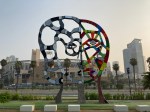
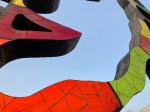
This is one of our favorite pieces. It stands majestically in a small garden, adjacent to the Convention Center on beautiful Harbor Drive. Niki’s design depicts the human challenge of integrating the opposing forces within all of us—the wholeness that comes from acknowledging the yin and yang of our existence.
The sculpture speaks to our ephemeral and delicate nature with the lacy design—almost invisible and translucent at times. The striking task she highlights is to bring the two halves of our existence together, integrating the shadow, depicted in the black and white portion of the sculpture, with the incredible bright colors reflecting the light of our limitless possibilities. The colors and contrasts on a sunny California day are awesome, much like the beauty of human form.
You may want to visit our “Behind the Scenes” story about Niki and her “Coming Together” sculpture—We call our story “Neither Black Nor White. Just click on the title.
Waterfront Park—San Diego
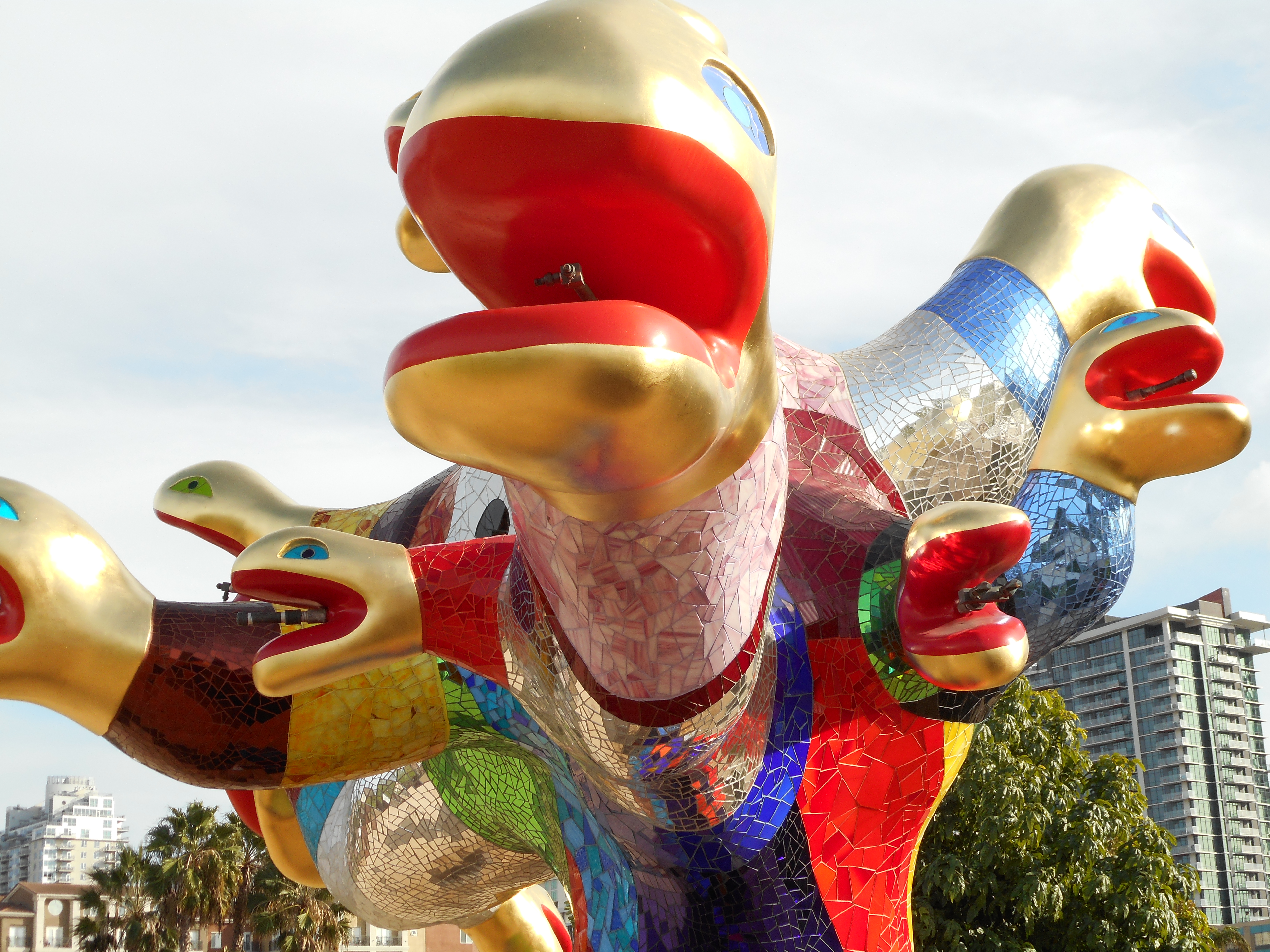
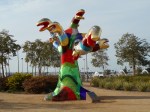
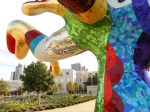
Serpent Tree
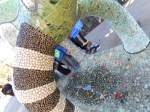
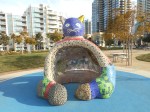
Three whimsical Niki sculptures grace Waterfront Park: Serpent Tree, Cat and Baseball Player, forming a trio of playful pieces that are irresistible to children and adults alike. The sculptures are on loan from Niki’s charitable foundation, but hopefully will be able to stay long term, making Waterfront Park the perfect location as their permanent home. Swing by and take a look, and maybe even play for a while!
The Tarot Garden—Tuscany, Italy
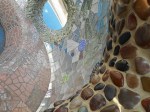
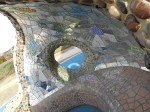
Niki discovered the incredible work of architect Antoní Gaudí in Barcelona Spain and was inspired to create her own magical park in Italy. She found a large wooded property to develop in southern Tuscany where she would design and build her fantastic creations—each year a new sculptural form emerged, peeking out above the tree-tops. This ongoing project was truly the culmination of her life’s work as an artist/sculptor.
Allow us to take you there by way of the following short video. The house you will see that’s literally built inside an enormous woman—Black Nana, as she called her, was Niki’s home where she would live while working every summer on her forever growing garden paradise. The Nana series was a favorite that Niki sculpted again and again, representing feminine energy. She created black versions, as well as white.
Notes/Credits
The mechanical sculptures shown in the Taro Garden video were done by Niki’s husband Jean Tinguely, a famous Swiss sculptor. They completed many projects together over their lifetimes.
Niki and Jean
The beautiful opening photo of Niki with a stylized snake painted on her face was first seen in the French Quarter magazine in an article called “Niki de Saint Phalle, French-American Heroine.”
Niki’s work can also be found around the world in Paris, France; Nice, France; Kiryat Hayovel Jerusalem, Israel; Stockholm, Sweden and Zurich, Switzerland. You will also find a number of artists with similar works that were influenced by her style.
Cheryl & Emerson
Quality time is undeniably great for relationships. We've discovered that quantity of time can provide that quality. Perhaps it takes Time to Partner.
















































































 Quality time is undeniably great for relationships. We've discovered that quantity of time can provide that quality. Perhaps it takes Time to Partner.
 Uncommon promise