Here we are, greeting the new year again. Hard to believe, it’s 2026. January 1st brings us to a natural pause in the day-to-day action for some much needed reflection, resolution and gratitude. We would like to offer a simple note of hope and quiet optimism for the new year.
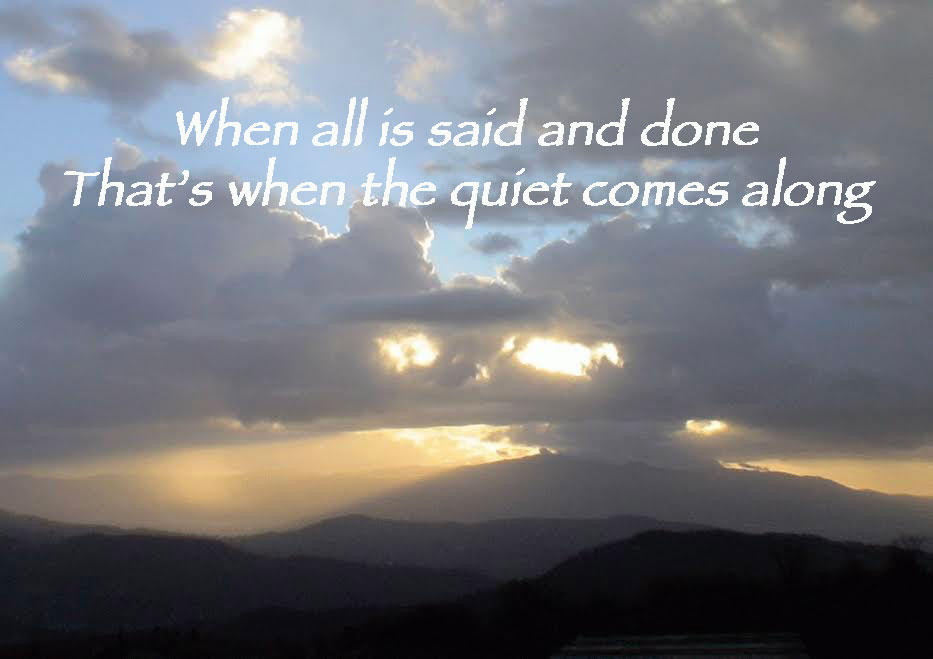
Quiet Comes Along
We wrote the following song as a lullaby, to shift ourselves into a more serene space, even if only temporarily. We feel the need to close each day and year with something soothing, something to calm frazzled nerves and agitated thoughts. The swaying rhythm and the reassuring words give us hope and the strength to face each tomorrow. When those new moments arrive, we will hopefully be refreshed and open with anticipation, yet braced, for whatever arrives. Yet, we are fully aware that at the end of every day, or extended period of challenge, once again, serenity will prevail. Quiet will surely Come Along.
Wishing you the very best,
Cheryl and Emerson
Music
Related Music and Story
Respite
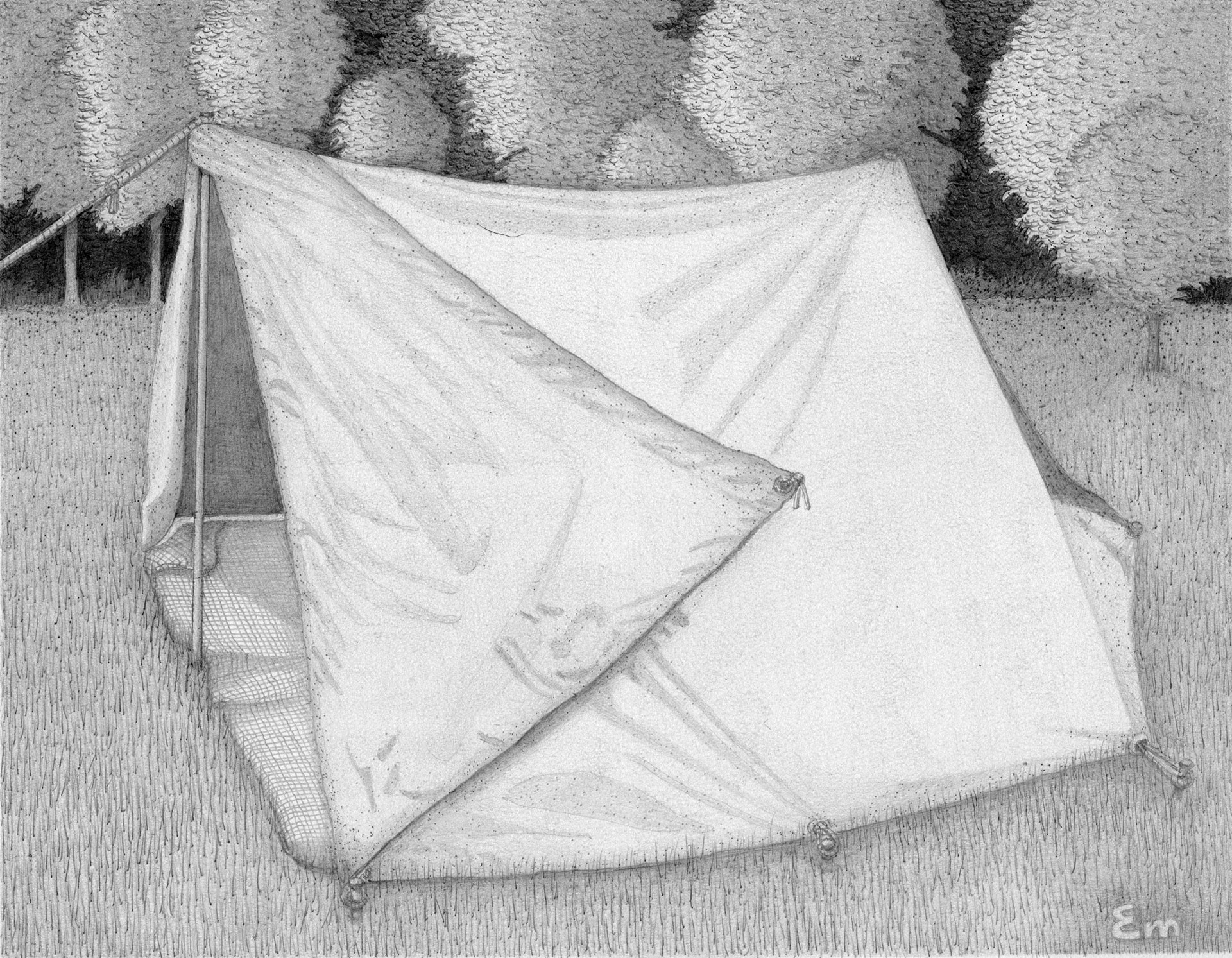
You may also enjoy another song and story called “Backyard Tent,” where we recall our own special “quiet places” from childhood—where did we go to get away? The need to retreat is a human need that never changes, no matter our age.
Italians are very clever people—a trait that we admire.
Good Tuscan Soil
Especially in the country, people have always had to struggle just to get by. Tuscany has to be the rockiest ground in the world, and that alone is enough to get the juices going as to how to make a living on the land. Resourcefulness is in their blood. Someone once said that if he was a farmer and found himself in Tuscany, he would ask God what he did to make him so mad. Even today, the habit persists of scouring the countryside for nature’s abundant bounty. Old habits die hard as you see people along country roads foraging for part of their dinner—whether it’s for mushrooms, berries or whatever they can find that’s edible. They know how to fend for themselves. But the energy and persistence required to eke out subsistence is just one part of the intriguing Italian puzzle.
Strong Group Identity
Italy has been divided and conquered for almost as long as anyone can remember. Rivalries have endured over the centuries, because provincial identity was about as good as it could possibly get. A friend from Florence actually told us that for him, Tuscany doesn’t exist south of the Arno River. It wasn’t until the mid-eighteen hundreds that anything resembling a truly united Italy was even a remote possibility. And now, even though it is one nation state, the strong sense of regionalism or family identity endures, rooted deeply in the culture.
Family Ties
We have often thought that, and perhaps rightfully so, there is little trust in Italy. They have experienced wars and takeovers, new and often bad rulers for their entire history. They never knew what would happen next, so it was always best to maintain strong personal capabilities. They relied on knowing that the family was and is one of the truly trustworthy groups in which to invest yourself for true security. For these reasons and more, you won’t find Italians dutifully waiting in line, or simply following the slower car in front of them. Windows of opportunity are created to jump through. Dangerously passing on a winding two lane road happens because they can, and not because they need to, almost as if practicing to stay nimble. We’ve seen passing cars narrowly miss the oncoming car, the bicycle or the nonna, grandmother out for a stroll. Then the same speeding vehicle immediately turns screeching into the next driveway.
An Italian can take any law apart piece by piece and then put it back together in a way that suits them. In Italy, it’s common to keep asking different people until you get the answer you want—and every “correct” answer is out there somewhere. We think this is partly where the slow processes, the famously Italian bureaucracy comes from. Everyone wants to make things happen the way they want them to happen, and they’re willing to take their sweet time to get their way—even if it seems to take forever.
Keep your balance
There is a special word here that aptly describes a unique quality of resourcefulness that frequently comes into play. It’s known as furbo. In English, the closest word is “clever,” however that doesn’t really do it justice. Furbo balances on that fine line between a compliment and a insult. The fact is, many of the problems that pop-up in Italy just plain won’t get solved without a special technique or perspective. Unfortunately, it’s in that gray area of cunning and covert activity that the line sometimes gets crossed, and furbo becomes questionable. You have to be careful that you don’t fall into becoming a victim of unseen opportunity—for the benefit of others. Someone could be dancing on that fine line, trying to make progress on their own agenda, perhaps seeing you as an easy mark.
You could say it’s possible to be too clever for someone else’s good. But, if you’re on your toes, you can successfully engage in this unique Italian free-for-all, where almost everybody eventually gets what they want—we said almost. Come to think about it, there really isn’t anything unusual about such behavior since there’s probably some version of that trait the world around. Maybe the difference is simply in the way the Italians play the game—which, frankly, makes it so much fun!
First posted onOctober 1, 2010
Related Story
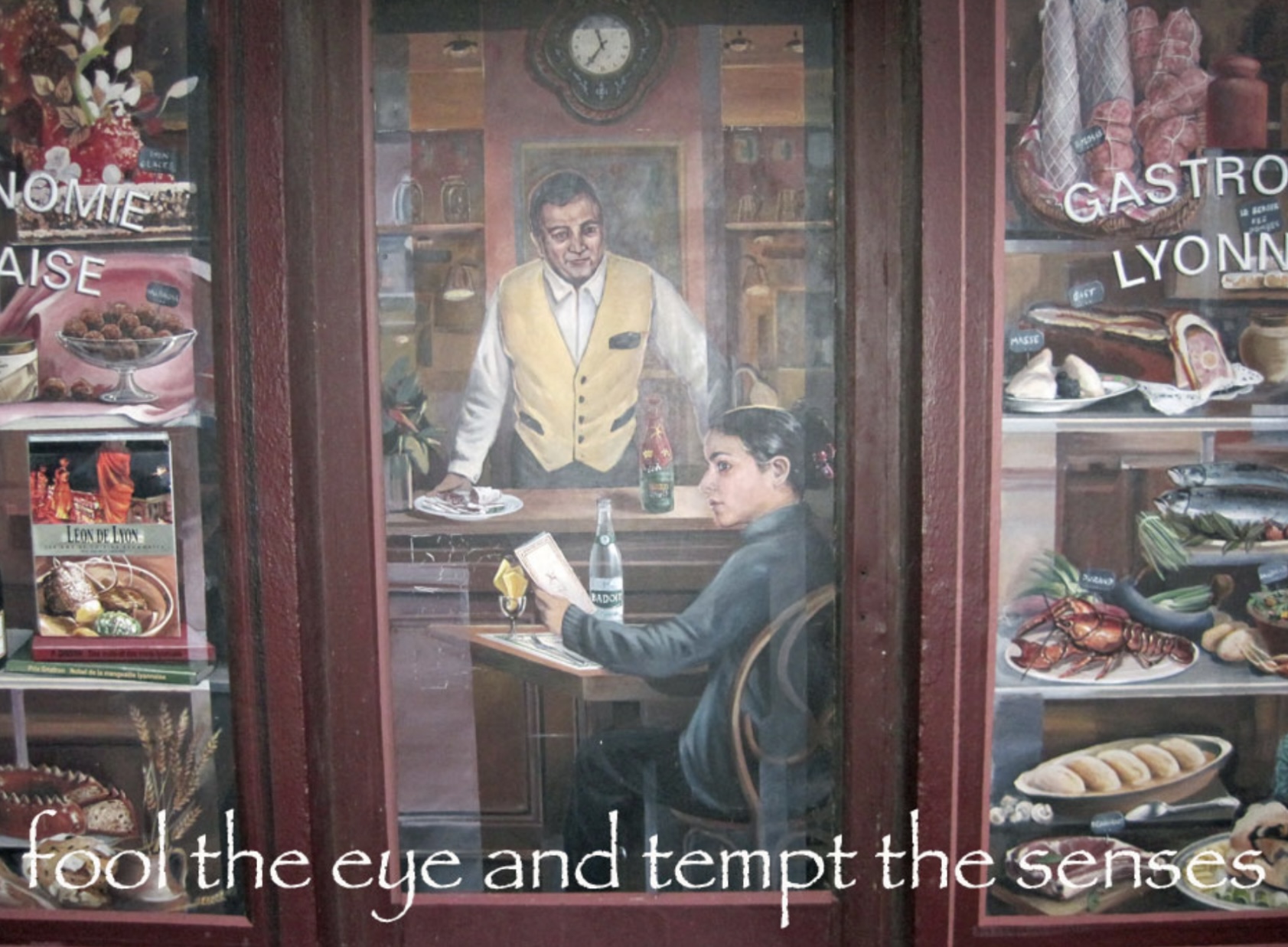
You might also be interested in “The Art of Trickery”: The brain picks up visual cues that are recognizable, instantly fitting them into familiar patterns. In a flash, it issues a report about what’s going on. The brain fills in the blanks. This form of trickery is harmless and quite entertaining as you will see, a thing of beauty.
Music
Here’s a song called “The Pusher,” about a different form of trickery—when a cleverly furbo individual loses their balance, they can become an overt bully instead. It’s a slippery slope!
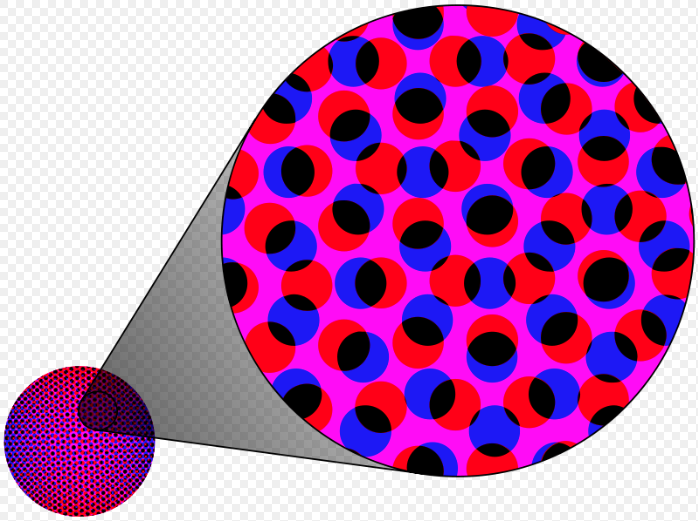
In 1879, the printer/illustrator Benjamin Henry Day invented “Ben Day dots,” those ubiquitous dots that illustrate comics. This invention opened up possibilities for creative expression. Day concluded that images don’t need to be rendered in full color, but rather, could be made from thousands of tiny equal-size dots with varied spacing, color or even overlapping to create a desired effect or illusion. Creating optical illusions is a visual magic act, based on knowledge of how the eye and brain work together to fill in the blanks. The human eye picks up patterns and the brain finishes the rest.
Day’s brilliant technique has been around for nearly 150 years, and we’ve all figured out the game. Comic strips are predictably constructed of those pervasive dots. In fact, they’re so obvious that we actually anticipate them. We all know the clever trick, yet it still works like magic—dots can be interpreted as people, animals, buildings, or anything else needed to create a comic strip story-line. It’s as though we all share a secret code, a magic key to deciphering clues.
“Ohhh…Alright” detail
The Pop Artist, Roy Fox Lichtenstein, took the visual illusions to a playful and lucrative new level in 1961. His son challenged Roy to paint as realistically as one of his favorite Disney cartoons appeared. The result was Lichtenstein’s first major piece, “Look Mickey.” He had an “Aha!” moment and the resulting style became synonymous with Lichtenstein’s name. Even his exploration into dots of monumental proportions resulted in the same success—the trick worked better than ever.
Daytime “Opaque” Graphics
The city of San Diego is preparing for the upcoming “Comic-Con International” (comic book convention). The city is abuzz with anticipation. The Marriott Hotel, hosting and supporting some of the festivities, has a sweeping curved glass facade. Right before our eyes, skilled workers applied huge comic-style graphics in the form of an opaque film to “wallpaper” the glass. The transformation was dramatic as the massive window-wall suddenly appeared solid, filled with vivid imagery. However, to our surprise, in the same evening, the huge wall of graphics seemed to have been completely removed. Or, so we thought. How was that possible, and why would they go to all of that expense for just one day? Strangely enough, the next morning the graphic once again reappeared over the entire glass facade.
Nighttime transparency
We discovered that the “skin” applied to the glass isn’t really opaque. It actually has thousands of tiny holes (reverse Ben Day dots) that allow the graphic to look monolithic and solid during the day. Likewise, when the interior lights are on in the evening, the skin seems to magically disappear. The eye/brain team do the rest—always ready to fill-in gaps with the “imagined” missing bits to make it complete. It seems that we are hard-wired with a built-in bias for completion—imagining everything just as we think it should be.
Incomplete information? No problem. We just fill in the gaps and fabricate the missing parts. That message from the brain seems to be enough for us to accept the illusion, in fact we embrace it. But just because we go along with the trick doesn’t mean that what we see is real, true or even complete. Clearly we only need enough Ben Day Dots to prompt us. We then connect, complete and accept the implied image.
It must be quite Comic-al for the Marriott folks to watch the quizzical and curiosity-filled faces passing by the facade.
Credits
Marriott Marquis Hotel, San Diego – Graphic installation
“Ahhh . . . Alright” detail – 1964 Roy Lichtenstein
“Ben Day dots” detail MoMA
“Both Sides, Now” – Joni Mitchell – courtesy of YouTube
Featured image above – Marriott graphic screen detail
Related Music
Joni Mitchell wrote about the serious implications of life’s illusions back in 1966 with her famous song “Both Sides, Now.” Over 30 years later, she recorded the song again, but from a more mature, reflective position—a different view of life’s illusions. Her poetry speaks: “I’ve looked at love from both sides now/ From give and take and still somehow/ It’s love’s illusions I recall/ I really don’t know love at all.” You can listen to her 2000 rendition below.
It began as a bouncing baby noun in merry old England some 900 years ago—meaning the young offspring or a family of young ones. Then after 300 years of good solid use, it morphed into an alternate form—an adjective. For example, they began referring to a “brood-flock,” which refers to birds kept for breeding. Suddenly the word brood had emerged as a full-fledged descriptor instead of just a thing. Then later that same century, the word transitioned once again into the highly coveted verb form (in addition to retaining its previous noun and adjective positions).
Brood flock—adjective
As cool as it was to become an action word, inaction remained the mode of the hen house— brood carried the original meaning of “attending to,” such as to brood eggs. In this instance the word implies the passive incubation of the offspring. The goal was to simply sit on the eggs in the nest to make something happen—to hatch a chick. So the brood-hen brooded her eggs, anticipating they’d soon become her family of little ones—her brood. Does that mean you could actually “brood a brood from a brood flock?” Exactly.
But wait! There’s more. That simple little B-word morphed once again. In this case, brood took on a whole new meaning—that is, to dwell gloomily on a subject, or to be in a state of depression. Gosh, that sure took a turn! With that shift in definition, brood adopted its most popular meaning today. It seems that everyone but a chicken farmer would agree.
Brooding Mood
So what if we combine the two meanings of “gloomy mood” and “hatch”? What then? There are definitely times when we become discouraged, uneasy, bored or confused with our lives, sensing something isn’t quite right—that pretty much nails the depression part. Then if we embrace this “hatching” idea, maybe we can shift that gloomy introspection into an unmatched force for change. Think about it. We withdraw, go inside and ponder the possibilities. We create a cocoon of sorts that protects us from being disturbed while contemplating life and healing our wounds—the important work of the Soul. A “dark night” for sure. (A grateful nod to Thomas Moore.)
Voila!
After a time of stewing and ruminating, we crack out of our protective shell. We emerge a bit musty and disheveled on shaky legs. Hmm. It seems that we have experienced a quiet transformation, a hatching of sorts amid the dark confusion. Perhaps clarity, direction and determination are birthed from our silent retreat of fretting and waiting—sitting with the discomfort of it all.
The real trick is to know when the brooding is finished.
New vision dawns
A hen who sits too long on the eggs may stifle the hatching process. But chickens, with their instinctive nature, seem to know just the right amount of time to relax into their stationary routine. After all, the purpose of the brooding (action) is to eventually produce a brood (noun). Results! Change! Birth! Hopefully, we humans have a remnant of innate “hen-wisdom” or “bird-brain” thinking as well. Will we know when to stop brooding? Will we sense when our innovative idea or new vision has already been hatched and it’s time to get on with it? Well, let’s not count our chickens.
Invitation to reflect
Let’s face it. Wouldn’t we rather just peck around the hen house instead of hanging-out in that dark dingy interior space? Of course we would. But on the other hand, if we want to produce a change and make a real difference we may need to go inside for a while, because something beautiful wants to be born. We can choose to forcefully resist, insist or just calmly sit with it, and let the potential magic happen.
Music
Following is a song we wrote to explore this idea of incubating a different future. Of course, we called it “Brood,” (the noun, adjective and verb forms).
Related Story and Music
Narrow Ledge
Years ago, we wrote another personal story with music about depression, called “Narrow Ledge.” When we find ourselves brooding, yet falling deeper and deeper into despair, there are many different helpers who can throw us a lifeline. There’s always a solution!
Walking through the city streets to our favorite coffee bar is great exercise, but can become a challenge on a hot, sunny, southern California day. So we experiment with different routes depending on the time and the angle of the sun. It’s possible, with trial and error, to discover a route that stays mostly shaded with cool breezes. Always searching, we happened to glance right from Ash Street as we crossed the trolley tracks. There, to our surprise was a never-before-seen covered walkway tucked in-between some high-rise buildings and the tracks. The shade extended for a few city blocks, all the way to the historic Santa Fe Station in downtown San Diego. What? Are you kidding us? When did that happen?
10 column passageway
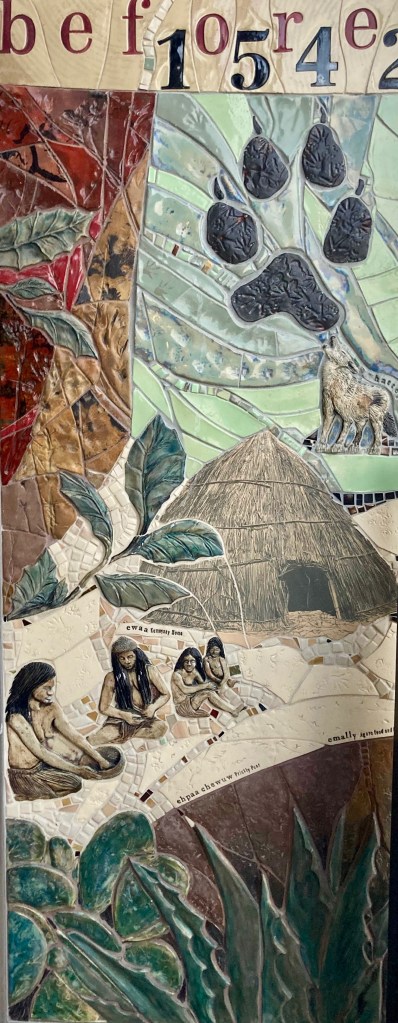
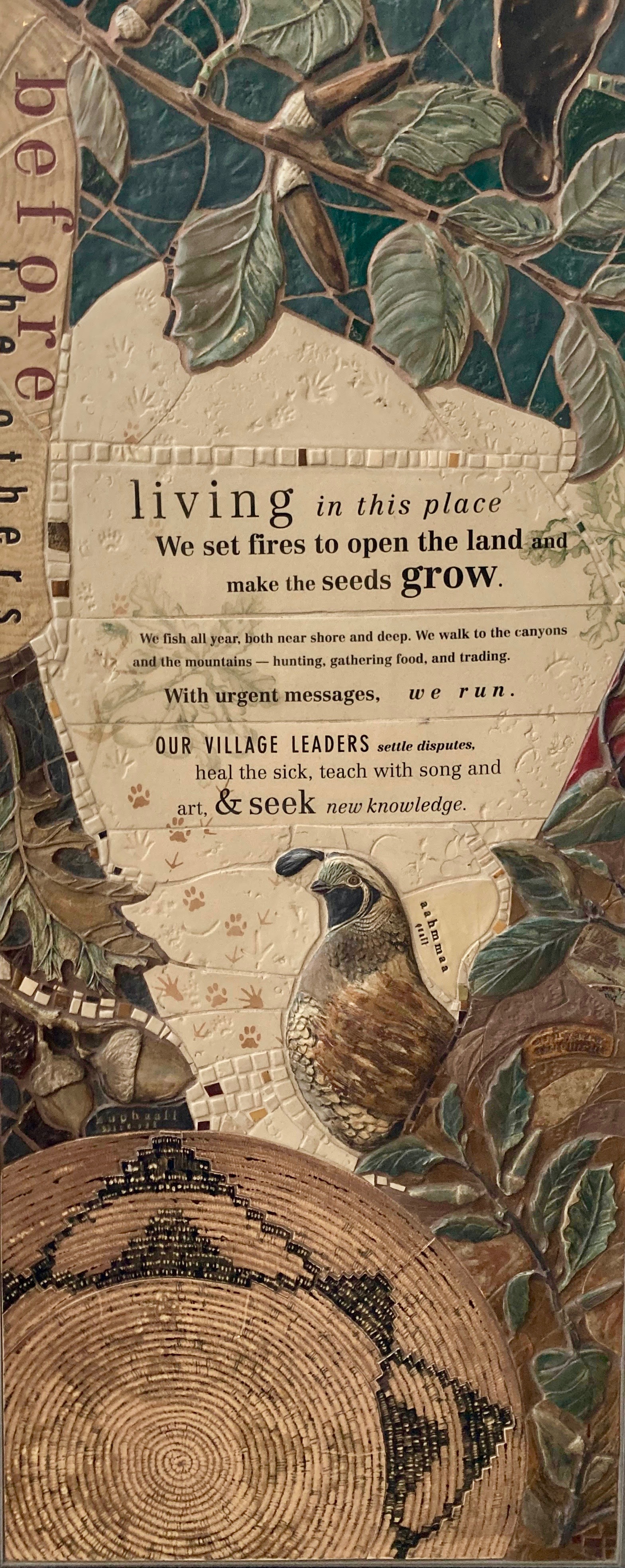
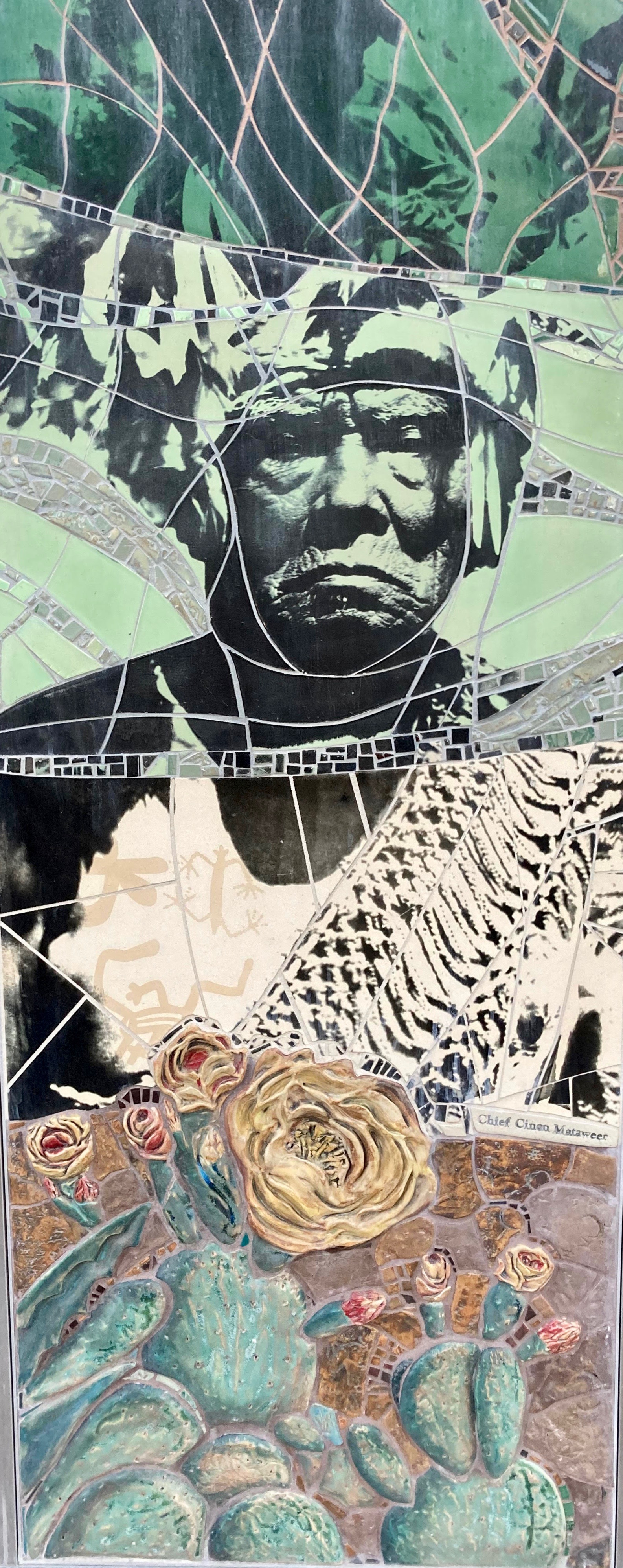
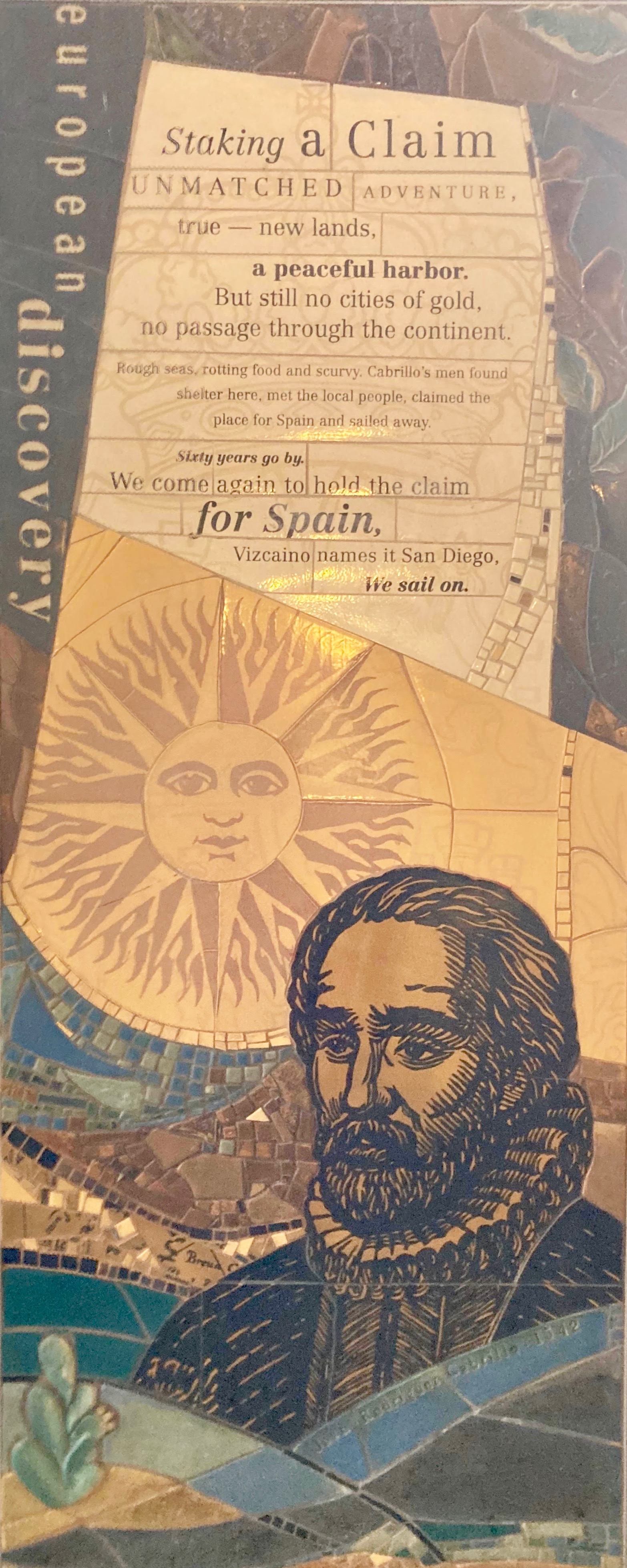
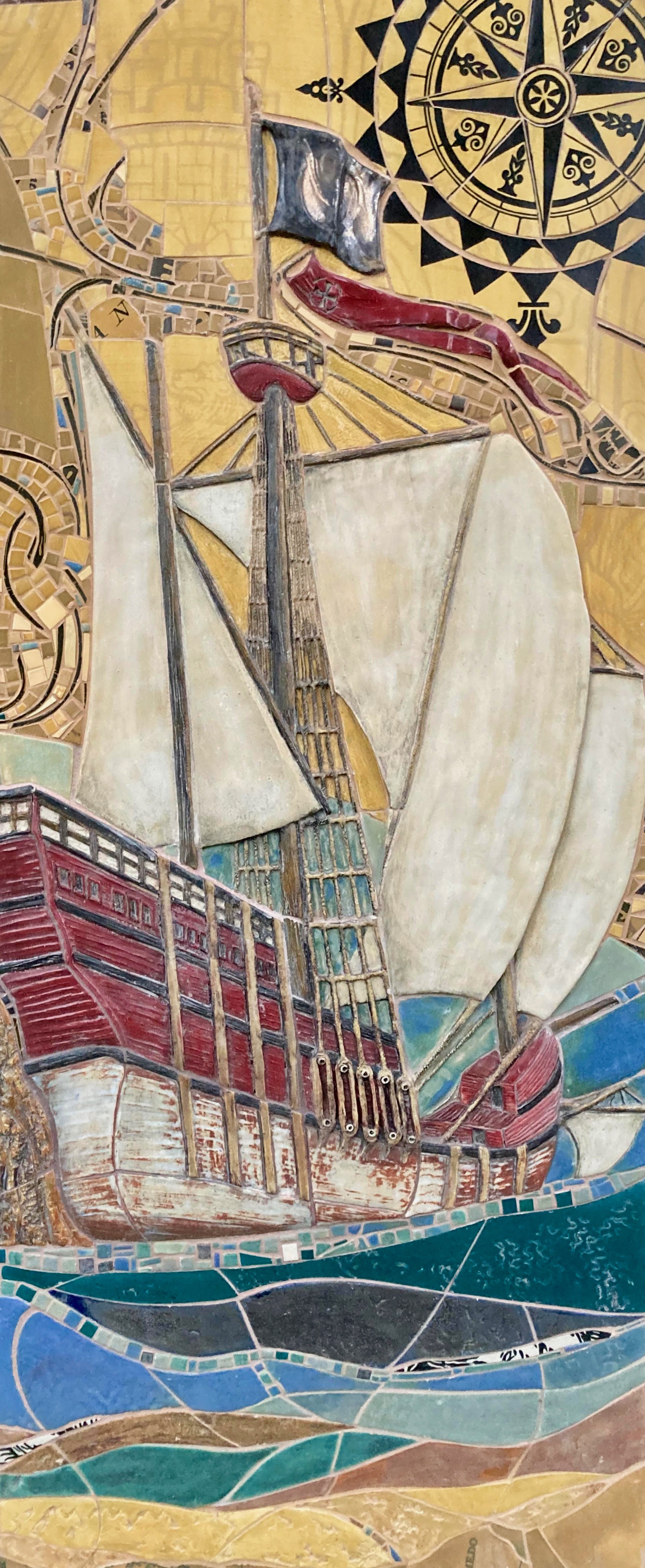
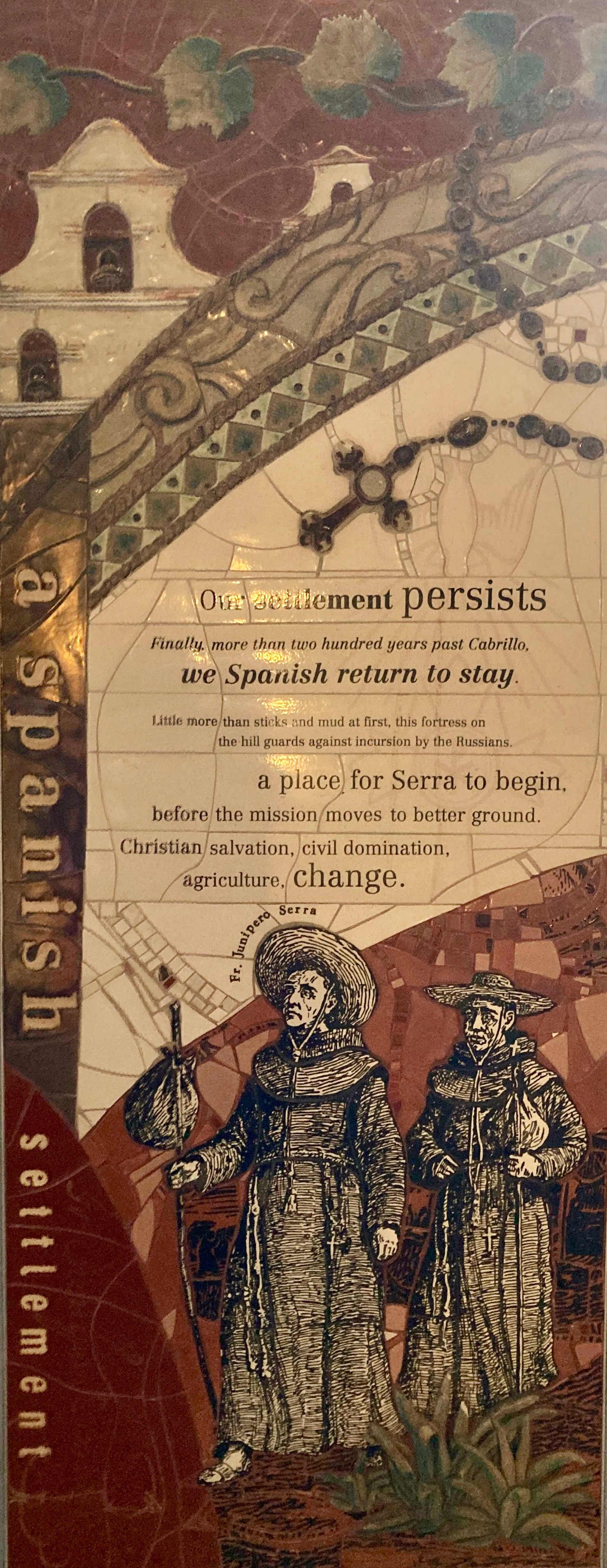
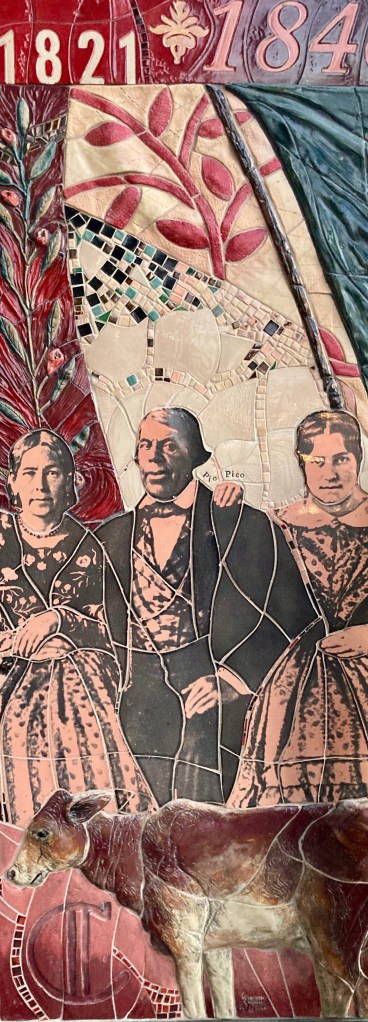
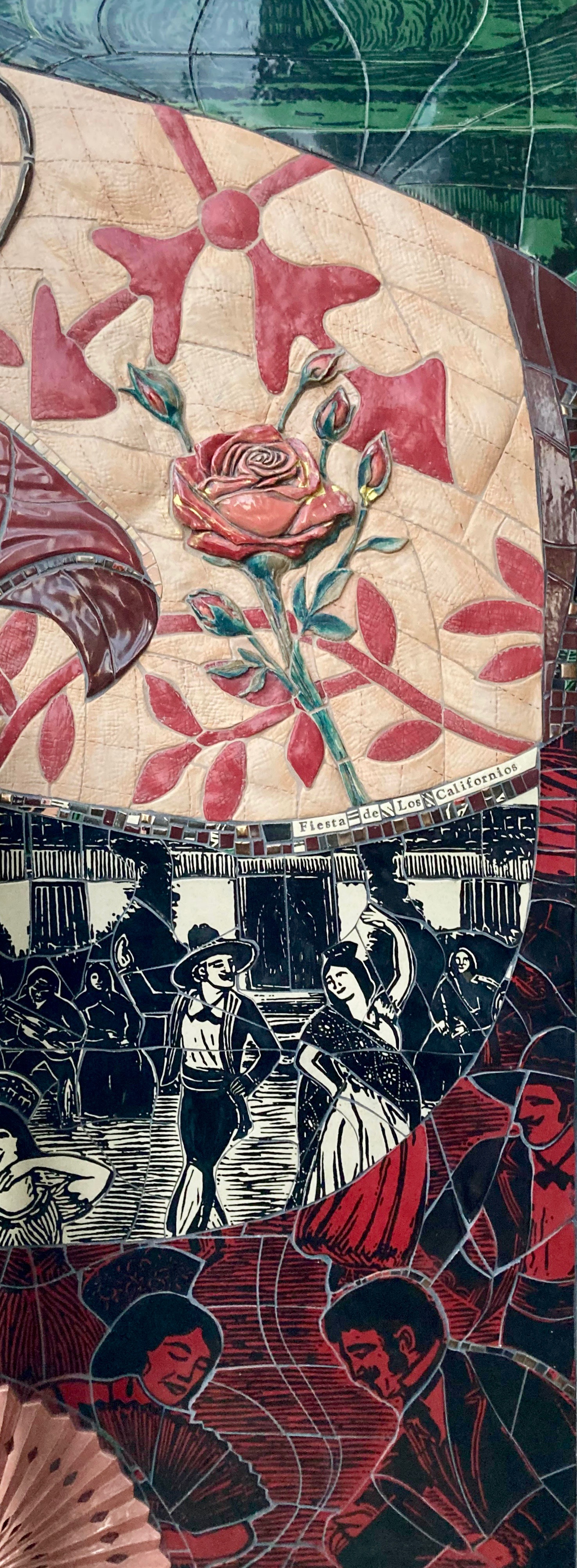
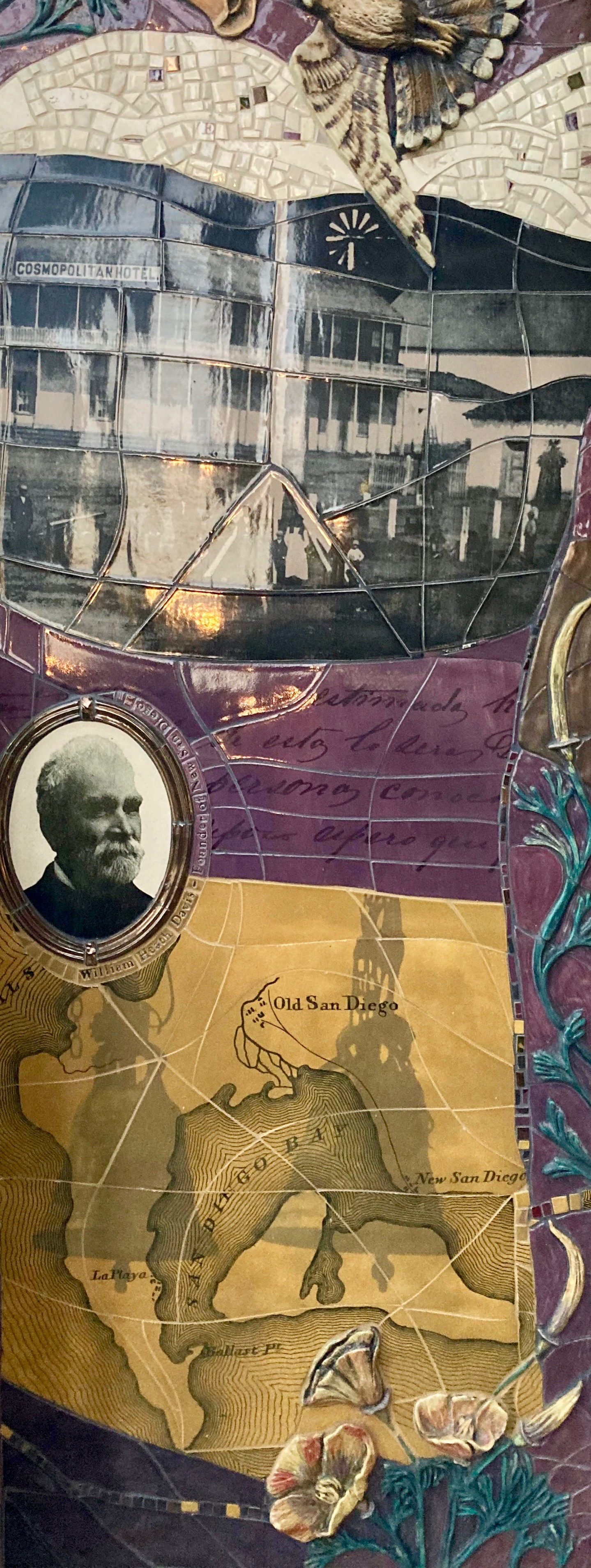
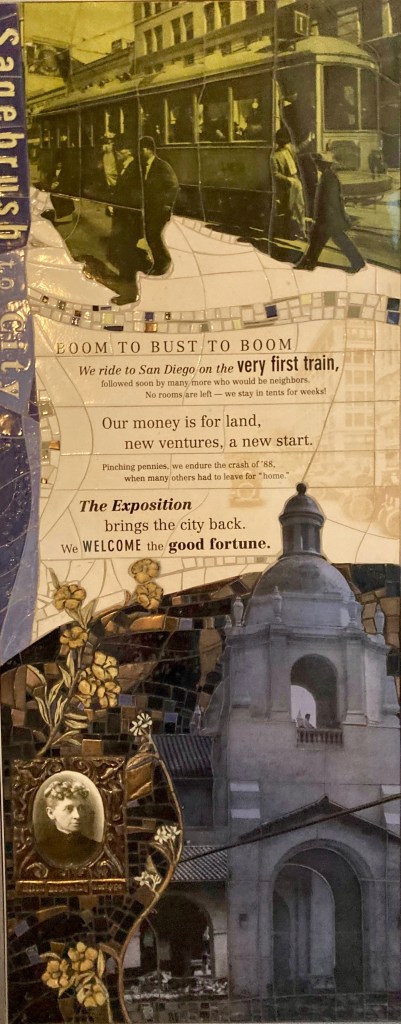
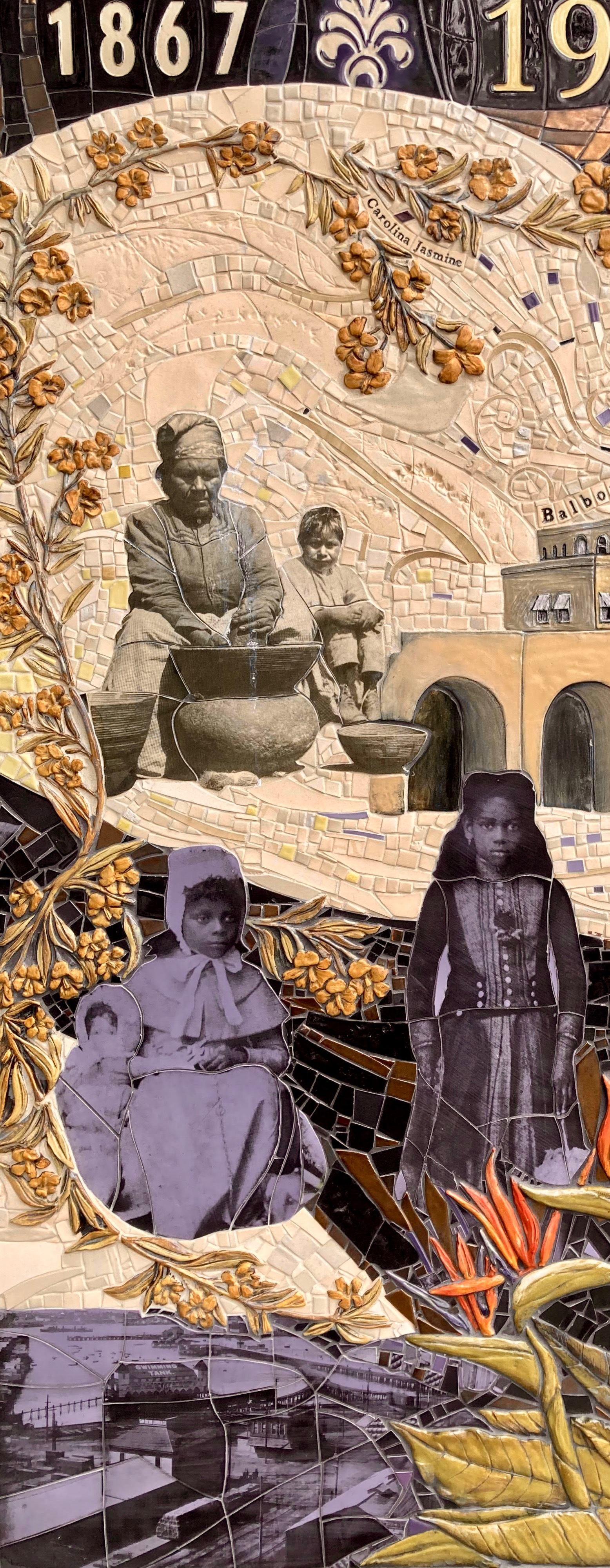
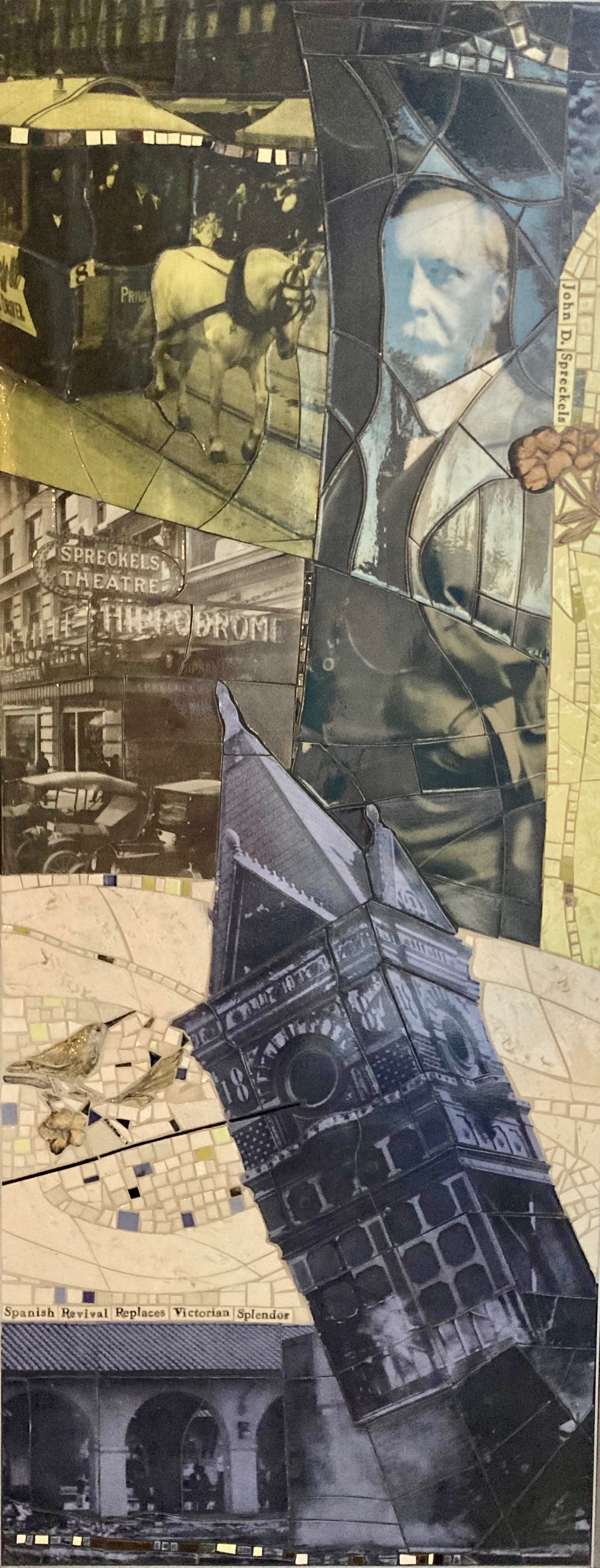
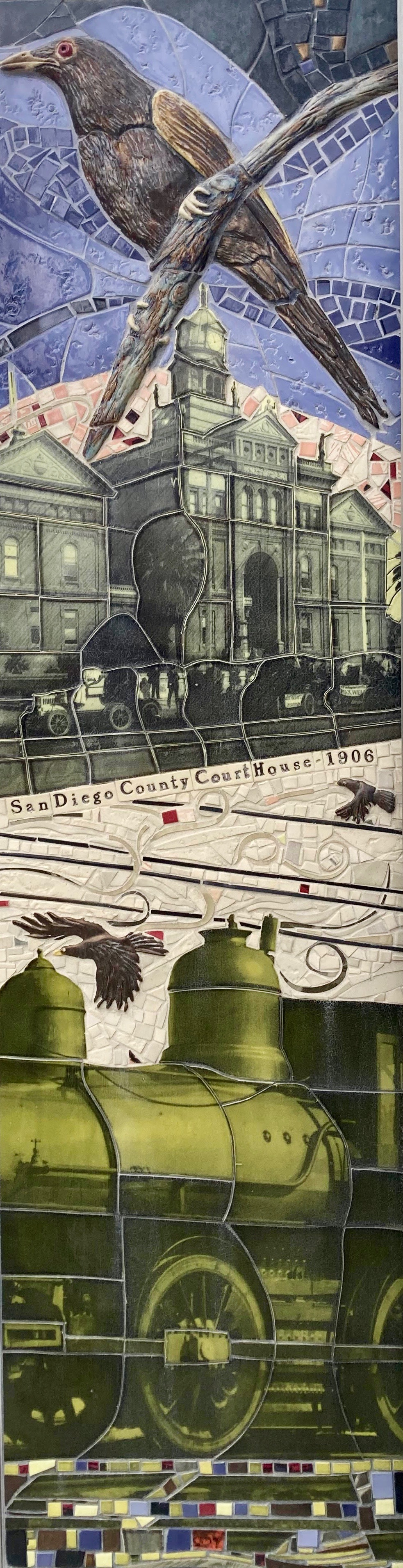
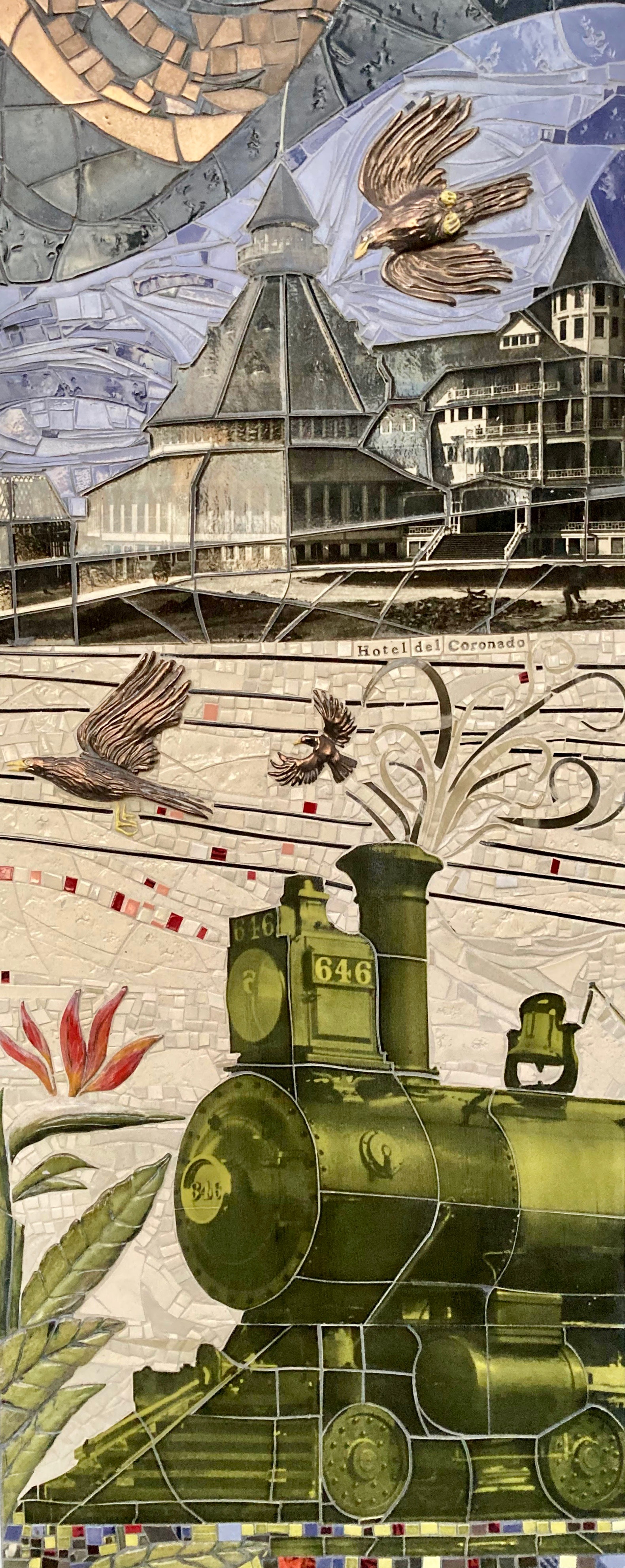
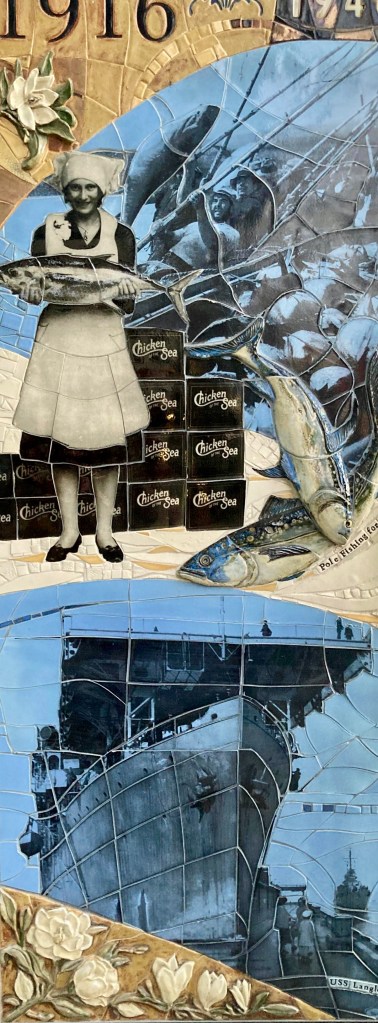
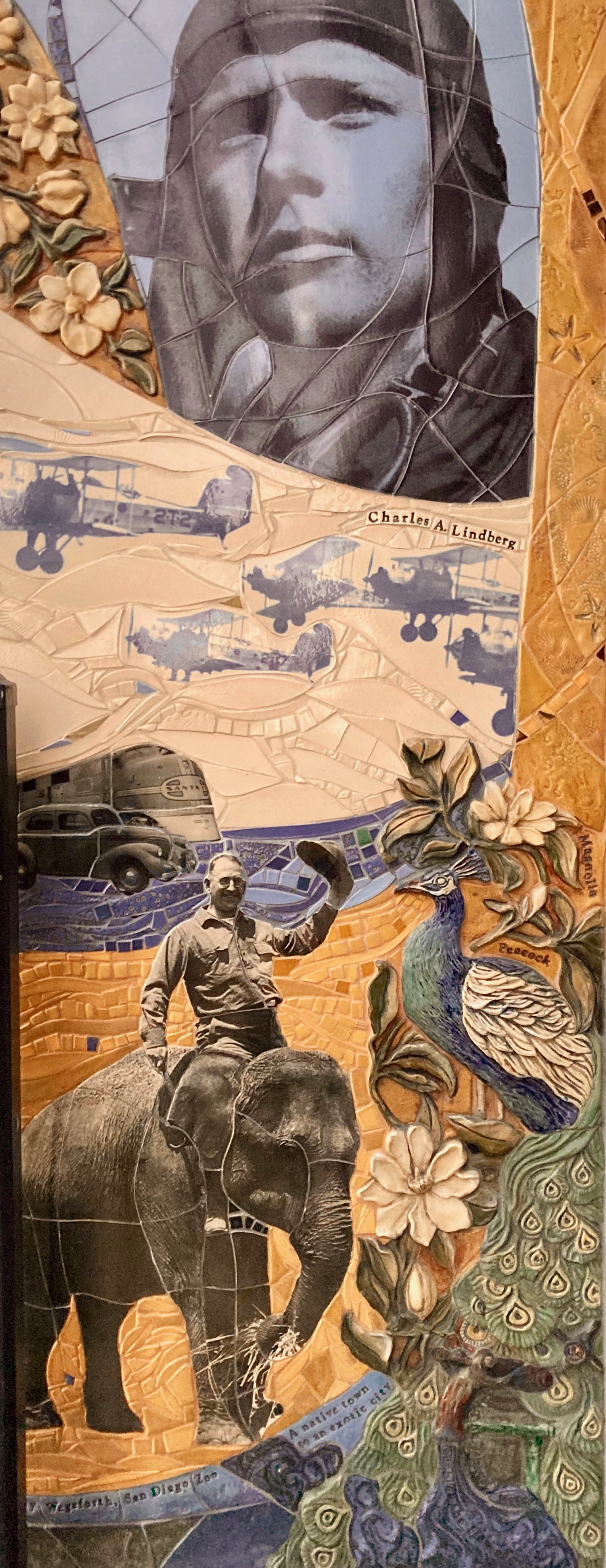
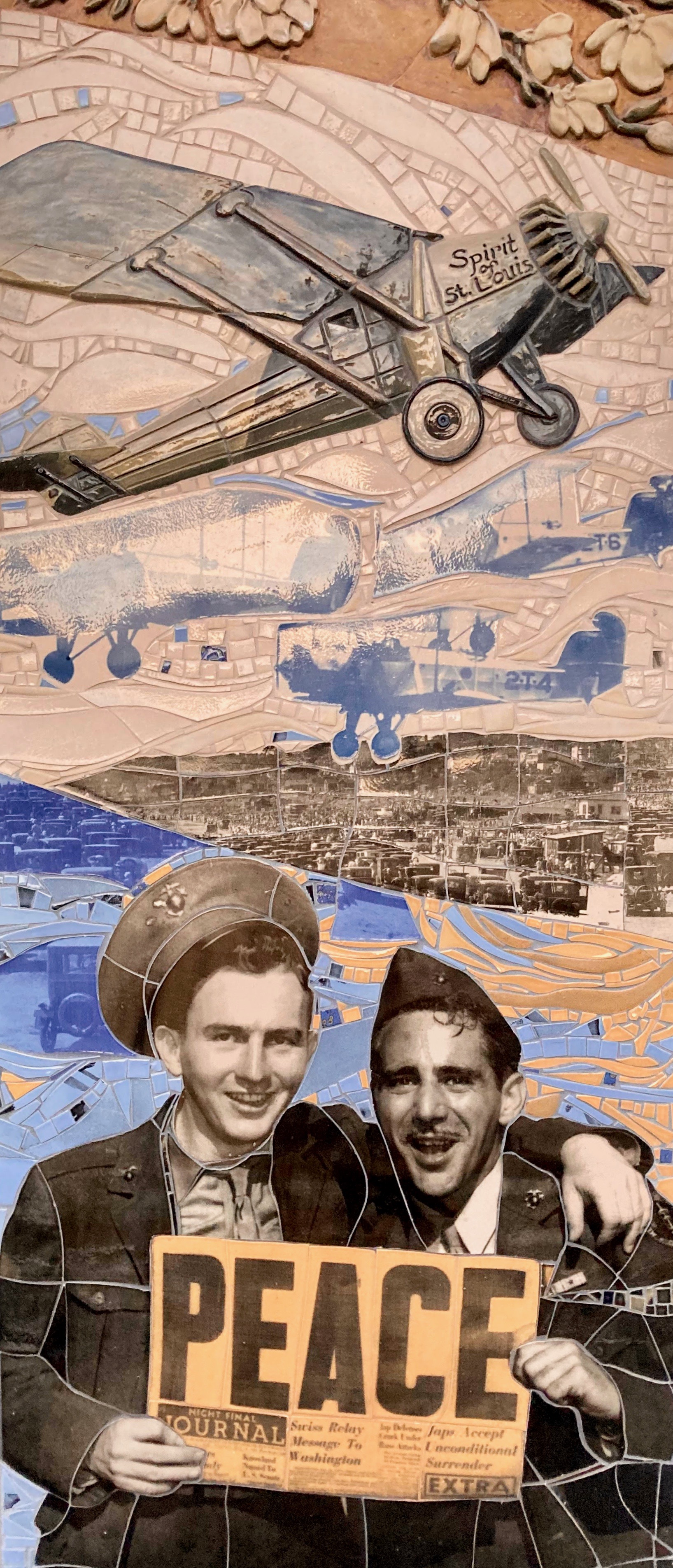
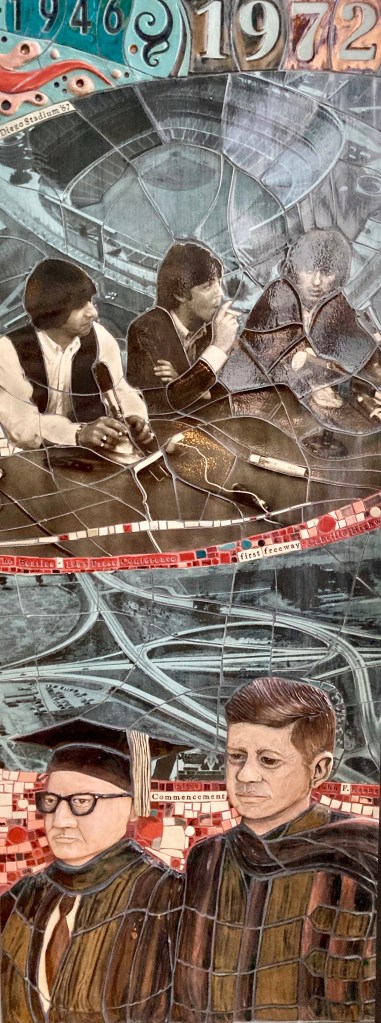
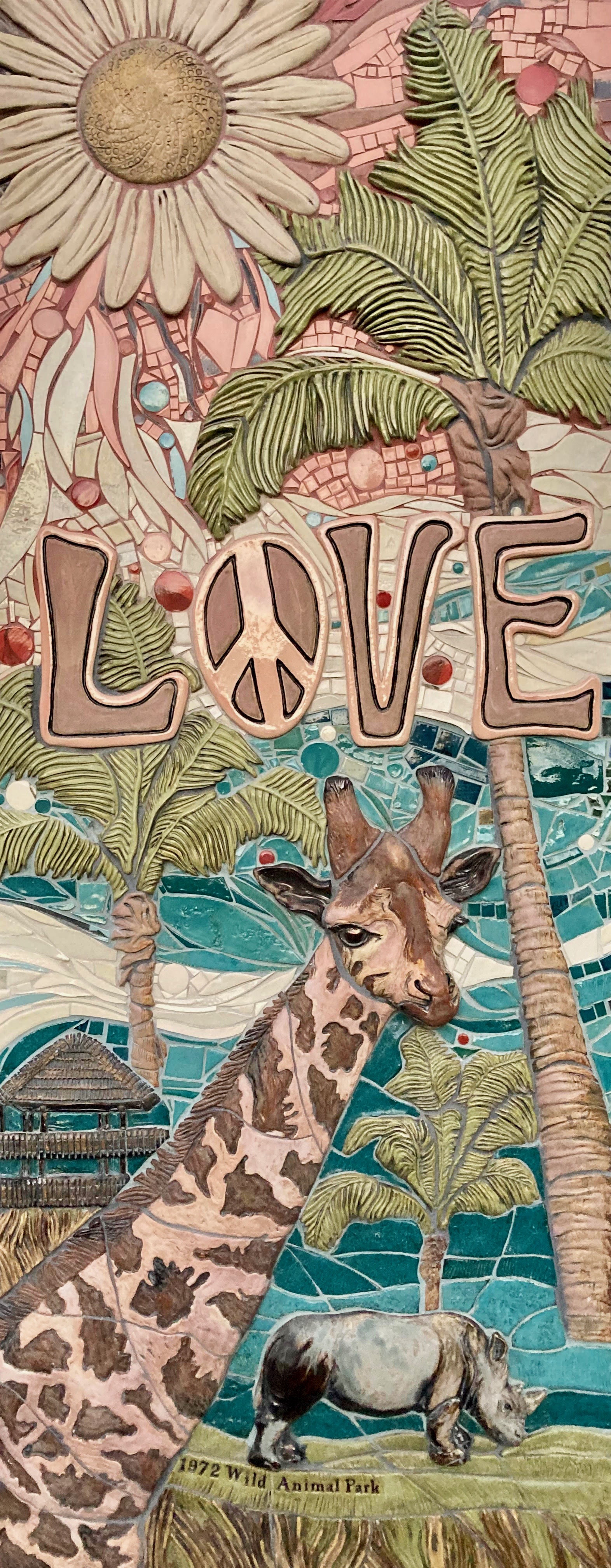
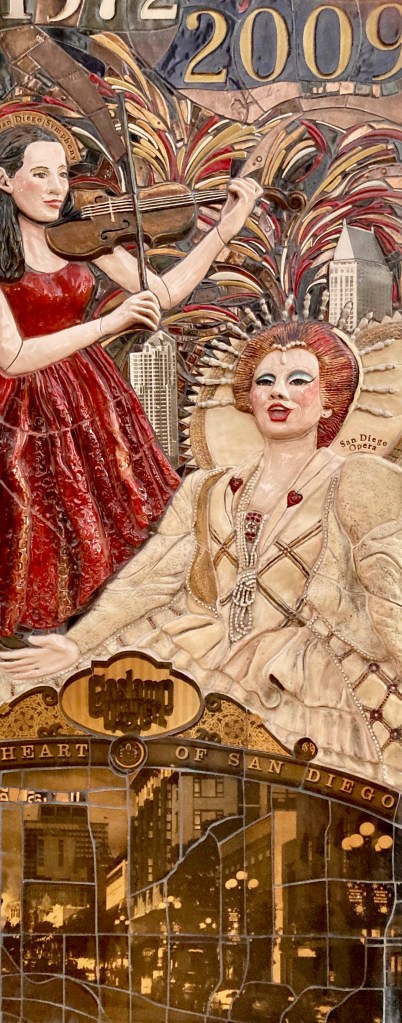
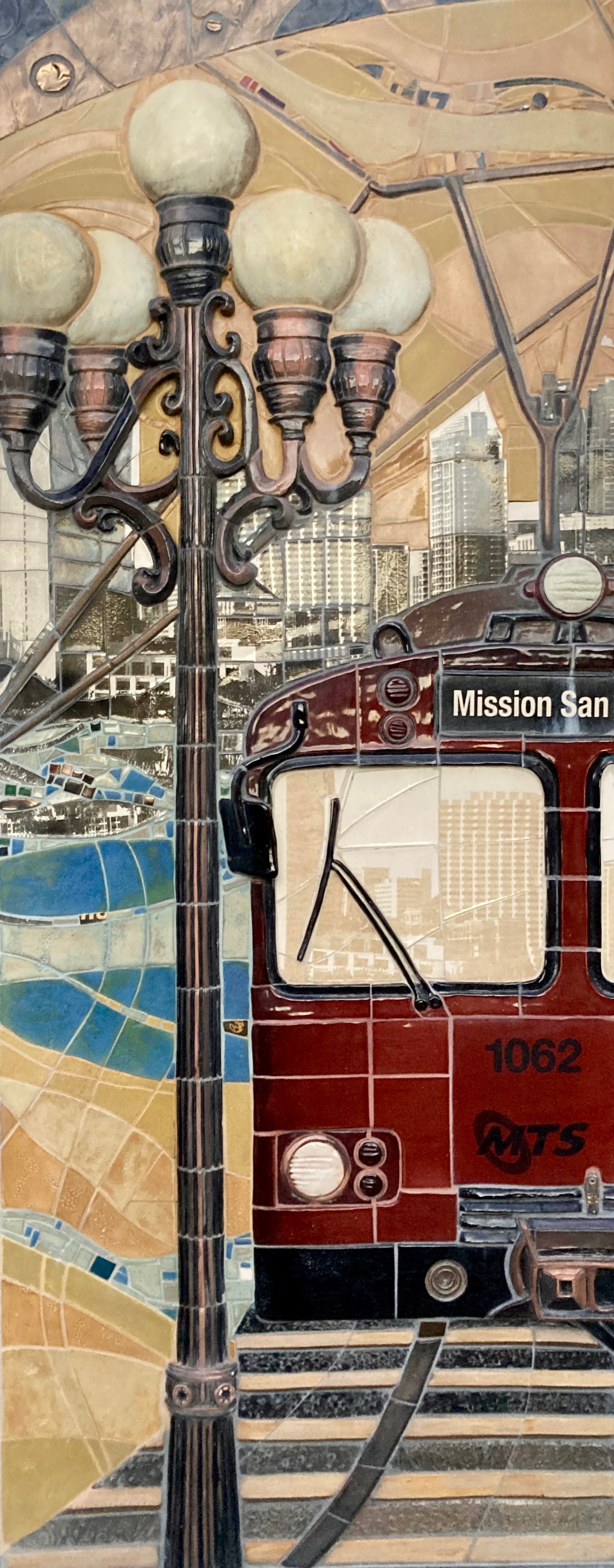
Strolling along our newly-found secret pedestrian-way, we came upon a series of 10 columns which were covered with literally thousands of handmade ceramic tiles, pieces and slivers depicting the entire history of San Diego. Just behind the Sapphire Tower, we discovered this “hidden” mosaic treasure. But they’re not just normal ceramic tiles—there were 40 people-size panels of intricate free-form mosaics with relief and incised carvings of objects, along with photographic images silkscreened onto some surfaces—people, places, horses, cows, birds, words, random objects, scenes, stories, dates, heroes and more, all mixed and merged into one grand 500-year-old chronological storyboard of this beautiful place as it became San Diego as we know it today.
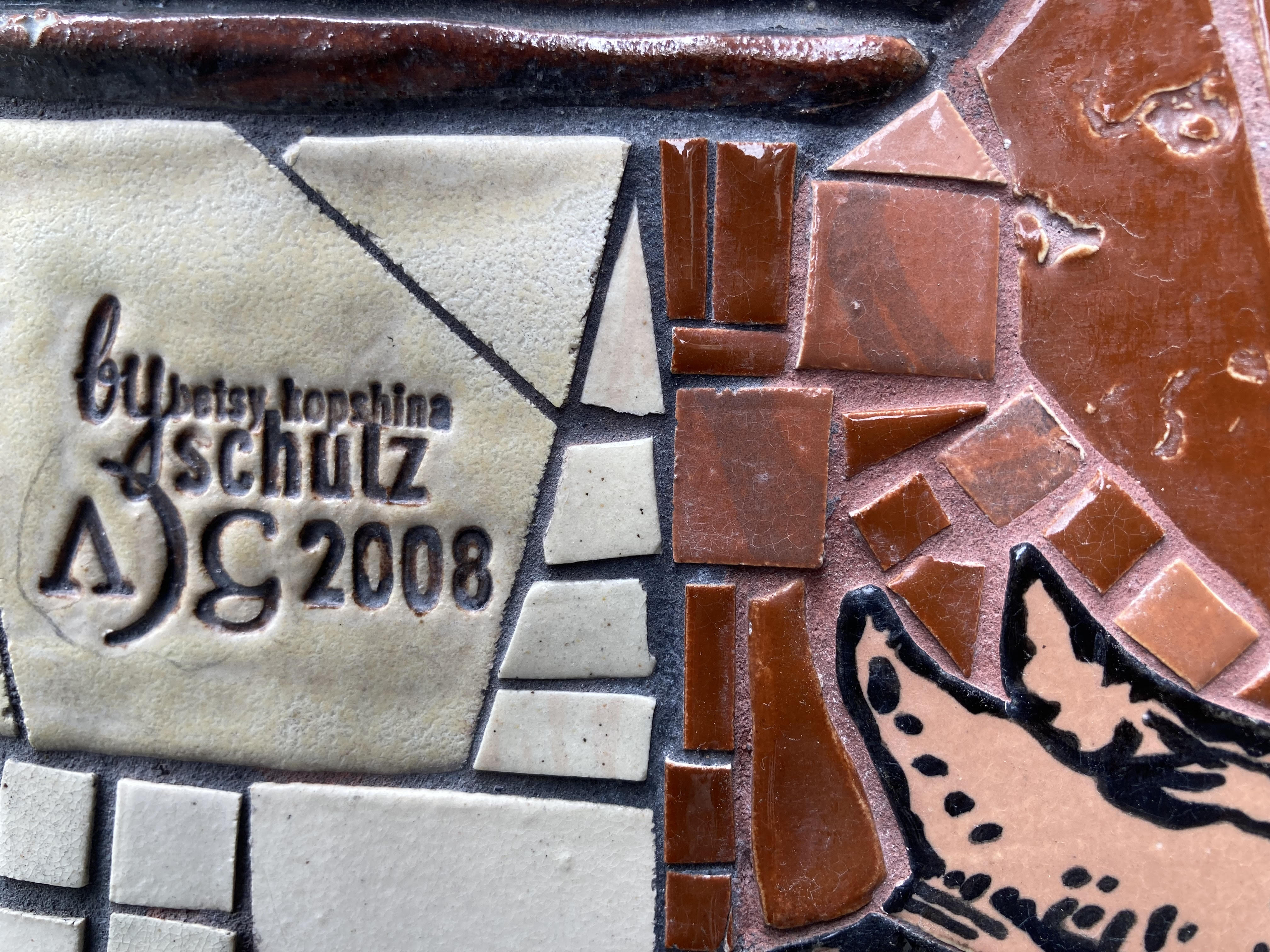
Artist’s obscure signature
We were amazed and felt compelled to dig deeper into this surprising discovery. Who did this? Why? When? Reading the storied walls was an obvious place to start. However, finding answers to our questions proved to be a bit more elusive. To our surprise, hardly anyone knew much about the mysterious work of art. With the investigative help from a guard in the Sapphire Tower lobby, we started to piece the story together.
The creator of this detailed chronology is a local artist, Betsy K. Schulz. We first found her name by visually scouring the many clay pieces. There it was, carved in tiny letters on the outside edge of a panel, partially hidden by the adjacent iron fence. Everything we had seen and read, led us to the conclusion that she is probably very smart, clever, extremely talented, a meticulous researcher, full of energy, a consummate artisan and obviously very humble. Once we found her website, we could clearly see that she is all of those things that we imagined, and more. Her body of work is impressive and well worth a little SoCal surfing on the web to find.
Relief sculpture
This artistic masterpiece is just one of many that are tucked in and around the city, just waiting for an unsuspecting passerby to discover. We hope you enjoy our representation of her work, but also encourage you to take a meandering walk some beautiful day, (which could be any day in SD), and find this mosaic gem for yourselves. Perhaps you might glance over your shoulder to discover another hidden treasure tucked away in the shade of the city—snippets and stories about the “pillars of the community.”
“There are 8 million stories in the Naked City. This has been one of them.” This quote is a nod to the “Naked City” series of the late 1950s/early 1960s, which happened concurrently with other events depicted on column #9.
San Diego Mosaics Gallery
By Betsy K. Schulz
Before 1542
1542-1769
1769-1821
1821-1846
1846-1867
1846-1867
1867-1916
1916-1946
1946-1972
1972-2009
Related Stories
Upon further investigation, another semi-shady alternative route appeared on the other side of the trolly/train tracks. There was no intricate story depicted in mosaic tiles, but the walkway is a beautiful columned and lattice structure with red roses climbing skyward. Delightful. However, we did make yet another artistic discovery—lighthouses atop the Grande North and South Towers called the “Weather Report,” but you’ll have to wait a few weeks until that story is finished. Stay tuned.
Niki de Saint Phalle was a French-American artist/sculptor, born near Paris in 1930, and died in 2002. She was a celebrated pioneer the world over in feminist and monumental art. During the later years of her life she lived in San Diego, where she left many sculptural mosaic masterpieces that can be found throughout the area. If you aren’t already familiar with her work, please allow us to introduce you to Niki by way of this digital “tour” of her incredible legacy—culminating in her magical “Tarot Garden” in Tuscany, Italy. Shall we begin? Please follow us! […]
Gaudí Mosaics
We first went to Barcelona, Spain in our early 20s. Traveling Europe together on eurail passes, hostels and very little money, we intended to experience the cultures from an ordinary perspective and to see every architectural treasure we could get our eyes on. The ultimate jewels in that treasure chest lay in Catalonia where the famous architect Antonio Gaudí lived and died with his projects. That was the first exposure to his magical curvilinear mosaic world, and certainly not the last, as we returned many times in the coming decades. We just couldn’t get enough! Created out of broken pieces of china from nearby factories, they too tell rich stories about the history of a place—Barcelona, like San Diego has centuries to talk about.
The saying goes that all you really need in this life is love, a therapist and a good friend, not necessarily in that order, or even all of them at the same time. The “Big Three.” It’s dynamic. For us the love can be a person, a thing or an activity; the therapist can be a religious leader, counselor or healer; and the friend can be a spouse, family member, acquaintance or a beloved pet. In fact, the best of times is when love, the therapist and the friend ARE experienced, all three together. And once in a great while, it’s possible to have all three wrapped into one—for example, in the form of that special little dog. She can be a trusted confidant, someone who will never disclose a single word you’ve said. She can deliver fur therapy that dries the most mournful tears. She might follow every step you make, mirroring the very essence of friendship. To imagine Life without the “Big Three” is to ask the question: How long can you hold your breath under water?
Not that long.
Flame of Friendship
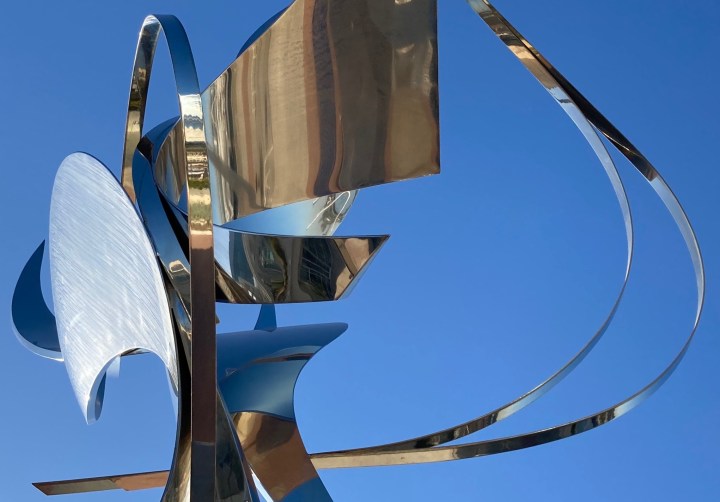
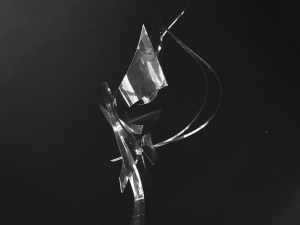
Our morning walk/exercise takes us by a beautiful sculpture that always makes us smile. The name is “Flame of Friendship” by the famous Mexican artist/sculptor Leonardo Nierman, located between the Marina and the Convention Center in San Diego. It was dedicated in 2000 as an expression of the warm friendship that exists between the US and Mexico—a centuries-old partnership, an intertwining of cultures, faiths and the very definitions of the two countries.
Friendship is a fundamental human need that finds expression at many levels: personal, interpersonal, cultural and national, creating bonds that we might literally guard with our very lives. Why? Because our humanity depends on them. We share a fundamental human need for warmth and connection. May the Flame of Friendship! burn ever more brightly.
Gallery
You might be interested in few other stories and songs about different expressions of friendship that have been meaningful for us over the years. Following are three musical stories that begin painting a picture of what friendship/love can look like in the everyday and how simple actions can instantly plumb the depths of feeling, emotion and life itself.
“There is no gate, no lock, no bolt that you can set upon the freedom of my mind.” Virginia Woolf 1882 – 1941
Hilma in her studio
Hilma af Klint, born in Stockholm in 1862 was an individual who demanded the freedom of her own mind. While it was still mostly unfashionable for women to be trained in the arts, she studied at the city’s Royal Academy, graduating with honors in 1887. She soon established herself as a respected painter, realizing the power of her spirit and the elegant expression of her own hand. She had a natural talent for realism, deftly rendering figurative paintings. But her heart wanted free reign with authentic originality, and in 1906 at the age of 44, she turned to colorful raw expression. From that point forward, the ground shifted and her life was never the same.
Group V The Evolution – 1908
A member of the Association of Swedish Women Artists, af Klint enjoyed camaraderie with like-minds. But the art world has a long history of male dominance, which caused Hilma to struggle to secure exhibition space. In fact, records show that she may have displayed some of her striking abstract works only once during her lifetime. Despite the challenges, she persisted, creating major stylistic advances ahead of her male peers, Vasily Kandinsky, Kazimer Malevich and Piet Mondrian, well-known abstract expressionists at the time. They created their groundbreaking style, rejecting “reality” literally years AFTER af Klint had already quietly invented such radical new forms.
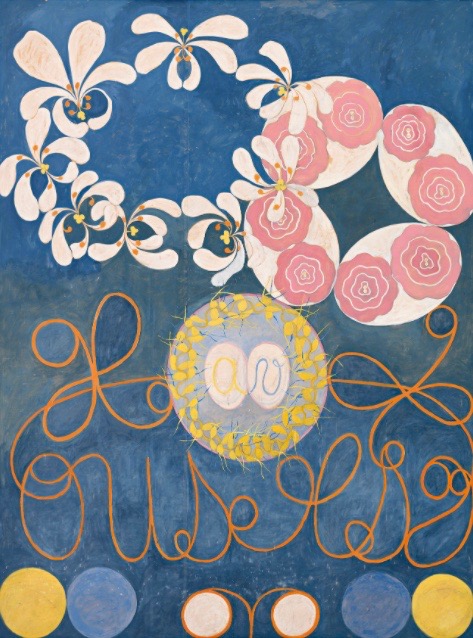
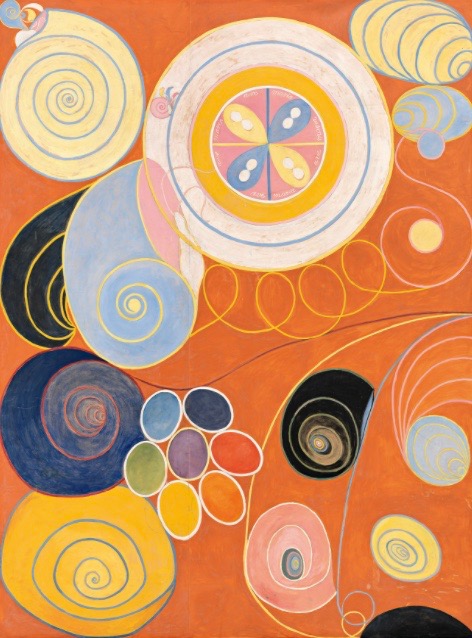
The Ten Largest #1 Childhood – 1907
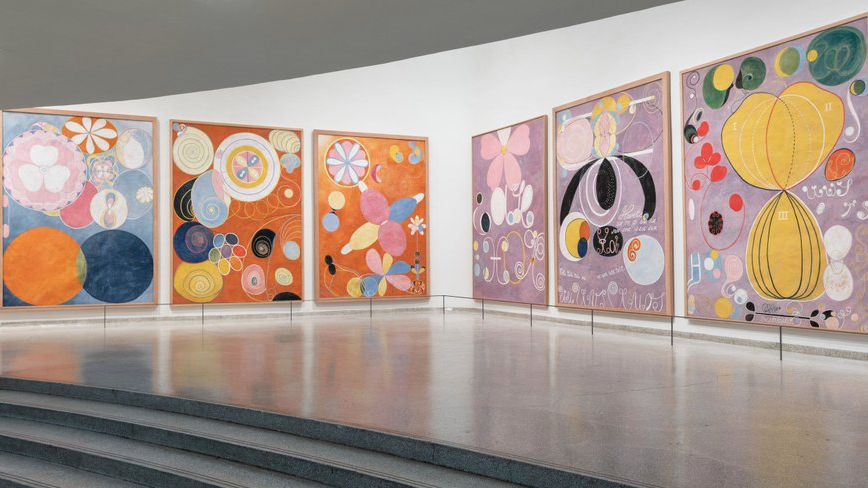
Af Klint produced ten massive pieces that were artistically and spiritually significant between October and December in 1907, calling them The Ten Largest. They “focused on the stages of life and humanity’s connections to the universe.” She was truly channeling spiritual energy into forms that had never been seen before. Hers is a magnificent story full of light, power and mysterious messages. She belonged to a group with four other women who used psychic abilities to create innovative paintings. In one of their meetings she was inspired to create TheTen Largest, to be displayed following a spiral path in a “Temple.” Coincidentally, 75 years after her death, The Ten were shown in a major exhibition at Frank Lloyd Wright’s Guggenheim Museum in New York City—famous for its unique art display surface on a descending “spiral path,” as mysteriously foretold.
Guggenheim exhibit – 2019
Sadly, her work was destined to be misunderstood and cast aside by the power structure of the time. However, she never wavered from her mission, having ultimate faith in her art. It was then, in that moment of dogged determination that she made an important decision that would literally change the world of art. She of course, decided to continue her life’s work undaunted, BUT, refused to sell any of her art. She intentionally devised a plan to deprive the male dominated art-collecting-world any profit from her work. Upon her death in 1944, her estate was sealed at her bequest. She stipulated that her work could not be seen until 20 years after her death, and absolutely never sold.
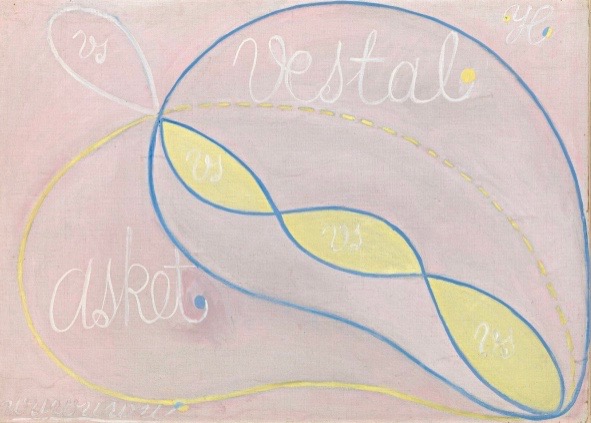
Eros Series #2 – 1907
Her incredible plan was successful and the majority of her work remained largely unseen until 1986—locked away in a storage room miraculously withstanding wide temperature and humidity fluctuations for decades. She was certain there would come a time when people would be able to appreciate what she had created and the story she was destined to tell. Hilma was right. Seventy years after her death, more than 1200 pieces were uncrated to reveal a treasure trove of unimaginable significance—finally receiving the much deserved serious attention that she longed for throughout her life. After so many years of being hidden from public view, the magic and mystery of her life’s work has finally come to light!
Hilma af Klint
The amazing abstract body of work by Hilma af Klint has emerged from the musty crates in the cellar vault, confirming that she clearly predated any early abstract paintings by Kandinsky, the “Father” of abstract art. One big question remains: Will we have the courage to rewrite the story of art to place Hilma af Klint at the center as the true creator of abstract art? After all, she was the “Mother” who invented the movement!
“There is no limit to what we, as women, can accomplish.” Michelle Obama
The work of Hilma af Klint can be seen: in the extraordinary documentary of her life called “Beyond the Visible“; in the video covering her past exhibition at the Guggenheim in New York; and in the book called Hilma af Klint: Paintings for the Future by Tracey Bashkoff. In addition, you can visit the Hilma af Klint Foundation for additional and ongoing information about her life and work.
The featured image at the top of this post is called “Group VI The Evolution #9 – 1908. All photographs of Hilma af Klint works shown here were originally from either the Guggenheim.org exhibition or artblart.com—thank you for your generosity.
We needed a replacement grill. The one we bought years ago rusted through, dropping fire out the bottom faster than we could sear our chicken breasts. That’s a dangerous scenario during the dry days of August. The trendy Big Green Egg is touted as the ultimate grilling experience, but they just don’t exist here. Perhaps something simple, like our classic Weber. But wait! Wouldn’t it be nice to replace our charcoal model with a spiffy propane powered grill? Regardless of the options, we decided that “buying local” was the thing to do. So, we went hunting. (more…)
A few months ago, we came across a program called “Workaway.” It’s an online organization that allows people who need help to find those people who want to help. Or conversely, people who want to help, can find someone with an engaging project. The idea is simple. If you want to spend time in Norway, then find a project and volunteer. How about New Zealand? South Africa? Peru? Just send them a message and see what happens. You might be surprised. We were. (more…)
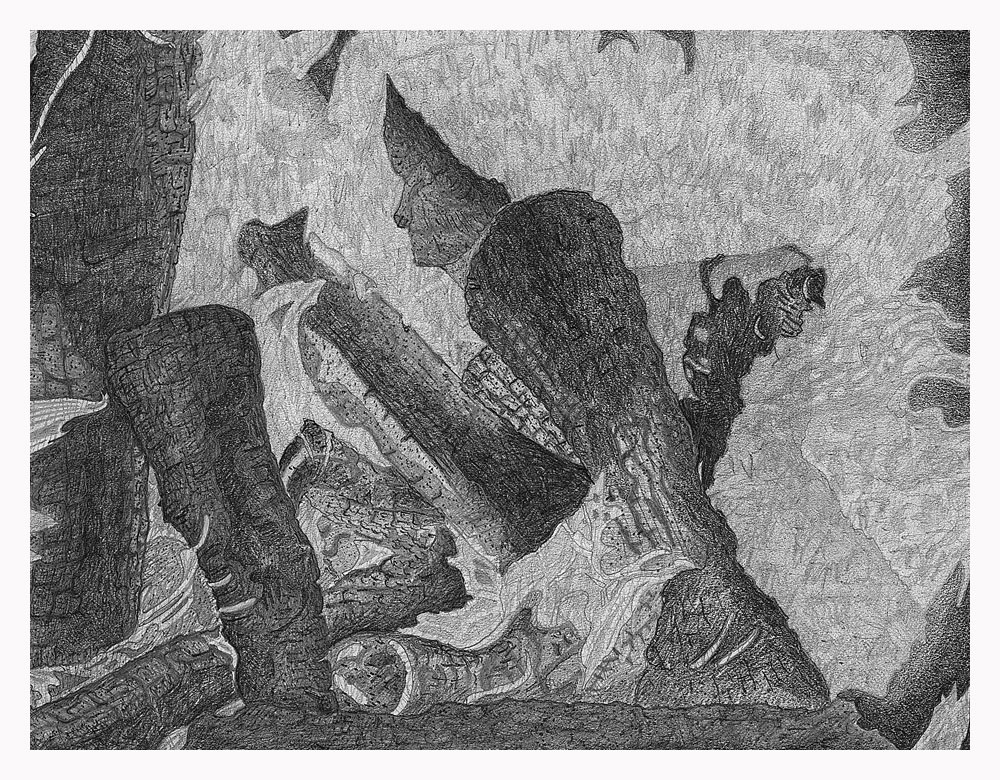
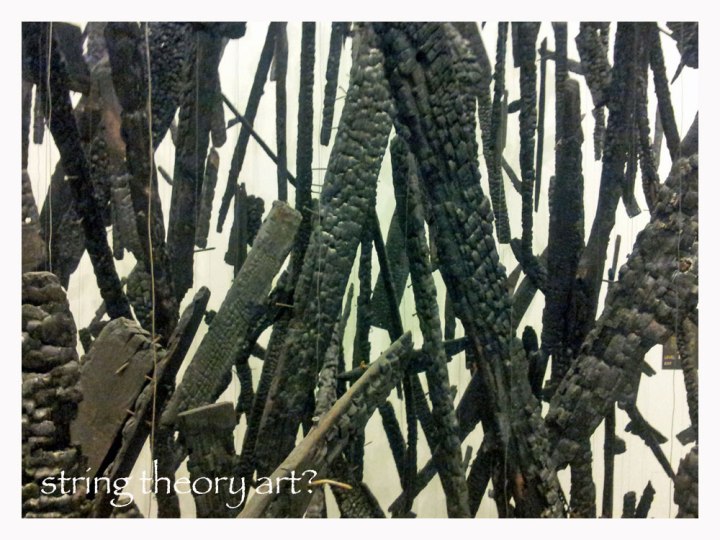
According to artist Cornelia Parker, the two opposites are currently merging in the corner of a room in Golden Gate Park, San Francisco. She calls it Anti-Mass, and the work of art is currently housed at the de Young Museum, gallery 16, to be exact.
Recently, when a soulful Southern Baptist Church burned to the ground at the hands of arsonists, Cornelia, with permission, collected and reclaimed the charred timbers of the once-vital wood structure. And then, without permission, she began her magical transformation that would, in her own artistic language, fuse science and religion; mind and heart; tangible and spiritual; grounded and otherworldly; violence and reverence into a powerful image, to lure people out of dualism and at least momentarily, into an awareness of the underlying unity of all things. (more…)
Cheryl & Emerson
Quality time is undeniably great for relationships. We've discovered that quantity of time can provide that quality. Perhaps it takes Time to Partner.
















































 Quality time is undeniably great for relationships. We've discovered that quantity of time can provide that quality. Perhaps it takes Time to Partner.
 Uncommon promise