These are stories that generally involve only Cheryl and/or Emerson and are most likely about day-to-day activities. They can be engaging the two of them in a whirlwind tour somewhere, or simply about conversation around the fire. Usually, they will have a more reflective side to them, or a particular lesson learned.

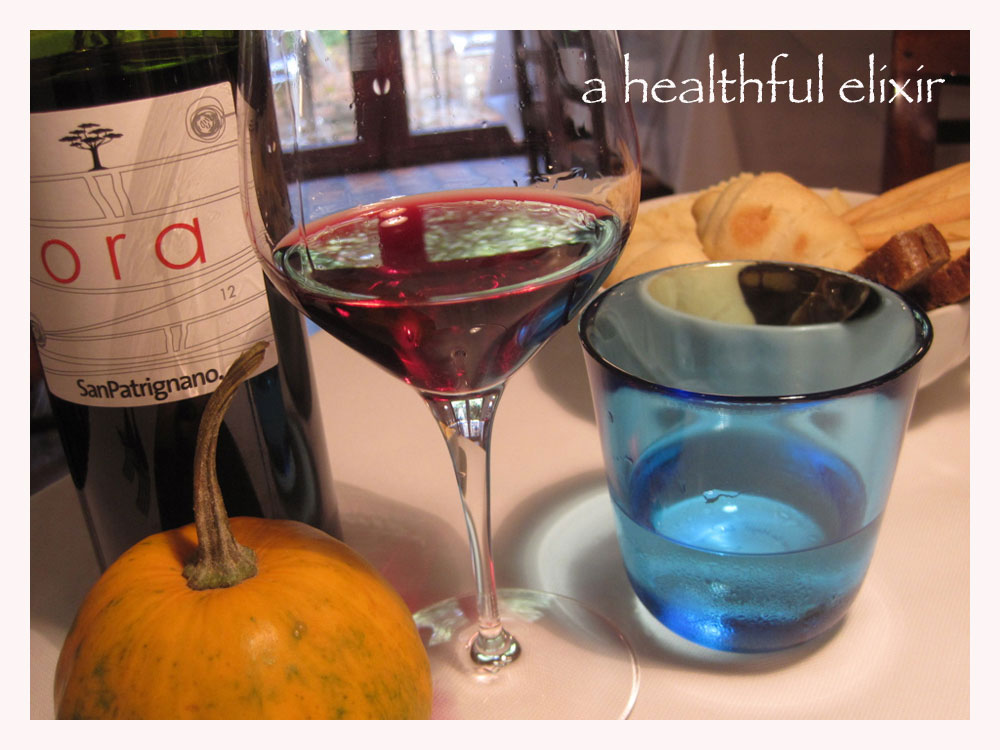
There’s an old saying about Tuscan wines—a Chianti wine you want in front of you at the table. A Pomino wine you must keep by your side—so special, it’s to be reserved for just the right moment.

Pomino

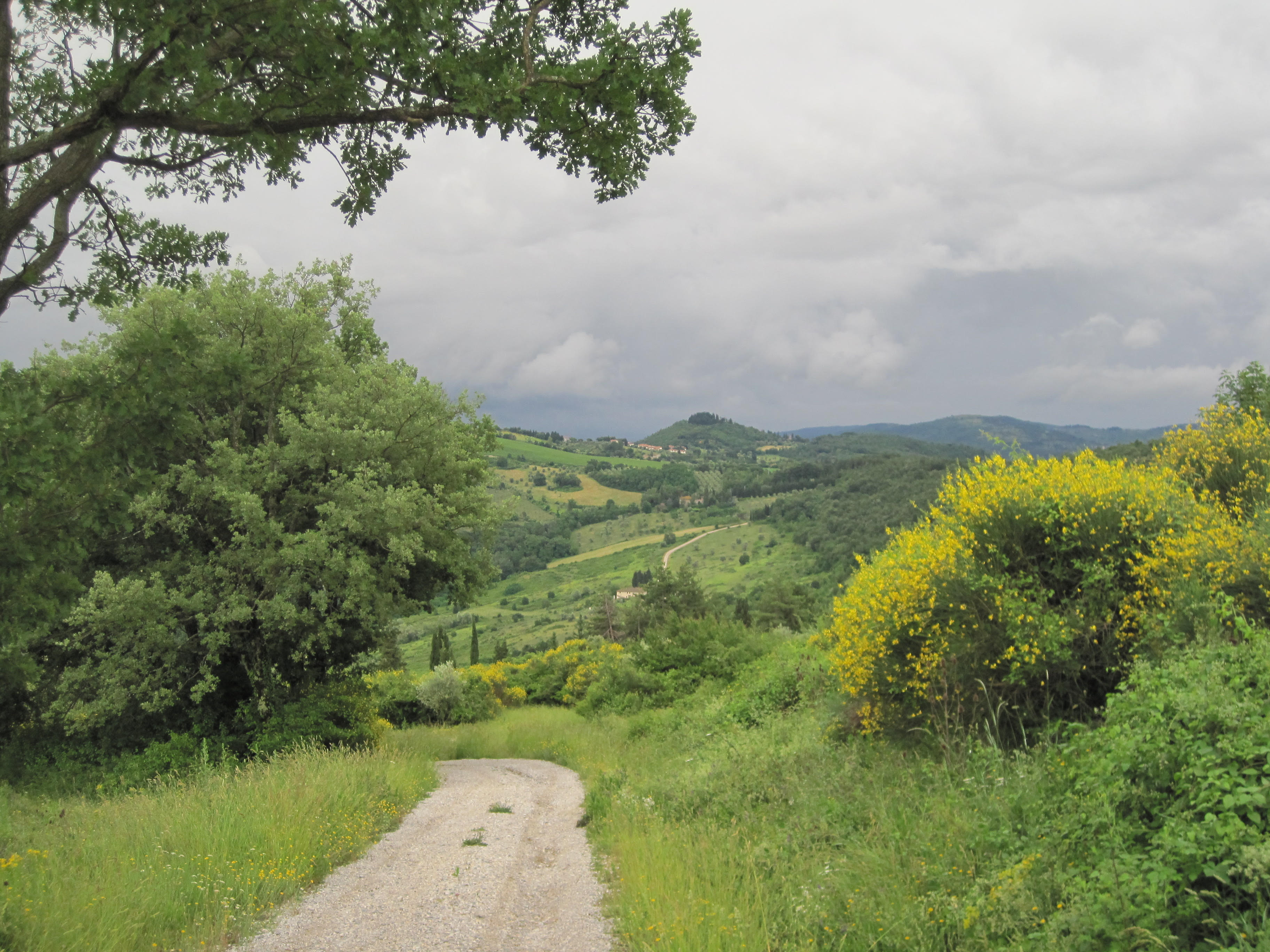
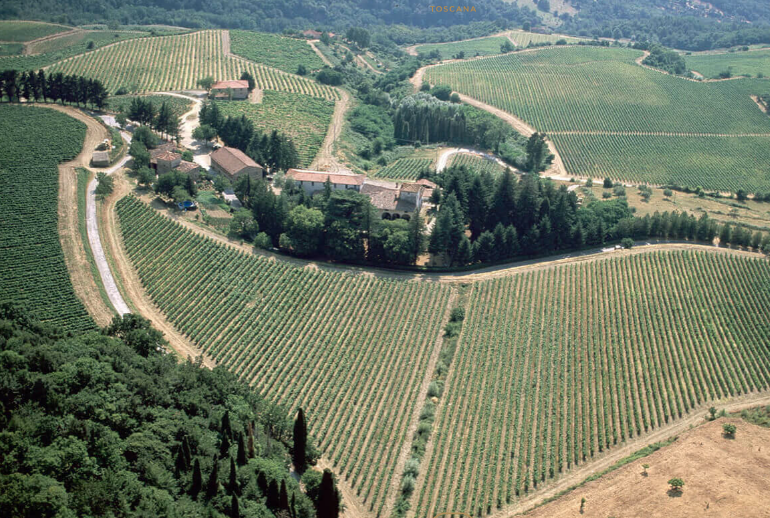
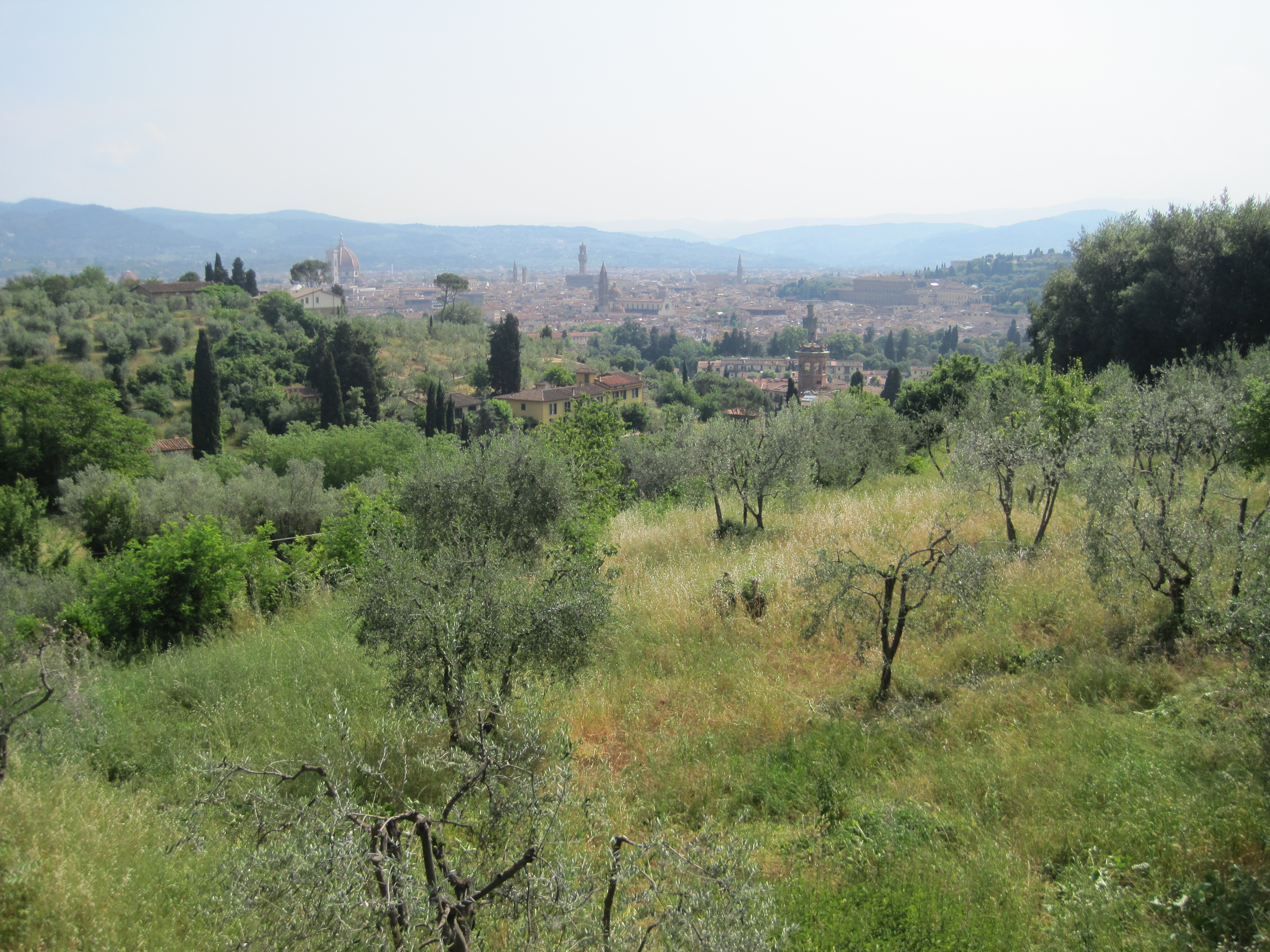
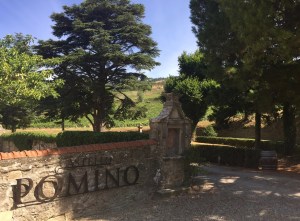
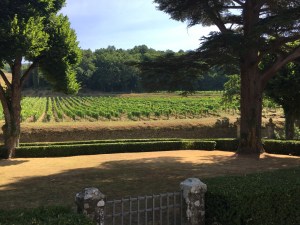
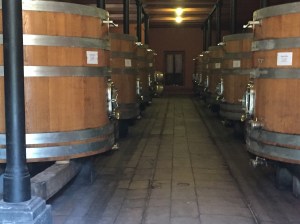
While hiking on a crisp, clear spring morning in the Pratomagno hills of Tuscany, we came upon a valley view that drew us deeper into the Frescobaldi family history. Pomino (which means little apple) is a small town tucked away in the Tuscan Hills that surround the beautiful Renaissance city of Florence, Italy. In 1716, the Grand Duke Cosimo III de’ Medici identified the four most highly prized territories of Tuscany for the production of wines. Today, not many know about the intimate burg of just over 200 people, but they certainly know of the famous wine that’s produced there—Pomino Bianco. The town’s elevation is some 600 meters above sea level, where white grapes grow best, so that’s the specialty in that small region. Pomino and its renowned wines are a relatively small part of the historic Marchesi de Frescobaldi estate, which has remained a family operation for over 30 generations and 700 years.

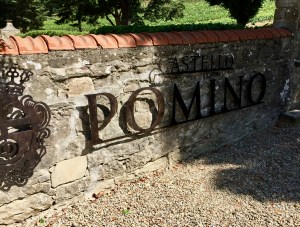
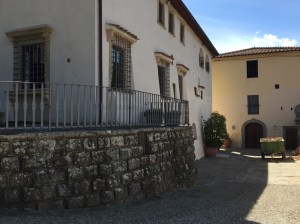
Castello Pomino

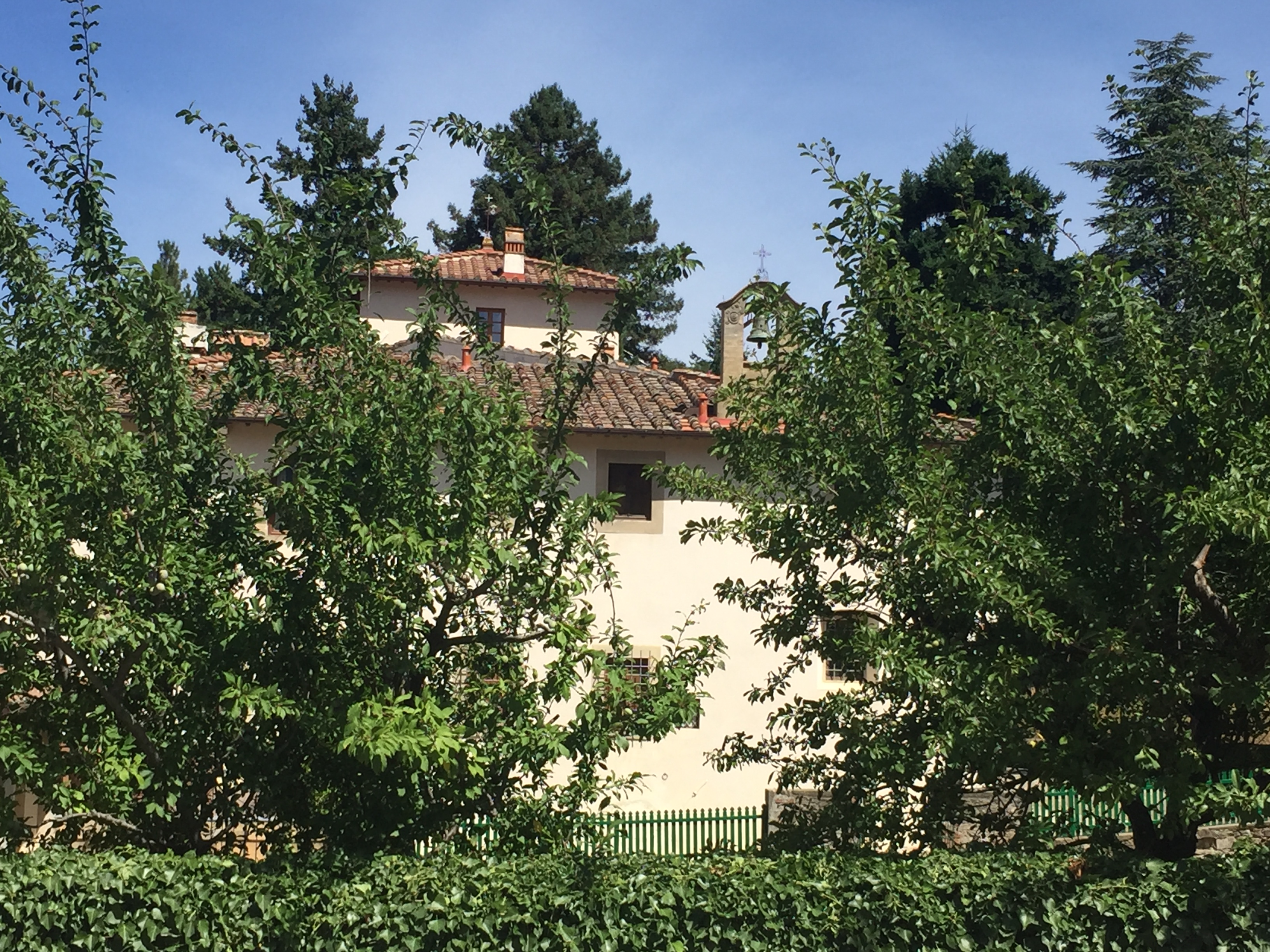
Clearly we are not wine experts, but we are compulsively drawn to the serenity, beauty and history of Tuscan culture. Surrounding the ancient Castello Pomino, lay an incredibly lush valley of vineyards. The castle was built in the 1500s and now serves as the centerpiece for that unique wine-making territory. The owners refer to the area as: “Elegance and femininity. A hidden gem that’s revealed among the woods of the Florentine mountains.” Irresistible!

The Frescobaldi family made wines that were well known throughout Europe. They socialized with the likes of artists, such as Donatello, Michelozzo Michelozzi, and Filippo Brunelleschi. Most Florentines will tell you that their city, although cosmopolitan, actually enjoys a “small town” feel. Everybody seems to know everybody else. So it’s no surprise to learn that Frescobaldi furnished wines to the well known locals, and further afield to the Papal Court in Rome. After all, at the World’s Fair of 1873 in Vienna, the wines of Pomino won coveted awards, and in 1878 took the gold medal at the World’s Fair in Paris, the highest international recognition of its time.

Splash of white wine

You might say that our story is similar to a Pomino wine—you want to save it until just the right moment. We find ourselves reminiscing about those beautiful treks through the rolling Tuscan hills. Now, some 10 years after that quiet hike in the Pratomagno, we decided it was the right time to “uncork this story.” Ahh, breathe in the distinct magic of the elixir! We savor every sip of those memories and hope you too become a bit intoxicated by the romance of it all.

Related stories and music

Tuscan Hills

You might also enjoy another story about inspiration in the Pratomagno mountains called Nipozzano Castle—have a look! And just to get you in the mood for a hypnotic Tuscan adventure, below is our song called “Tuscan Hills” written in 2003. Enjoy!

Gallery

This is a short story with a long, happy ending.

Sometimes, we want something to happen so badly, that we will do just about anything humanly possible to make it so. But, no matter how hard we try, plan and anticipate, it seems that we just can’t force a yield. NOPE. Not happening. 

Then, in that final minute, we wonder whether trying one last time might be the magical push that will work—or maybe just one more try after that? Perhaps another?

Let’s face it. It seems that it would be a cryin’ shame if we gave up just one moment too soon. Then, how do we know when to stop? A reasonable person would understand how to decide that tricky question. But, are WE reasonable? Sometimes, we’re NOT!

Voila!

So, here’s the deal. All we wanted to do was create a little one-room studio apartment in Italy. That sounds so romantic, yet easy enough. Then the twelve months project turned into four grueling years, and we were on the verge of giving up—calling it quits—surrendering to the powers that be—bowing to the bureaucracy—admitting defeat. Then, Voila! One last gut-wrenching try turned our building dirge into a victory dance. Ahhhh!

What we learned was this: there is no real answer to the question of when to let go. The dilemma is always “of the moment.” It can’t be graphed, outlined, critical-pathed or magic-8 balled ahead of time. We’ll quit when we quit . . . or not. Perhaps we might muster an ounce of courage and effort in the last seconds of trying. Give it one more go. When that final push results in success, we are reminded to NEVER GIVE UP! This may be a fool’s lesson, but we’ll take it. ALWAYS try one more time! TRUST in yourself and the process—there could be magic just around the corner!

We invite you to read our BACK STORY—called “Meeting the Notaio.” It’s the story with a happy ending, no matter what trials and tribulations are encountered.

Have you seen my tombino?

Wait, what? Is that a pick-up line? 

It must be here somewhere!?

NO! We just can’t find that darn tombino. In Italy, of course, language results in many quizical and/or dumbfounded glances. In this instance the word tombino verrrrry loosely translates to mean, a large underground junction box. It is the heartbeat of many systems that feed into a country dwelling like ours. Running underground for about 120 meters (roughly 400 feet) are electrical cables, telephone lines and water systems. The tombino is a heavy concrete lidded box. In our Tuscan hideaway, stealthily secluded underground are many of these cement cubes about 5 feet on all sides. Typically unseen and NOT generally a topic of  conversation. However, in these post-pandemic times, it has earned the distinction of being one of the most important talking points in our little corner of the world. Once found, you could probably hide in one, but we wouldn’t recommend it. But, WHERE, oh where, is my tombino? That’s the million-euro-question. Typically they’re fairly easy to locate, but unfortunately, ours has been covered over by years of crunched and compacted gravel mixed with gritty dirt. You get the picture?

Breakfast, lunch and dinner

It seems that our utilities have been interrupted by a tiny little country mouse who has nibbled through the yummy gray sheathing on the power cable to create a hole for water to seep in. Once the cable gets wet, you’re only months away from full-on corrosion. One day we’re feeling the “power”and the next day our “current” strength is completely gone. Living Without Power is of course, annoying, unacceptable, and even dangerous. The only way to remedy the situation is to locate the exact position of the “nibbled-through nuisance wire”—good luck with that! We had no choice but to locate all 7 of the buried tombini under the driveway as the first step in our problem-solving process. The first six, okay. Number seven, no way. What a challenge—trying to find a “nibble in a dirt-pack.”

The radiator seems so peaceful

Now, electricity certainly is a utility that we have come to enjoy on a daily basis. With the flip of a switch, we have light. The familiar click of a gas stove reminds us that it uses an electric ignition. But more than a mere creature comfort, it’s essential for surviving frigid winters in Tuscany. Without power, there’s NO heat. Without heat, cast iron radiators freeze. When they freeze, they burst. And they are NOT tidy bursters. They spray and spit rusty water as far as their cracks will allow. The force exerted from them mimics little explosions. It’s certainly not a pretty sight, and hopefully you’ll never have to witness or clean up such a disgusting mess.

Sneaky power work-around

During the pandemic, our neighbor informed us that we had suffered a loss of power in the winter. Yikes! We immediately flashed a joint memory of bursting radiators. Since it was too cold and nearly impossible to repair the electrical lines mid-winter, we borrowed electricity from a neighboring building. Using a very LONG extension cord (as a temporary measure), we kept the radiators happy enough that they didn’t crack-up under the stress. So when  warmer weather arrived, we kicked into high gear to find a quasi-permanent solution for the electricity issue. Hence, we found ourselves in a desperate search for that seventh elusive tombino, which was the key to our success.

Alongside two trusty electricians, we energetically swung picks at the hardened earth and scraped the loosened dirt with our shoes and shovels to clear the debris. After multiple attempts and without success, we shifted again and again, to a different digging location, every time someone shouted “Let’s dig here!” The driveway started to look like giant gophers had taken up residence, randomly having popped up, leaving gaping holes and massive mounds of gravel. Our day ended on a note of dismay and discouragement.

Could it be?

But persistence persisted. Later that evening, our neighbor sent a text, “WOW, I found it.” No, he hadn’t been out digging in the dark, but he had discovered an equally valuable treasure—a single photograph of the house during construction. Some 20 years before, in the foreground, just barely within the frame was an old cement-covered Tuscan wheelbarrow balanced across a hole in the ground—a square hole. Safety first! There, beside that rusty-wheeled implement was a chunk of concrete shaped like—yes, a square lid. In the silence of the night, our sleuthy neighbor dug through hundreds of photos to find perhaps the only picture ever taken of that lonely tombino during construction.

Don’t let a mouse steal your power!

As with any Italian problem, endless loud talking and arm-waving is required, along with a dash of clever insight. But the noise, persistence and cunning almost always pay off. Fortunately, our neighbor snapped pics of the more mundane phases of construction—capturing momentary glimpses of life “uncovered.” We’re not finished with the repairs yet, but we currently have direction. Having a plan and renewed hope is certainly em-POWER-ing!

Related Story and Music

You might check out another story called “Living Without Power” that we wrote and recorded back in 2009 amid a devastating hurricane. Following is the music if you want a quick listen.


You’ve probably heard of the dog breed called the Blue Heeler. Well, our experience tells us that most dogs are amazing healers of a different kind.

The “Mystical Doctor” is open for business

Anyone who has ever had a dog can probably attest to the fact that canines, as well as other different pets, seem to have a sixth sense. It’s a multifaceted and magical capability that goes beyond empathy, love and loyalty to include powerful “healing.” Yes, that’s a big statement, but it’s true—dogs are “Mystical Doctors” rather than “medical doctors.”

For example, our little 9-pound doxy is a profound Healer. We’ve had many dogs over the years, each with a unique personality and special talents, but none have been quite like our little Sara. She seems to be hard-wired to heal.   

If one of us is having a sad or down moment, she seems to single the “patient” out, making physical contact her top priority. She’s always focused on the one in need, leaving the capable other to fend for themselves until her healing is done. It’s as if she’s a sponge, spontaneously drawn to soak up the sad or wounded energy. We joke about the magical capabilities, by calling the process, “fur-therapy.” She thinks it’s just “being a dog.”

As long as it takes—just like her nose

In these pandemic days of video medical appointments and tele-therapy, she insists on laying on the needy lap—a circle-dog all curled-up to provide optimal care. Time and energy are unimportant to Sara. She’s there for the duration, taking in the stress while imparting warmth and comfort.

Recently, Em had a tele-therapy session and Sara assumed her normal healing position in his lap. Then, as Em became agitated, Sara suddenly began to shiver. She seemed uncontrollably cold, which is odd given that it’s summer in California and human laps are typically especially warm. Em noted her strange behavior. The session ended rather abruptly due to his intense emotional reaction. What did Sara sense? 

Following the session, Em lay on the bed to regain his balance. Normally, Sara would assume her familiar conditioned position on his lap to snooze. But she behaved differently. She refused to sleep and instead, she turned away from him and laid down at the foot of the bed. He called and coaxed her to come to him, but she completely ignored his requests and, in fact, wouldn’t even look at him. 

Then Em noticed something he’d never seen before. Sara continued shaking, but now it didn’t seem that she was cold. Instead, It looked like she was shaking to throw off the negative energy she had absorbed from him. Our conclusion was that his negative mood had been too much for her. She had reached overload! Apparently she was just too maxed-out and couldn’t convert the bad energy to good.  Furthermore, she refused to come anywhere near him for the rest of the evening.

The following day, Em regained perspective and equilibrium and Sara couldn’t get enough of him. Perhaps she deemed the remaining energy work to be possible. Or maybe he was feeling so much better she just wanted to soak-up some of that positive energy. In any case, her presence was sorely needed and made all the difference in his day of recovery.

This story is an anecdotal, intuitive recollection of “a day in the life with Sara.” There’s nothing scientific or measurable. However, when you find yourself in need of some therapy, rather than asking, “Is there a doctor in the house?”, why not consider fur-therapy. Simply ask, “Is there a dachshund in the house?” We think someone will answer the call and come running.

Healing in process

An addendum: As usual for a weekend, we went to get coffee at one of our favorite coffee bars. A woman sitting next to us, noticed Sara and turned toward her. We introduced Sara and the lady smiled and asked to pet her. Then, she requested, “May I hold her?”  We gently handed over all 9 pounds of Sara and she was immediately comfortable with the stranger. Then we  glanced at the woman’s face to see that tears were streaming down her cheeks. She said, “You have no idea how much I needed this love, thank you sooo much!”  Sara responded with a couple of quick licks—which always means, “You’re welcome.”

Related Story and Music

Sweet Isabella

Sara’s older half-sister Isabella (Izzi-B) was our previous “Mystical Doctor,” hanging a shingle outside our home for 16 years. She later became a well-known Italian personality after many adventures in Tuscany. The following story called “Isabella” was written for her in 2013 and we share it now in her loving memory.


Today, an unexpected guest arrived at our home.

Doors wide open

On a beautiful sunny, cloudless June day in San Diego, something amazing happened. Following our lunch on the patio, we left the door wide open to let outside breezes in. Suddenly, there was a fluttering—a shadowy silhouette against the stark white ceiling. A lone monarch butterfly had decided to pay us a summery afternoon visit. She flitted silently, exploring every nook and cranny—first the bookcase, then the pictures and knick-knacks on the shelves. She floated across the room with intention, lightly touching the corner of the mantle, and then momentarily paused for a short rest on the back of a chair. 

Up close and personal

Cheryl was in the room at the time, reclining on the sofa—a post-lunch lull. She sighed when the butterfly gracefully swooped to clear the door frame, and then watched the antics as she worked her way across the room. Suddenly our unannounced guest landed directly in front of Cheryl’s face and seemed to be staring, unblinkingly at her. Wide-eyed, Cheryl lay nearly breathless, not wanting to make a sound or sudden move—butterflies are notoriously shy, you know. Could it be that this graceful visitor had a message to deliver? 

Have you ever had a monarch butterfly visit you in your home—in your face? It seems pretty rare, so we felt both curious and honored. We decided reflect on the possible meaning of this impromptu encounter. First of all, the monarch butterfly is among the most beautiful of all the butterflies. Their name, Monarch, Is fitting. If there was ever a monarchy over all butterflies, one of these beauties would surely be appointed Queen over the entire Kingdom. 

Subtle energy vibration

For millennia, cultures around the world have
recognized the grace and beauty of the butterfly. Their presence has been considered a sign that we, as humans, might be on our right path, and will most probably achieve our chosen goals. They are also viewed as delicate messengers announcing an impending rebirth or spiritual transformation—arriving to help us navigate through life or simply nudge us onward along the path already chosen. Some say that they’re drawn to particular people by a specific vibration, a subtle energy that emanates from their chosen companion.

Going for the Essence!

Our conclusion: this was a day of joyful reflection and celebration—perhaps it was a time for preparation, signaling some profound events about to unfold. As we continued talking about the brief visit, our thoughts, too, began to take flight.  Our conversation became more playful and lighthearted. Imaginations fluttered, then soared effortlessly through the air, floating high above a beautiful landscaped urban canyon. After a few minutes of ideas, dreams and exploration, we touched ground again. All of a sudden, the world seemed more open, inspiring, expansive and exciting!

Queen of the Royal Family

Fortunately, our butterfly-friend made an entrance that could not be ignored. We concluded that the message had, in fact, been received! We wonder, though, how many silent messengers fly close by, unnoticed every day. What clues have we missed by being too busy, too oblivious to our surroundings to note subtle changes? If nothing else, our colorful friend reminded us to watch more carefully, listen more intently and stay open, hopeful and engaged. She nudged us to pay closer attention to quiet information available to us. Surely, when it comes to magical insights and majestic influence, the Monarch definitely rules!  

Related Stories and Music

You might also enjoy a story called “Lavender, Bees and Butterflies” documenting nature’s party in the hills of Tuscany.

Another story called “Bee Major” reveals a little-known discovery about the song of the Bees.

And finally, a Musical Story called “Make Believe” might trigger your imagination and interest in tuning into the signs and messages from the Universe. 

Wishing well

There’s nothing quite like a good friend!

Best friend Emelee

The saying goes that all you really need in this life is love, a therapist and a good friend, not necessarily in that order, or even all of them at the same time. The “Big Three.” It’s dynamic. For us the love can be a person, a thing or an activity; the therapist can be a religious leader, counselor or healer; and the friend can be a spouse, family member, acquaintance or a beloved pet. In fact, the best of times is when love, the therapist and the friend ARE experienced, all three together. And once in a great while, it’s possible to have all three wrapped into one—for example, in the form of that special little dog. She can be a trusted confidant, someone who will never disclose a single word you’ve said. She can deliver fur therapy that dries the most mournful tears. She might follow every step you make, mirroring the very essence of friendship. To imagine Life without the “Big Three” is to ask the question: How long can you hold your breath under water?

Not that long.

Flame of Friendship

Our morning walk/exercise takes us by a beautiful sculpture that always makes us smile. The name is “Flame of Friendship” by the famous Mexican artist/sculptor Leonardo Nierman, located between the Marina and the Convention Center in San Diego. It was dedicated in 2000 as an expression of the warm friendship that exists between the US and Mexico—a centuries-old partnership, an intertwining of cultures, faiths and the very definitions of the two countries.

Friendship is a fundamental human need that finds expression at many levels: personal, interpersonal, cultural and national, creating bonds that we might literally guard with our very lives. Why? Because our humanity depends on them. We share a fundamental human need for warmth and connection. May the Flame of Friendship! burn ever more brightly.

Gallery

You might be interested in few other stories and songs about different expressions of friendship that have been meaningful for us over the years. Following are three musical stories that begin painting a picture of what friendship/love can look like in the everyday and how simple actions can instantly plumb the depths of feeling, emotion and life itself.

Musical Stories

Finally Friends

Circle of Trust

Helping Hand

Family Ties

Dead flies cause the ointment of the apothecary to become rancid. A terrible smell supposedly wafts into the air. Could that be our problem!

That unmistakable smell

The smell of sweaty tennis shoes clued us in that we had issues with dampness in the small annex building, or anesso as the Italians call it. To us, it’s just our studio. We worked there most days, writing music, drawing, recording and reading. However, the small enclosed cantina, cellar beneath was the culprit, we were sure. Pretending that airing out the space above was sufficient, we tried various techniques to enhance the air quality.

One approach we tried was the muffa mangia, the mildew eater. This device was a half-gallon size plastic box with a tray suspended slightly down from the top. On this tray a block of moisture attractant is placed and as it sucks the moisture from the air, the water fills the space beneath the tray. Didn’t work. It may have worked had it been the equivalent of, say, a family size refrigerator? So we called our engineer friend, Leonardo and requested professional help. His recommendation? Claudio.

Claudio is a contractor who looks completely at home on a motorcycle. He has very dark hair and eyes to match, ties a colorful scarf around his neck and looks the part of the romantic loner. He was our man. We forgot to even ask his last name since he came highly recommended and we had immediate rapport. With an artistic wave of his hand, “Team Claudio” went into high gear.

Rotting wood from inside the cantina

First, they opened the cantina by removing the temporary stone wall where the door should be, only to discover that the original contractors had actually abandoned scaffolding inside. It was an absolutely disgusting scene. After 5 years or so, the wood planks had slowly disintegrated, creating the rotting wood smell that we couldn’t quite recognize from inside the studio above. In addition, a patch of mildew the size of Rhode Island heaved and slimed on the back wall as we watched. Mystery solved! The source for the nauseating smell was exposed.

Finished cantina with triple floor!

Claudio assured us that he could solve the moisture problem by pouring a concrete floor, building an open grid on top of that so that air might circulate, and finally, pouring a second concrete floor on top of the grid. What a GENIUS! At this point (just between the two of us), we began referring to him as “Clau-god,” since in Italian, dio means god. He certainly was our hero, and definitely looked the part.

After the clever double-floor was installed, the guys resurfaced the walls and finally, for good measure, laid a moisture resistant tile floor making our double floor into a TRIPLE. That cinched the deal! The cantina was finally dry and consequently, so was the studio. The ominous smell of dirty gym socks quickly dissipated!

Claudio performed a final inspection and declared the project complete. We agreed and took out our checkbook. Payment was the only thing left. With pen poised above the assegna, check, I remarked, “Claudio, I don’t even know your last name.”
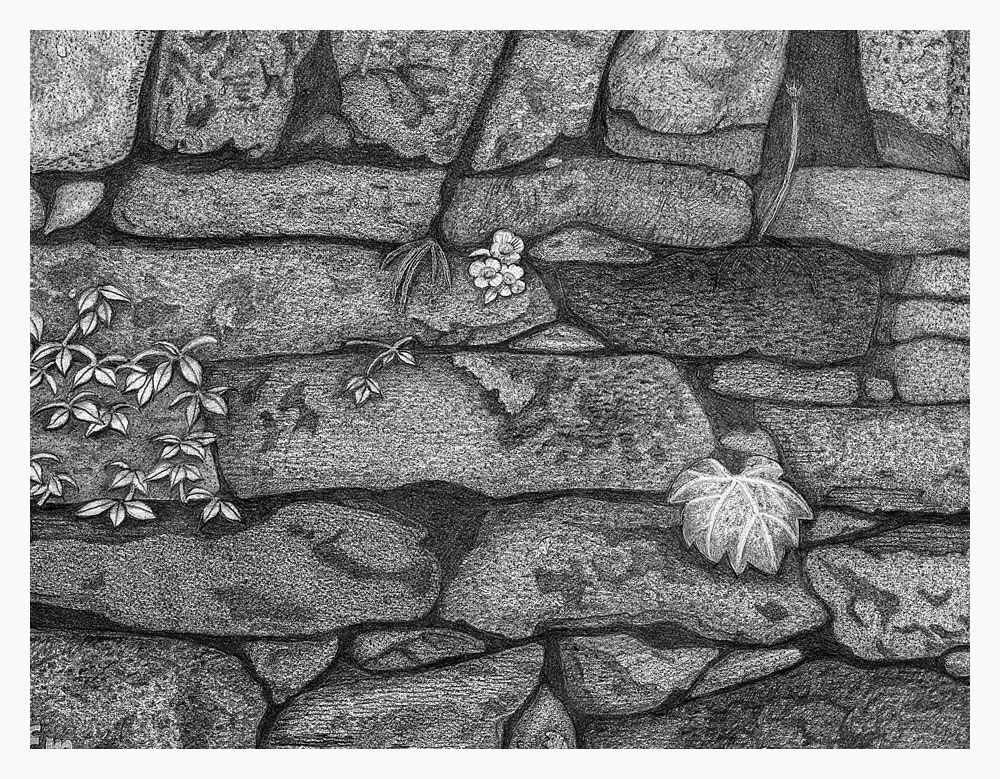
“Tafani.”

Horsefly

Tafani? Doesn’t tafani mean horseflies? “Si, si. In fatti abbiamo una stemma di famiglia, Yes, yes, in fact we have a family crest.” At the same moment, in our mind’s eye, we each pictured a flowing golden silk banner graced with a delicately embroidered horsefly. We glanced at each other as if to say, “this must be a joke.” But, it was not!

He went on to explain, however, that there had been some bad blood between some of the family members centuries ago, and that after a serious disagreement, the only logical conclusion was for the family to separate. They broke into two distinct factions. In a final act of civility, Claudio’s ancestors had chosen to amicably share the rich heritage of the family horsefly crest. After much debate, they decided to literally cut the image of the horsefly in half.
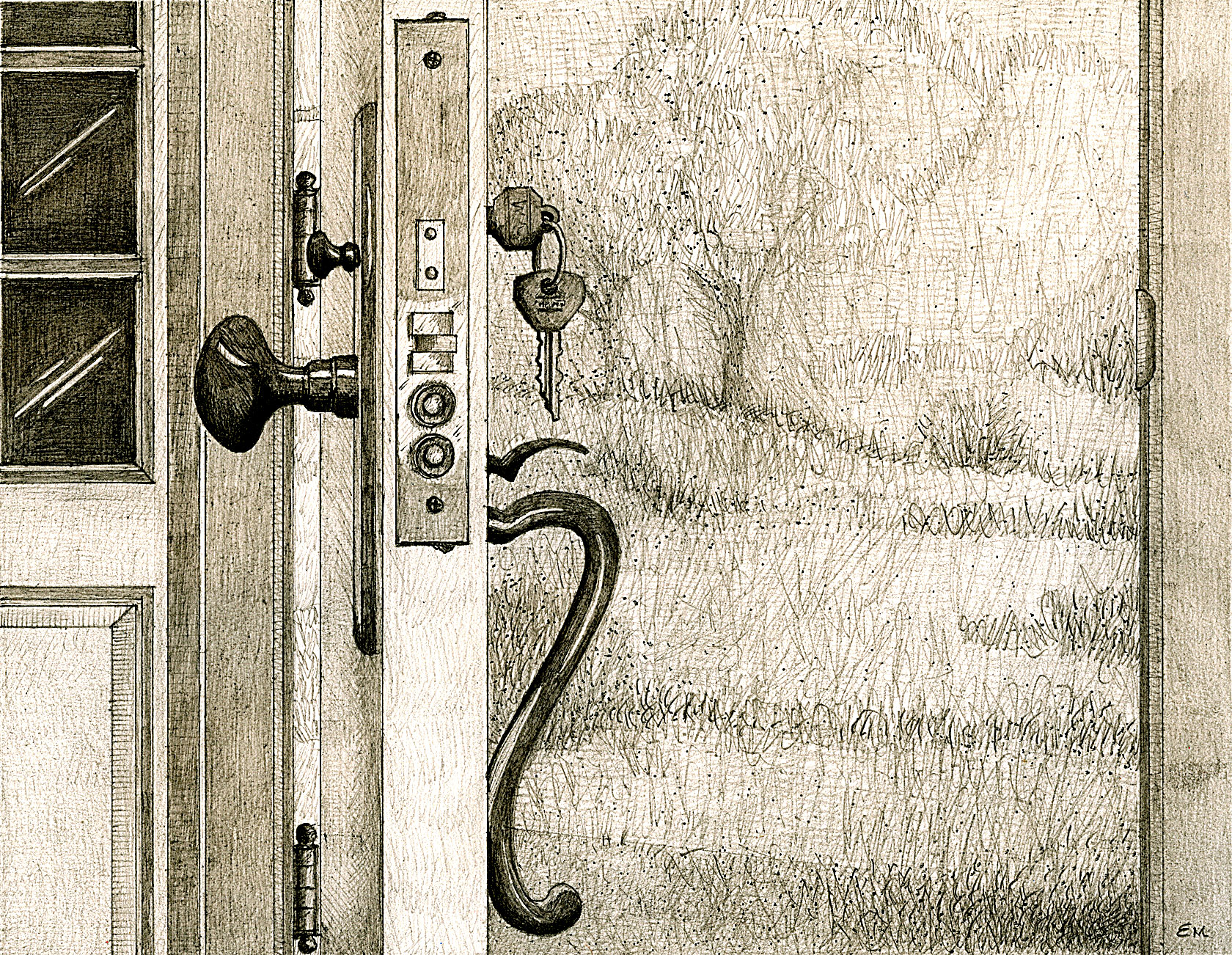
When we commented that the two halves were virtually equal, Claudio corrected our misperception, “No, no. È stato tagliato orizzontalmente, No, no it was cut horizontally.” WHAT!? WHAT!? Was he saying that one side of the family inherited the top half of a horsefly and the other crest depicts the lower half of the body, legs and all?

Clau-god to the rescue! (a facsimile)

“Si, si. La mia famiglia è rappresentata dalla metà con le gambe, Yes, yes. My family is represented by the half with the legs.” We shook our heads in disbelief as we walked him to his motorcycle. He carefully retied his colorful scarf, tucked his dark hair into his helmet, and swung his leg over the bike. We stifled a chuckle, imagining a horsefly swinging 3 of his 6 legs over the bike. We all waved as he headed down the drive, an ancient noble insect flying away on the sultry summer winds. There was NO fly in our ointment, in fact the air smelled of honeysuckle. We watched as the dust billowed into the dusk. We sighed. There goes our hero, our Clau-god!

This is a true “Italian Moments” story in which everything happened almost exactly as described, in the summer of 2009.

Italy is in a class all by itself.

The incomparable Vespa is known around the world, but that’s just one minor detail in the vast array of Italian accomplishments. The distinctions are many, including: food, art, the Renaissance, the Roman Empire, the Vatican, incredible villas, world-class fashion, fast cars (Lamborghini, Ferrari, Maserati ), passionate lovers, espresso, the original organized crime group (a dubious distinction), beautiful cities, culture, opera, and the list goes on and on. But, in addition to the many significant accomplishments over literally millennia, there is nothing quite like the unique Italian personality—a tireless energy, generosity and unmistakable presence, easily seen in their facial expressions, synchronized with flamboyant gestures or easily heard in their voices, as they speak. Spoken words sound like poetry, lyrical and lilting. The Tuscans are particularly proud of their language, since their favorite son, Dante Aligheri, invented it.

Traveling around Italy, wandering the towns and narrow back-streets, one can find all sorts of clever, cute, hilarious and sometimes downright unbelievable Italian sights. Following is a gallery of some surprising and often quirky discoveries we’ve made over several decades of living amongst the amazing Italians. They offer a seemingly endless source of inspiration, and yes, humorous, free entertainment. Their most fascinating contributions can be found scattered around in the every-day activities. You absolutely have to love the Italians!


Something happened as we drove  home the other day.

Skinniest two-way traffic in Borgunto

Returning from a routine visit into Fiesole to buy a few groceries and for Em to get a haircut, we rounded the curve just beyond the small town of Borgunto, home to the “bottle-neck capital” of Italy. To our surprise, an oncoming car flashed its headlights. It was broad daylight and we wondered, “What’s that about?  Was that a friend and we just didn’t recognize their car?” A few more yards and we encountered another oncoming car. Again, headlights flashed. “What’s going on here? Is there something wrong with the car that we don’t know about?”

Lollipop police

Then, just after the last turn off (and the final escape route) we saw them: Two police officers were randomly signaling cars to pull over for a routine check. Their style and flair in doing such a mundane task was actually a thing of beauty. They each wore the recognizable uniform of the Carabinieri, local police—navy blue head to toe, single-breasted blazer, silver braid around the red and white collar and cuffs, red piped epaulets on each shoulder, single red stripes down each trouser leg, a dramatic white diagonal sash, and black boots, where they store their little hand held “stop sign on a stick” when it’s not in use.

Carabinieri in action

We amuse ourselves by calling those ridiculous signaling devices “lollipops,” and so of course we refer to the historically significant and highly esteemed carabinieri as the “lollipop police.” Oh yes, they carry another piece of equipment at all times, a holstered pistol, which is classified as an “ordinary” weapon. But, as beautiful as they are, these dedicated enforcers of the law are far more than “eye candy.” They are the keepers of all things lawful.

We thought little of the request since we had all the necessary documents—title, registration, and international driver’s license—neatly stashed and at the ready in the glove box. We were seasoned “residents,” models of perfectly honest, part-time Italians with flawless organization skills. We had been randomly pulled over before, so this seemed somewhat routine. We soon discovered that it was anything but!  

The rule book looked sorta like this

One officer strolled over to the driver’s side window, while the second remained at a safe distance, evidently serving as the back-up “protector” just in case a fight broke out. The impressive figure at the window examined the neatly stacked documents in his gloved hand, and then without a word, walked over to his colleague. Together they looked at our documents as we watched their faces change from “cool Italians” to “puzzled police officers.” Then, after several minutes, they opened the trunk of their subcompact Fiat squad car and took out a voluminous book of rules—so massive, it took both of them to pick it up. One started leafing through the pages and then turned it over to his partner, pointing to a particular place on the page. His forehead wrinkled and eyes squinted. We laughed to each other thinking that maybe we had a couple of trainees on our hands. In previous checks, the officers had only made cursory glances at the documents. These guys clearly didn’t know what they were doing—or so we thought.

The first officer returned to our car and said, “C’è un problema. Parlate italiano?”  “There is a problem. Do you speak Italian?” Since our language skills were iffy at best, we said, “No.” We thought under-stating was the best strategy—they might feel sorry for us and let us go. 

Sidelined—our little car given a “time-out”

Without hesitation, the officer continued his explanation in full speed Italian. We clearly understood key words like, invalido, invalid, and knew that we indeed had a problem. We just didn’t know exactly what, yet. Time to call our friend and attorney, Barbara. After about 5 seconds of hearing our explanation, she asked to speak to the officer. We heard her muffled chattering and his responses. We understood quasi niente, almost nothing. The officer handed the phone back and Barbara’s instructions were clear, “You have no chance. You must pay il multo, the fine, sulla strada, on the road. And you cannot drive la macchina, the car—ancora, again. 

WHAT?!! A FINE?!! CAN’T DRIVE THE CAR?!! BUT, BUT .  . . 

A lot, but not nearly enough

Once we realized that we had to pay, we asked, “quanto costa, how much?” (Even tourists can ask “how much” but usually to buy souvenirs and pay the check after lunch). 275 euro was the reply, plus an additional 73 euro for something else, yet unidentified. Nearly 350 total! We asked, “How do we pay?” “In contante, in cash,” came the answer. 

Okay. Let’s review.

We just received a fine of over 300 euro that must be paid in cash right now. We usually have about 40-50 euro between us on a good day. We can’t drive our car to the bank in Fiesole to get the money. Our international driver’s licenses were useless. The only choice was to ask the carabinieri to give us a ride to the bank. 

The Shaq in action

At first they seem surprised, but soon realized that it was the only possible solution. So we climbed into the backseat of the subcompact Italian squad car, sequestered criminals locked in, and headed in the direction of town. One officer apologized for the inconvenience. “Mi dispiace per questo, I’m sorry for this.” Then, the other officer decided that small talk was in order, probably since they didn’t often have captive Americans on board. “Gioca pallacanestra?” We gave each other blank stares in disbelief. Then he offered in stilted English, “Bahs-keet-ball, you play?” Oh yeah . . . that question. Em is 6’5” and so it’s the single most-asked question of his entire life. (But in Italy, his height earns him the distinction of fetching top-shelf items at the grocery stores for many Italian mammas). The officer went on to say that it was his dream to play basketball—with Shaquille O’Neal. Shaq is 7’-1”. Mr Carabinieri is  maybe 5’-8” in his police boots. The idea made us chuckle but we didn’t let on—B-ball talk or not, we were still in trouble with the law. 

As luck would have it, the local carabinieri headquarters is directly across the street from Banca Toscana. Once out of the car, we headed into the bank before returning to finalize our paperwork at the carabinieri headquarters. Fiorella, our favorite teller saw the looks of dismay on our faces and immediately asked, “Che è successo, what happened?” We mumbled our new vocabulary words and phrases, “la macchina, multo, sulla strada, carabinieri.” She said, “Mamma mia! Quanto costa? She shook her head side to side, grimaced and offered her condolences with a deeply sincere sadness, “Mi dispiace. I’m sorry.”

Off to Driver’s Ed—Italian style

After making the report and paying the fine, we were told that neither of us could drive the car. The car documents showed that we had not done the mandatory revisione, which is the bi-annual service/safety check required by Italian law. Unfortunately, we didn’t know such a law existed. The car was to be parked until the revisione could be scheduled. In addition, they confiscated Em’s US driver’s license just for good measure, since we had resident status and were required by Italian law to have patenti italiani—the much dreaded Italian driver’s license. Oops! 

So here’s the riddle: Can a car, that can’t be legally driven, arrive across town for a scheduled appointment, when driven by people who can’t drive because they don’t have valid driver’s licenses?

Answer: Maybe.

This is actually a trick question. The answer is always forse, maybe in Italy, no matter what the question is.

A friendly hello, or goodbye—you choose

The two pleasant carabinieri officers kindly returned us to our car with strict orders not to drive it—except for our immediate drive directly home (that favor required some significant begging and groveling). We were under strict orders that the car was to remain parked until we were legally able to drive it again. We promised to comply as we climbed out of the back seat of the tiny squad car. Then, in one wonderful moment of total linguistic confusion, rather than saying “Goodbye,” Mr Carabinieri extended his hand, and in an effort to close on a high note of international accord, simply said, in English, “HELLO.”  Then he turned in confident military fashion and climbed back into his government-issued Fiat squad car. Their work was finished. 

They surely went immediately to Riccardo‘s bar for coffee, but as for us, our “problemi“ problems had just begun!

This is a true “Italian Moments” story that took place in Fiesole Italy in the spring of 2005.

You might be interested in another kind of “Italian car story,” except this one has a happier ending—called “True Italians.”

Rose Louise Kleis Martlage Henneke.

Rose at home

Wow! Quite a powerful name, don’t you agree? Of course, it is fitting, since she’s such a powerful individual. She’s definitely one of a kind, and today is her 99th birthday. If you were to meet her, we think you’d like her. Oh, sure, she has a few little quirks and peccadillos, but who doesn’t? And if you were to tally the pros and cons of her life, it would be HEAVILY weighted toward the pros—thereby making her an absolute “PRO” at this messy business of living. We’re impressed with her stamina and desire to achieve the sweet age of 99, and offer our congratulations along with a few hearty compliments on her admirable style as well.

A part of the dream come true

Born on April 3, 1922, she was Alice and Will’s third child making her the lucky last one in line to get the lion’s share of abundant parental doting, with the bonus of a big brother and sister adding to the dotage. She set-out to create the best possible version of the “American Dream” (which was impressed onto everyone’s psyche at the time). Her goals were simple: deep and sustaining faith, member of a church that she cherishes, a loving husband, healthy and happy children, and of course a safe and beautiful home in the suburbs. For her, it was a fairy-tale come true, and couldn’t get any better. Even as she lived her dream, she saw her fair share of sorrow and heartache, as well. True to  the custom of the day, when troubles arose, she just prayed, shed a few tears, then propped herself back up and started in again—powered by undaunted drive and persistence which was her hallmark.

Rose and sweet daughter Sue

She always told us she was going to live to be 100. We believed her, but never quite imagined what that prediction really meant or would look like. Now we’re beginning to get an inkling. So, in anticipation of her upcoming 100th year, it seems appropriate to honor her magnificent dream as she charges forward toward achieving her goal. We sang “Happy Birthday” to her this morning and she giggled. We don’t question whether or not she’ll celebrate the next one, because knowing her, she WILL, and possibly even set a new goal. She lives life with a Master Plan—the way she wants things to turn out. In fact, we always joked that she was a “dessert-first planner.” When creating a menu for a dinner party she would consistently decide on the dessert, then make the rest of the meal play toward that end. This upcoming 100th birthday is her “icing on the cake,” and you can be sure she’s in the “kitchen” making everything just right!

Cheers!

This story isn’t just about Rose, or the magical age of 100, or the goodness of a life. Rather, it’s about the power of vision, commitment and determination. Those qualities are readily available to all of us no matter what our name, stage or age. They’re free. Please join in a metaphorical toast to all of us—our hopes, dreams, visions and goals. “Here’s to the power of positive thinking!” Mom’s will-power and the way she lives her strategy is a model for us all. That unmistakable approach and style remains simple. She merely sees this complex world through “Rose-colored glasses.” Well done and happy Birthday!

We love you!

Note: The photo of the 99th birthday party was taken by T.C. Christenberry